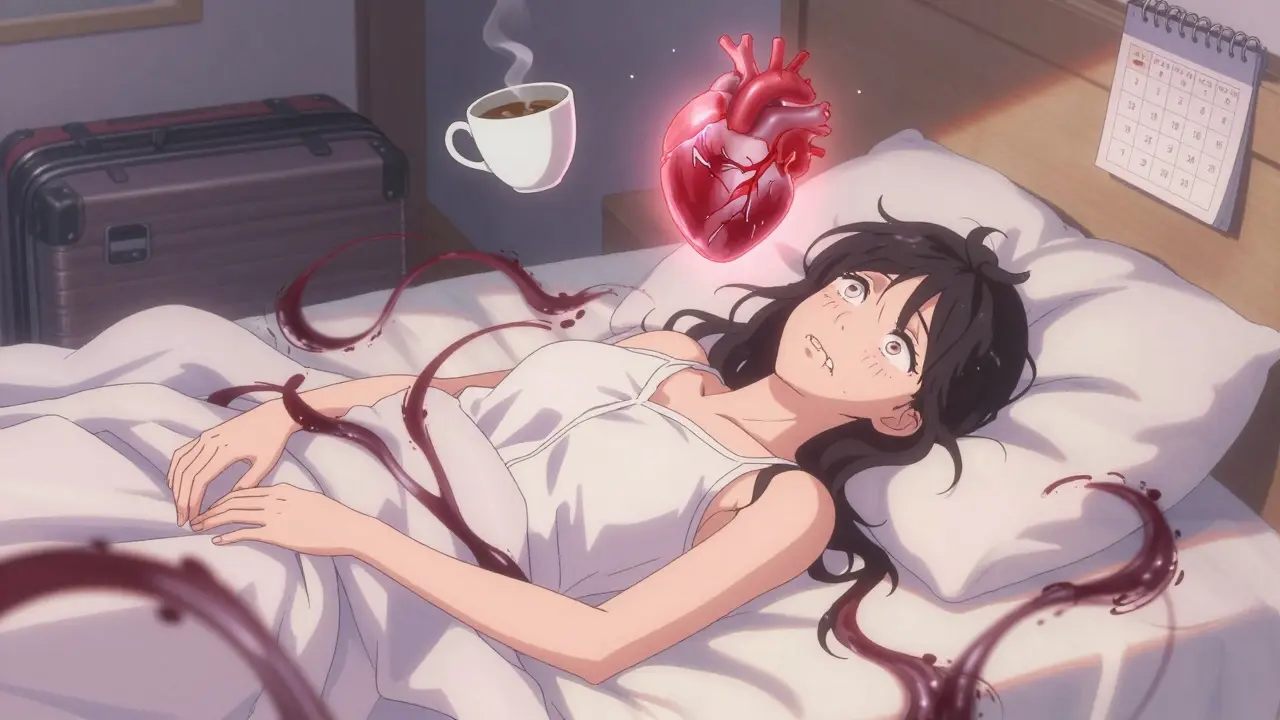
Heart disease kills women more than all cancers combined. Yet most women don’t realize it’s their biggest threat. In the U.S., about 1 in 5 female deaths is from heart disease - that’s 307,000 women every year. Globally, it claims 8.9 million female lives annually. But here’s the problem: many women don’t recognize the signs. And when they do, doctors often miss them too.
What Heart Disease Looks Like in Women - Not Like in Men
When you think of a heart attack, you probably picture someone clutching their chest, screaming in pain. That’s the Hollywood version. It’s mostly a male story. For women, it’s different. A lot of women don’t feel chest pain at all. In fact, nearly half of women who have heart attacks never have the classic crushing chest discomfort. Instead, they feel something else entirely. Unexplained, crushing fatigue - the kind that makes it hard to get out of bed or make your own coffee. Shortness of breath while walking to the mailbox. Pain in the jaw, neck, or upper back - not sharp, but dull and persistent. Nausea. Dizziness. A sudden, strange sense of dread. These aren’t random symptoms. They’re signals. Research from Yale Medicine shows that 71% of women who had heart attacks reported extreme fatigue weeks before the event. That’s not just being tired. It’s fatigue that interferes with daily life - the kind that makes you cancel plans because you just can’t move. And yet, most women dismiss it as stress, aging, or too much to do. Even chest pain in women often feels different. It’s not a knife or a weight. It’s pressure. Tightness. A burning sensation. Sometimes it comes with nausea or vomiting. Sometimes it wakes you up at night. Dr. Lisa Freed from Yale puts it plainly: “You can get the shortness of breath or the nausea without the chest discomfort.”Why Women’s Heart Disease Is Often Missed
For decades, heart research focused almost entirely on men. The Framingham Heart Study, launched in 1948, enrolled only men. That shaped how doctors learned to diagnose heart disease - based on male symptoms. Even today, many medical textbooks still describe heart attacks the same way: chest pain radiating to the left arm. But women’s hearts are different. Their arteries are smaller. They’re more likely to have microvascular disease - where the tiny blood vessels feeding the heart become damaged. This doesn’t show up on standard stress tests or angiograms designed for larger arteries. So doctors often say, “Your tests are normal,” and send women home. A 2021 study in the Journal of the American Heart Association found that women under 55 are seven times more likely than men to be sent home from the ER during a heart attack. That delay is deadly. One year after being misdiagnosed, women are 50% more likely to die than men who got the right care. There’s also bias. A 2022 study in JAMA Internal Medicine found that 68% of emergency room cases involving women with heart symptoms were wrongly labeled as anxiety or stress. “She’s just overworked,” one doctor might say. “She’s hormonal.” But when women report symptoms like jaw pain, nausea, or sudden fatigue, those aren’t signs of anxiety - they’re signs of a heart problem.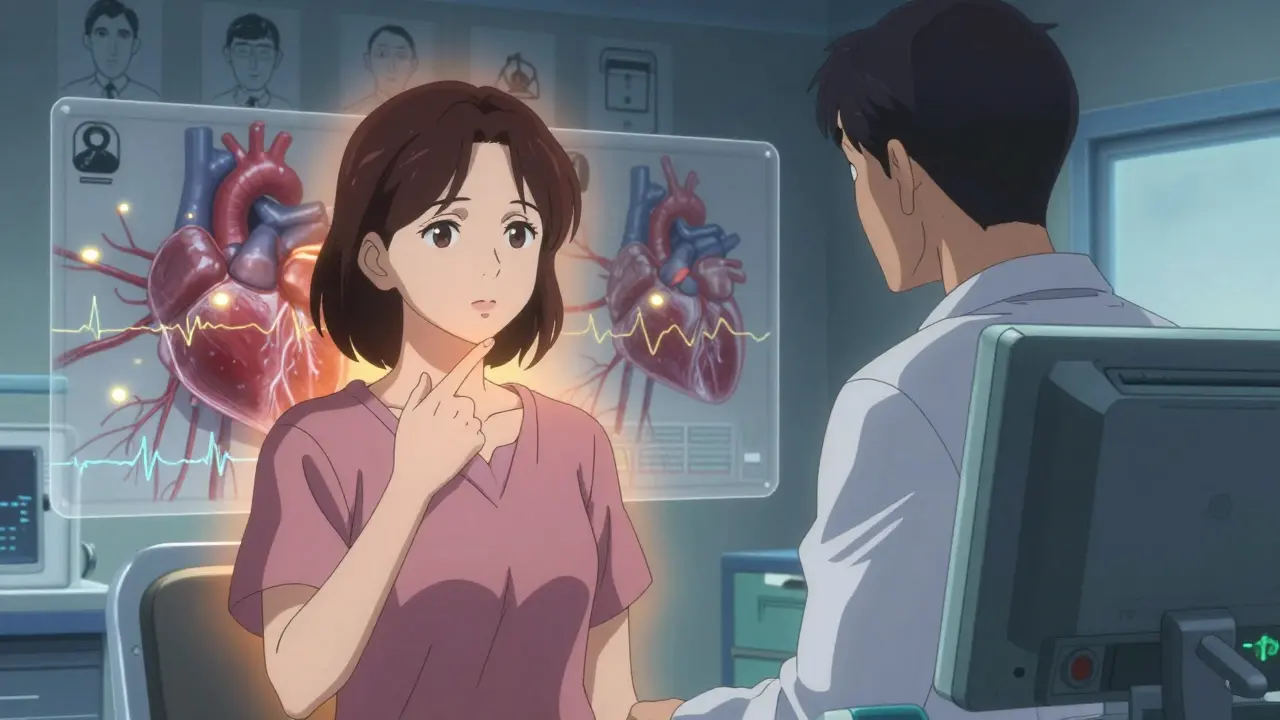
Hidden Risk Factors Women Can’t Ignore
Some risk factors for heart disease are the same for men and women: smoking, high blood pressure, obesity, lack of exercise. But women have unique ones too - ones that are often overlooked.One major one: pregnancy complications. If you had preeclampsia, gestational diabetes, or delivered a baby prematurely, your risk of heart disease jumps by 80%. That’s not a one-time issue. It’s a lifelong warning sign.
Menopause matters too. After menopause, estrogen drops. That protective effect fades. Blood pressure and cholesterol often rise. Weight tends to shift to the belly - a known risk for heart disease. And here’s the kicker: women over 65 are 34% more likely than men to have a “silent” heart attack - one with no obvious symptoms. They might just feel unusually tired for weeks. Or have indigestion that won’t go away. They don’t realize it’s their heart.
Autoimmune diseases like lupus and rheumatoid arthritis also raise heart risk in women. So does chronic stress. Mental stress triggers angina (chest pain from reduced blood flow) 37% more often in women than men. And women are twice as likely to develop Takotsubo syndrome - also called broken heart syndrome - triggered by extreme emotional stress.
What You Should Do - Practical Steps for Prevention and Early Detection
The good news? You can take action. And you don’t need to wait for a crisis.- Track your symptoms. If you’ve had unexplained fatigue for more than two weeks - especially if it’s worse than usual or comes with shortness of breath - get checked. Don’t wait. That pattern precedes 78% of female heart attacks.
- Know your history. Write down your pregnancy complications, menopause age, and family history of heart disease. Bring this to every doctor visit. It’s not just background - it’s critical data.
- Ask for the right tests. If you have symptoms but standard tests come back normal, ask about tests for microvascular disease. The Corus CAD test - approved by the FDA in 2020 - analyzes gene expression and is 88% accurate in women, compared to just 72% for traditional stress tests.
- Look for specialized care. Hospitals with Women’s Cardiovascular Centers of Excellence have trained staff and protocols designed for women. Studies show women treated at these centers are 22% more likely to survive a heart attack.
- Don’t ignore emotional triggers. If you’ve had a major loss, divorce, or burnout and now feel physically off, get your heart checked. Emotional stress is a real cardiac risk.
The Bigger Picture - Why This Still Isn’t Fixed
Despite decades of research, progress is slow. Only 34% of cardiovascular research funding in the U.S. focuses on women’s health. Women make up just 38% of participants in major heart studies - even though they’re half the population. That gap means we’re still learning about how their bodies respond to medications, devices, and procedures. The economic cost is huge. Heart disease costs the U.S. $329.7 billion a year. Women account for 55% of those costs - because they often have longer hospital stays and more complications after events like heart attacks. But change is coming. The NHLBI launched the RENEW initiative in 2023, pouring $150 million into research on hormonal changes and autoimmune links to heart disease. The American Heart Association is pushing to raise awareness from 44% to 70% of women recognizing heart disease as their top killer by 2030. And AI tools are being trained to spot female-specific symptom patterns - early data suggests they could cut misdiagnosis rates by 40% in the next five years.What to Do Right Now
You don’t need to wait for a national campaign. You don’t need to wait for your doctor to catch up. Start today:- Write down your symptoms - even the ones you think are “nothing.” Fatigue? Jaw pain? Nausea? Write them down.
- Call your doctor and say: “I’m concerned about my heart. I’ve been feeling [list symptoms]. I want to be evaluated for microvascular disease or other female-specific heart conditions.”
- Ask if your hospital has a Women’s Cardiovascular Center. If not, ask for a referral.
- Start tracking your menstrual cycle, pregnancy history, and menopause status. These aren’t just gynecological details - they’re heart health data.
- If you’re over 50, get your blood pressure, cholesterol, and blood sugar checked annually - even if you feel fine.
Heart disease in women isn’t a mystery. It’s a miscommunication. The signs are there. The data is clear. What’s missing is the urgency - from women themselves, and from the system that’s supposed to protect them.
You know your body better than anyone. If something feels off - it is. Don’t wait for permission to speak up. Don’t let anyone tell you it’s just stress. Your heart is worth fighting for.
Do women always feel chest pain during a heart attack?
No. While chest pain is common, nearly 43% of women who have heart attacks don’t experience it at all. Instead, they may feel extreme fatigue, nausea, shortness of breath, jaw or back pain, or dizziness. These are just as serious - and often more common in women.
Can pregnancy affect my risk of heart disease later in life?
Yes. Women who had preeclampsia, gestational diabetes, or delivered prematurely are at 80% higher risk of developing heart disease later. These conditions stress the cardiovascular system and can cause lasting damage. Always tell your doctor about your pregnancy history - it’s vital for heart risk assessment.
Why are standard heart tests less accurate for women?
Most heart tests were designed using data from men. Women often have microvascular disease - damage to small arteries - which doesn’t show up on standard angiograms or stress tests. Tests like the Corus CAD, which analyze gene expression, are more accurate for women and should be requested if symptoms persist despite normal results.
Is heart disease more deadly for women than men?
Yes, after a heart attack, women are more likely to die within a year - especially if misdiagnosed. They’re also more likely to have complications like heart failure or stroke afterward. This is partly because symptoms are different, care is delayed, and many treatments were tested mostly on men.
What should I do if I think I’m having a heart attack but my doctor says it’s anxiety?
Insist on further testing. Say: “I understand anxiety can cause symptoms, but I need to rule out heart disease. I’m experiencing [list symptoms], and I have [risk factors]. I’d like a Corus CAD test or referral to a Women’s Cardiovascular Center.” If your doctor refuses, seek a second opinion. Your life is worth it.
Can lifestyle changes really reduce my risk?
Absolutely. Quitting smoking, moving daily, eating whole foods, and managing stress can reduce heart disease risk by up to 80%. But for women, it’s not just about diet and exercise - it’s also about managing hormonal shifts, sleep, and emotional well-being. Small, consistent changes make the biggest difference over time.
Are there any new tests or treatments specifically for women?
Yes. The FDA-approved Corus CAD test is the first diagnostic tool validated specifically for women, with 88% accuracy for detecting coronary artery disease. Hospitals with Women’s Cardiovascular Centers of Excellence now use gender-specific protocols. And AI tools trained on female symptom patterns are emerging - expected to cut misdiagnosis by 40% in the next five years.
How do I know if my doctor understands women’s heart disease?
Ask them: “Do you use gender-specific guidelines for heart disease diagnosis?” or “Have you treated patients with microvascular disease or Takotsubo syndrome?” If they hesitate or say no, ask for a referral to a Women’s Cardiovascular Center. You deserve a provider who knows how women’s hearts behave differently.
Wendy Lamb
February 3, 2026 AT 17:54My mom had a heart attack and didn’t feel chest pain at all-just nausea and this weird exhaustion that made her cancel her book club. They sent her home twice. She’s alive because she insisted on a second opinion. If you’re tired and it’s not getting better, don’t let anyone tell you it’s ‘just stress.’
Prajwal Manjunath Shanthappa
February 4, 2026 AT 13:44Oh, here we go again-another ‘women’s heart disease’ op-ed masquerading as public health. Let me guess: you’re going to tell us to ‘trust our bodies’? As if that’s never led to hypochondria and 3 a.m. Google diagnoses? The real problem is the medical system’s failure to standardize diagnostics-not some mystical feminine intuition.
And don’t get me started on the Corus CAD test. It’s a $1,200 genetic panel that’s barely been replicated in independent cohorts. You’re advocating for expensive, unproven tech while ignoring the fact that 80% of cardiac events are preventable through BP control and statins-regardless of gender.
Also, ‘microvascular disease’? That’s not a diagnosis-it’s a catch-all for when doctors don’t know what’s wrong. Stop romanticizing ambiguity. We need better imaging, not more buzzwords.
And yes-I said ‘romanticizing.’ Because this article reads like a TED Talk written by someone who’s never held a stethoscope.
Antwonette Robinson
February 4, 2026 AT 14:28So let me get this straight: women don’t get chest pain, so now we’re supposed to treat every case of ‘fatigue’ as a potential heart attack? What’s next? ‘Dizziness = blocked artery’? ‘Spilled coffee = cardiac emergency’?
Also, ‘Takotsubo syndrome’? That’s broken heart syndrome. You know, the one caused by grief? So now emotional trauma is a cardiac risk factor? Congrats, you’ve turned medicine into a soap opera.
And why is it always ‘women’s heart disease’? Did the FDA forget to approve ‘men’s heart disease’? No. Because it’s just… heart disease. But sure, let’s sell more tests by making women feel like their bodies are ticking time bombs.
Coy Huffman
February 5, 2026 AT 22:29man… i just read this and i’m sitting here thinking about my grandma who passed in 2018. she kept saying her arm felt ‘heavy’ and that she couldn’t breathe right after walking to the porch. doc said ‘it’s arthritis and anxiety.’ she died 3 days later. 😔
we gotta do better. not just for moms and sisters, but for the women who’ve been told ‘it’s all in your head’ one too many times.
also-thank you for mentioning microvascular disease. nobody talks about that. it’s like the medical world forgot half the population has a different plumbing system.
Nathan King
February 7, 2026 AT 05:54The data presented is statistically sound, yet the rhetorical framing is dangerously reductive. To attribute diagnostic disparity solely to gender bias ignores the confounding variables of socioeconomic status, access to tertiary care, and physician workload. Moreover, the assertion that ‘women’s hearts are different’ risks essentialism-cardiac physiology is not a binary construct.
Furthermore, the promotion of the Corus CAD test as a panacea is premature. Its validation cohort was small, and longitudinal outcomes remain unestablished. One must not confuse innovation with efficacy.
That said, the call for gender-inclusive research is not merely ethical-it is scientifically imperative.
rahulkumar maurya
February 7, 2026 AT 17:16Let’s be real-this whole thing is a scam. You think women are getting misdiagnosed because doctors are sexist? Nah. It’s because most of them are overworked, underpaid, and drowning in paperwork. You want change? Stop complaining about ‘gender bias’ and start demanding better funding for ERs.
Also, ‘microvascular disease’? That’s just a fancy way of saying ‘we don’t know what’s wrong.’ And ‘Corus CAD’? Sounds like a crypto token. Next you’ll tell me to track my menstrual cycle like it’s a fitness app.
And don’t even get me started on ‘emotional stress = heart attack.’ So now grief is a cardiovascular event? What’s next? ‘Divorce causes plaque’?
People need to stop turning medical facts into clickbait.
Demetria Morris
February 9, 2026 AT 04:45I’ve been a nurse for 22 years. I’ve seen women dismissed for ‘hysteria’ while their hearts fail. I’ve watched them cry in the waiting room because their doctor said, ‘You’re too young for this.’
It’s not just about tests or bias-it’s about dignity. When a woman says, ‘Something’s wrong,’ she deserves to be heard-not lectured about stress.
And yes-I know it’s inconvenient. But saving lives isn’t supposed to be convenient.
Geri Rogers
February 10, 2026 AT 04:06YES. YES. YES. 🙌
I’m a 48-year-old mom of three. Had a silent heart attack in 2021. Thought I had the flu for 3 weeks. My husband had to drag me to the ER. They almost sent me home. I screamed, ‘I’m not anxious-I’m dying.’
They did the Corus CAD. Turns out my LAD was 95% blocked.
TO ALL WOMEN: If you feel off, push. Push harder. Bring this article. Print it. Tape it to your doctor’s clipboard. Your life is worth more than their 10-minute visit.
And if your doctor doesn’t know about microvascular disease? Find one who does. 💪❤️
Susheel Sharma
February 11, 2026 AT 22:44Let’s be honest: this is performative medicine. You want to ‘raise awareness’? Fine. But you’re not fixing the root issue: the fact that women’s pain is still treated as secondary.
And why is the ‘solution’ always another test? Why not fix the system? Why not train doctors to listen? Why not pay nurses more so they have time to actually talk to patients?
Instead, we get glossy infographics and $1,200 genetic panels. Meanwhile, rural women still drive 2 hours to get a stress test that won’t even work for them.
This isn’t empowerment-it’s capitalism with a pink ribbon.
Janice Williams
February 12, 2026 AT 10:41While I appreciate the intent, this article indulges in emotional manipulation under the guise of advocacy. The statistic that ‘heart disease kills more women than all cancers combined’ is technically true-but misleadingly presented. Cancer kills more women overall when aggregated by type; heart disease is a single entity.
Furthermore, the assertion that ‘doctors ignore women’s symptoms’ is a gross oversimplification. Many physicians are trained in gender-specific cardiology. The issue is not ignorance-it is systemic under-resourcing.
And the Corus CAD test? Its sensitivity in asymptomatic populations is questionable. You are promoting a diagnostic tool with a 12% false-positive rate as if it were gospel.
This is not science. It is fear-based marketing.
Joy Johnston
February 12, 2026 AT 16:40I’m a 52-year-old woman who had preeclampsia, gestational diabetes, and two preterm births. I thought those were ‘just pregnancy things.’ Turns out they were red flags.
I asked my doctor for a Corus CAD after reading this. He laughed. Said, ‘You’re fine.’
I went to a Women’s Cardiovascular Center. Found a 70% blockage in a small artery. Stent next week.
If you’ve had pregnancy complications? Don’t wait. Don’t be polite. Say: ‘I need to be checked for microvascular disease.’
And if they say no? Go to the next one. You’re not being dramatic-you’re being smart.
Shelby Price
February 13, 2026 AT 04:54just read this. i’m 39. been tired for months. thought it was mom life. maybe i should call my doctor…