NSAID Safety: GI Risks, Kidney Effects, and How to Monitor Them
NSAIDs relieve pain but carry hidden risks to your stomach and kidneys. Learn how to spot early signs of damage, who’s most at risk, and what monitoring you need to stay safe.
View MoreWhen you reach for ibuprofen, naproxen, or aspirin to ease a headache, sore muscles, or menstrual cramps, you’re using a nonsteroidal anti-inflammatory drug, a class of medications that reduce pain, fever, and inflammation without steroids. Also known as NSAIDs, these drugs are among the most commonly used medicines worldwide—but they’re not harmless. Just because they’re sold without a prescription doesn’t mean they’re safe for everyone, every time.
NSAIDs work by blocking enzymes that cause inflammation, but they also interfere with protective functions in your stomach, kidneys, and heart. The most common NSAID side effects include stomach upset, nausea, and heartburn—but those are just the start. Long-term or high-dose use can lead to ulcers, internal bleeding, and even life-threatening gastrointestinal perforations. Studies show that over 100,000 hospitalizations each year in the U.S. are linked to NSAID-related stomach damage. Your risk goes up if you’re over 60, take blood thinners, or have a history of ulcers.
It’s not just your gut at risk. kidney damage from NSAIDs, a hidden danger that often shows up too late can happen even in healthy people. These drugs reduce blood flow to the kidneys, which can cause acute kidney injury—especially if you’re dehydrated, have high blood pressure, or already have kidney issues. And then there’s the heart. Some NSAIDs raise blood pressure and increase the chance of heart attack or stroke, especially with daily use. This isn’t just a warning for people with existing heart disease—it applies to anyone who takes them regularly.
People often think switching between brands or doubling up on doses makes pain go away faster. But that’s when things get dangerous. Combining ibuprofen with aspirin for a headache? Taking naproxen every day for back pain? These habits quietly stack up the risks. And because NSAIDs are so common, side effects get dismissed as "just part of getting older" or "normal"—when they’re not.
You don’t have to avoid NSAIDs entirely. But you need to know when they’re helping and when they’re hurting. The right dose, the right duration, and the right person matter more than you think. Some people can take them safely for short periods. Others should never use them at all. The key is understanding your body, your other medications, and your real risk factors—not just following the label.
Below, you’ll find real stories and data-driven insights about how NSAIDs affect different people, what hidden dangers you might miss, and how to spot early warning signs before they become emergencies. Whether you’re managing chronic pain, dealing with occasional aches, or helping someone else navigate their meds—this collection gives you the facts you need to make smarter choices.
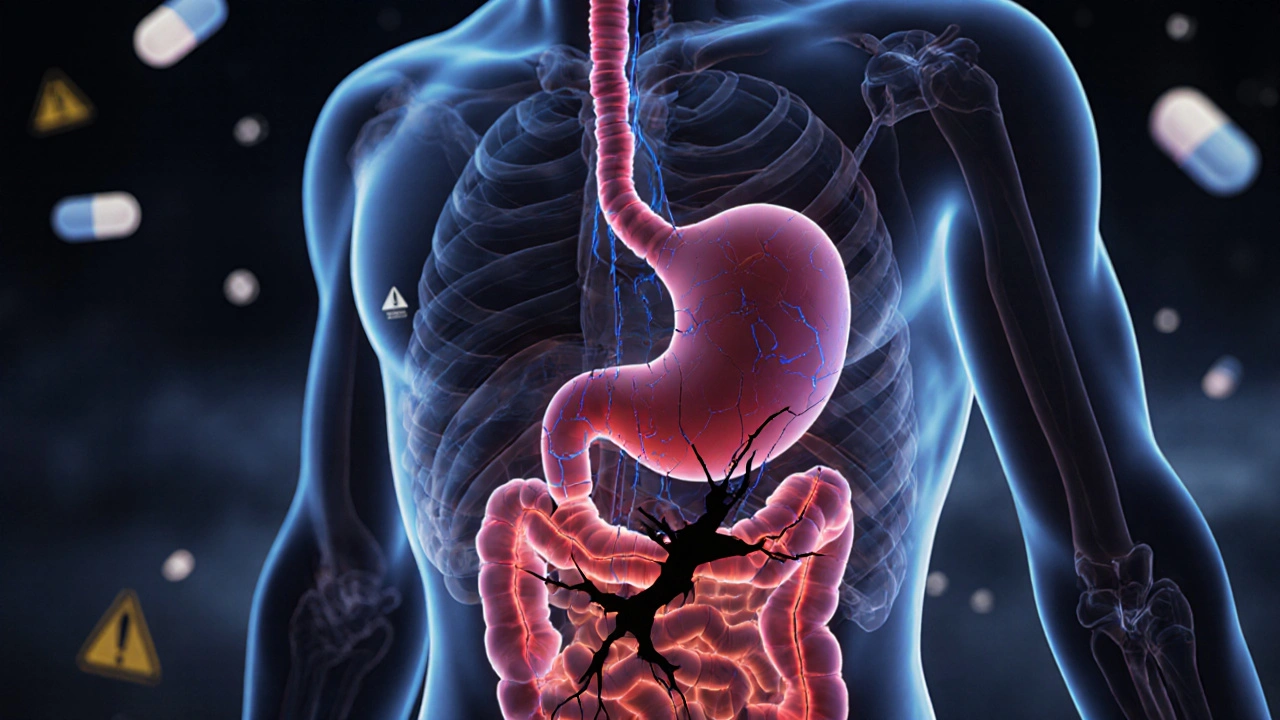
NSAIDs relieve pain but carry hidden risks to your stomach and kidneys. Learn how to spot early signs of damage, who’s most at risk, and what monitoring you need to stay safe.
View More