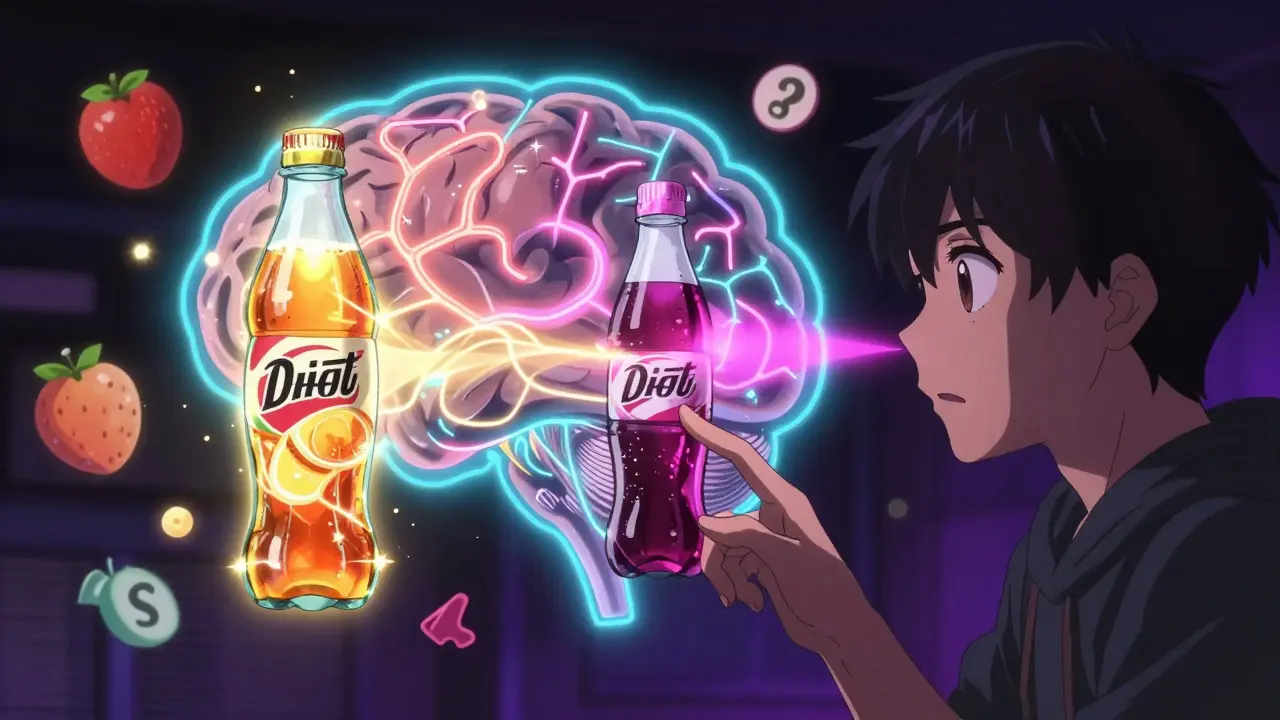
When you swap a soda with sugar for a diet version, you’re not just cutting calories-you’re sending a signal to your brain that doesn’t match what’s happening in your body. That mismatch might be why, despite using sweeteners to lose weight, many people end up feeling hungrier, craving more sweets, or even gaining weight over time.
What Happens When Your Brain Gets Sweetness Without Calories
Your brain expects energy when it tastes something sweet. For millions of years, sweetness meant calories-fruit, honey, milk. But artificial sweeteners break that rule. They trick your tongue into thinking you’re eating sugar, but deliver almost no calories. That confusion can throw off your hunger signals. A 2023 study from the University of Southern California used fMRI scans to show that sucralose, the main ingredient in Splenda, doesn’t activate the brain’s fullness centers the way sugar does. In people with obesity, this led to a 17% increase in reported hunger. Worse, women showed a 40% stronger brain response than men, meaning their hunger signals were more disrupted. This isn’t just about feeling hungry. It’s about your brain recalibrating. A 2016 study from the University of Sydney found that fruit flies exposed to sucralose for five days started eating 30% more when given real sugar later. Their brains had learned: sweet taste doesn’t mean energy, so eat more to make up for it. The same thing happens in humans.The Evidence Is Split-And It Depends on Who You Are
Some studies say artificial sweeteners help. A 2022 trial from the University of Leeds found people who switched from sugar to sweeteners ate fewer calories overall and had lower blood sugar spikes. Their insulin levels dropped by 18%, and they didn’t compensate by eating more later. But other research tells a different story. A 2024 study from the German Center for Diabetes Research showed that while sucralose barely affected blood sugar (AUC 12.7 mmol/L*min), it also didn’t trigger the release of GLP-1, the hormone that tells your stomach you’re full. Sugar? It spiked GLP-1 by 35%. No fullness signal. No stop-eating cue. And it’s not just the sweetener-it’s how long you’ve been using it. Short-term use (under 4 weeks) usually shows neutral or positive effects. But after 3 months? Problems start showing up. A 2024 study from the German Diabetes Center found sucralose increased activity in the hypothalamus-the brain’s hunger control center-by 34% in long-term users.Not All Sweeteners Are Created Equal
You can’t treat all artificial sweeteners the same. They work differently in your body.- Sucralose (Splenda): 600 times sweeter than sugar. Doesn’t trigger fullness hormones. Linked to increased hunger in long-term users, especially women.
- Aspartame (Equal, NutraSweet): 200 times sweeter. Shown in some studies to increase appetite in men. Often blamed for cravings in diet sodas.
- Acesulfame potassium (Ace-K): Often mixed with sucralose in diet drinks. May disrupt gut bacteria and increase sweet cravings over time.
- Stevia and monk fruit: Natural, plant-based. Less intensely sweet. Studies show fewer appetite spikes. Users report fewer cravings compared to artificial options.

Why Diet Sodas Might Be Making You Hungrier
Diet sodas are the #1 source of artificial sweeteners for most people. But they’re also the biggest culprit in appetite disruption. Why? Because they’re consumed quickly, in large amounts, and without any food. When you drink a diet soda, your brain gets a massive sweet hit with zero protein, fiber, or fat to slow it down. That’s a recipe for craving overload. A 2023 survey by the American Diabetes Association found that 41% of people with type 2 diabetes who used artificial sweeteners regularly reported increased appetite-especially with aspartame-sweetened drinks. Healthline’s 2024 survey of 2,300 adults found that 63% of daily users who’d been on sweeteners for over six months felt hungrier, not less. And it’s not just about the sweetener. It’s about the habit. Drinking a diet soda with lunch becomes a cue: “I’ve had my sweet fix, now I can eat more.” That mental reset can undo the calorie savings.What Works Better Than Sweeteners
If you’re trying to reduce sugar cravings, there’s a better strategy than swapping sugar for chemicals: retrain your taste buds. Registered dietitians recommend starting with less intense sweeteners. Monk fruit (150x sweeter than sugar) or stevia are gentler on your system than sucralose (600x). They’re less likely to trigger that brain recalibration. Pair your sweetener with protein or fiber. A study from the Academy of Nutrition and Dietetics showed that adding sweetener to Greek yogurt (not soda) reduced hunger by 22%. The protein slows digestion and signals fullness. The sweetener satisfies the craving. Together, they work. Also, give your brain a break. If you’ve been using sweeteners daily for months, try cutting back for 4-6 weeks. Many people find their cravings for intensely sweet foods drop significantly. You start noticing natural sweetness in fruit, yogurt, even coffee.
Who Should Avoid Artificial Sweeteners?
Not everyone reacts the same. Here’s who might want to steer clear:- Women: Brain studies show stronger hunger responses to sucralose and aspartame.
- People with obesity: More likely to experience disrupted GLP-1 and increased appetite.
- Long-term users: After 3+ months, sweeteners may start increasing cravings instead of reducing them.
- Children: The American Heart Association warns against regular use-taste preferences are still forming.
What to Do Instead
If you’re trying to manage weight and cravings, here’s what actually works:- Drink water, unsweetened tea, or sparkling water with lemon instead of diet soda.
- Choose whole fruit over sweetened yogurt or snacks. The fiber slows sugar absorption and adds fullness.
- If you need sweetness, use small amounts of stevia or monk fruit-never in liquid form alone.
- Pair any sweetener with protein or fat: nut butter on apple slices, plain yogurt with a drop of stevia.
- Take a 2-3 week break from all sweeteners. You’ll be surprised how much less you crave them afterward.
The Bottom Line
Artificial sweeteners aren’t magic. They’re tools-and like any tool, they can backfire if used the wrong way. For some people, they help cut sugar and reduce blood sugar spikes. For others, they trigger hunger, cravings, and overeating. The key isn’t choosing between sugar and sweeteners. It’s learning how your body responds. If you notice you’re hungrier after diet soda, or you’re reaching for more sweets after using sweeteners, it’s not your willpower failing. It’s your brain rewiring itself. Your best move? Cut back slowly. Swap one diet soda for water. Add protein to your sweet snack. Give your taste buds a reset. You don’t need to quit sweeteners cold turkey-you just need to use them smarter.Do artificial sweeteners make you gain weight?
Some people do gain weight using artificial sweeteners, but not because the sweeteners themselves have calories. It’s because they can increase hunger and cravings over time, especially with long-term use. Studies show that after 3+ months, some sweeteners like sucralose disrupt hunger hormones and cause people to eat more later. It’s not guaranteed-it depends on your body, how much you use, and what you eat with it.
Is stevia better than aspartame or sucralose?
Yes, for most people. Stevia and monk fruit are plant-based and less intensely sweet than artificial options like sucralose or aspartame. This means they’re less likely to trigger brain cravings or disrupt hunger signals. User reviews and clinical studies show fewer reports of increased appetite with stevia. They’re also better tolerated by people with sensitive digestion or hormonal responses.
Why do I crave sweets more after using diet soda?
Diet soda delivers a strong sweet signal without any calories or nutrients. Your brain expects energy after sweetness. When it doesn’t get it, your brain starts searching for it-leading to stronger cravings. Over time, your taste buds get used to intense sweetness, making naturally sweet foods like fruit feel bland. This is called “sweetness recalibration,” and it’s why many people end up eating more sugar after switching to diet drinks.
How long does it take for sweeteners to affect your appetite?
It varies. Some people notice increased hunger within days, especially if they’re consuming large amounts of sweeteners daily. For most, changes become noticeable after 2-4 weeks. Long-term effects-like increased cravings or disrupted hunger hormones-typically appear after 3 months or more of regular use. The 2024 DZD study showed sucralose increased brain hunger signals by 34% after just 12 weeks.
Should I stop using artificial sweeteners to lose weight?
Not necessarily-but you should use them wisely. If you’re using them to cut sugar and you’re not feeling hungrier or craving more sweets, they can help. But if you notice increased hunger, snacking more, or stronger sweet cravings, it’s time to cut back. Try replacing one sweetener product per week with water, tea, or whole food. Many people find their cravings fade within 4-6 weeks, and they end up eating less overall.
Margaret Khaemba
January 22, 2026 AT 02:59I’ve been switching to stevia for my coffee and noticed my afternoon cookie cravings dropped off after 3 weeks. Not sure if it’s the sweetener or just drinking more water, but I haven’t reached for sugar in months. Weird how your taste buds reset like that.
Also, the part about women having stronger brain responses? That tracks. My sister’s been on diet soda for years and swears she’s hungrier than ever. She’s not even trying to lose weight - it just happens.
Malik Ronquillo
January 24, 2026 AT 02:36So let me get this straight - we’re now blaming diet soda for making us eat more because our brain is ‘confused’? Bro. Our ancestors didn’t have smartphones or Netflix either. Should we blame those too? I drink diet soda because I like the taste and it doesn’t spike my blood sugar. If I eat more after, that’s on me. Not the sweetener.
Also, stevia tastes like licorice and makes my teeth feel weird. I’ll take my Splenda and my extra fries, thanks.
Lauren Wall
January 25, 2026 AT 22:24Long-term users get hungrier. That’s it. No need to overthink it.
Kenji Gaerlan
January 27, 2026 AT 20:00so like… if i drink diet coke and then eat a whole pizza, its not the pizza its the splenda? 😭
also why is everyone acting like aspartame is some evil chem lab juice. its been around since the 80s. my grandma drank it and lived to 92.
Ryan Riesterer
January 29, 2026 AT 03:40The neuroendocrine mismatch hypothesis is well-supported here. Sucralose fails to activate the cephalic phase insulin response and blunts GLP-1 secretion, which in turn reduces satiety signaling via vagal afferents. The fMRI data from USC aligns with prior work on dopaminergic reward pathway dysregulation under chronic non-caloric sweetener exposure.
That said, individual variability in gut microbiota composition - particularly Bacteroidetes/Firmicutes ratios - may modulate this effect. Personalized nutrition frameworks are needed.
Akriti Jain
January 29, 2026 AT 15:46OF COURSE they’re making you hungrier 😏
Big Soda and Big Pharma don’t want you to crave fruit. They want you addicted to chemical sweetness so you keep buying their products. Stevia? Nah, that’s too natural. They can’t patent a plant. 🤡
Also, did you know the FDA approved aspartame after a scientist who worked for the company ‘accidentally’ lost the original safety studies? 😈
Just sayin’… your diet soda is a Trojan horse. 🍊💣
Mike P
January 31, 2026 AT 08:04Y’all are overcomplicating this. Sugar is poison. Artificial sweeteners are the lesser evil. If you’re eating more after drinking diet soda, it’s because you think you ‘saved’ calories and now you deserve a treat. That’s psychology, not biochemistry.
And yeah, I’m a man - and I crave sweets after aspartame. So what? I just eat a protein bar and move on. Stop acting like your brain is broken. It’s just lazy.
Jasmine Bryant
February 1, 2026 AT 06:58I tried cutting out all sweeteners for 4 weeks last year and holy cow - my cravings disappeared. I started noticing how sweet regular fruit actually is. Like, my banana tasted like candy.
Also, I think I misread something - did the study say sucralose increases hunger in women by 40%? I thought it was 17% overall? Maybe I’m mixing up the numbers… 🤔
shivani acharya
February 2, 2026 AT 03:38Let’s be real - this isn’t about science. This is about control. They want you to think you need chemicals to enjoy life. But what if the real problem is that we’ve forgotten how to feel satisfied with less?
I used to drink diet soda every day. Now I drink water with mint and lemon. I don’t crave sweets anymore. I don’t even notice them. It’s like my body finally remembered what real food tastes like.
And yeah, I know what you’re gonna say - ‘but I need the caffeine!’ - but guess what? Tea has caffeine. And it doesn’t trick your brain into thinking it’s getting sugar.
Also, did you know the artificial sweetener industry spends more on lobbying than the tobacco industry did in the 90s? Coincidence? I think not. 🍃
My grandma never ate ‘diet’ anything. She ate food. Real food. And she danced at 85. What’s your excuse?
Sarvesh CK
February 2, 2026 AT 04:29The tension between evolutionary biology and modern food engineering is profound. For millennia, sweetness was an honest signal of caloric density. The advent of non-nutritive sweeteners represents a cognitive dissonance on a species level - a sensory deception that bypasses homeostatic regulation.
Yet, human agency remains. We are not merely biochemical machines. The act of choosing to abstain from artificial sweeteners, even when convenient, is an assertion of autonomy over instinct. It is not merely dietary - it is philosophical.
Perhaps the real question is not whether sweeteners increase appetite, but whether we still trust our bodies to guide us - or have we outsourced that trust to corporations and algorithms?
And yet, in the spirit of compassion, we must acknowledge that for some, these substances are a lifeline - a bridge out of sugar addiction. To condemn them entirely is to ignore the complexity of human suffering and recovery.
Hilary Miller
February 3, 2026 AT 13:17Swap one diet soda for sparkling water with lime. Do it for a week. Then tell me how you feel.
Margaret Khaemba
February 4, 2026 AT 05:49I did the sparkling water thing. First week was rough. Second week? I forgot I used to drink soda. Now I just crave the fizz, not the sweetness. And my skin cleared up. Weird side effect.
Also, I tried stevia in yogurt with chia seeds. Felt full for hours. No cravings. No guilt. Maybe we’re overcomplicating this whole thing.