A Silent Danger in Your Medicine Cabinet
Imagine this scenario: you've been taking your cholesterol medication for years without issue. Then, you develop a stubborn fungal infection. Your doctor prescribes a common antifungal cream or tablet. A week later, you wake up with severe muscle pain and dark urine. You rush to the ER, where tests reveal dangerously high creatine kinase levels. This isn't just bad luck; it's a known chemical reaction between two common classes of drugs: statins and azole antifungals.
In today's medical landscape, where patients often manage multiple conditions simultaneously, understanding how medications interact is vital. Over 300 million people globally take statins annually. Meanwhile, antifungal prescriptions continue to rise, especially with increasing resistance issues like Candida auris. When these meet in the body, specifically in the liver, the consequences can range from uncomfortable side effects to life-threatening emergencies like rhabdomyolysis.
Defining the Players: What Are Statins and Antifungals?
To understand the risk, we first need to define what we are talking about.
Statins are the cornerstone of modern heart health. They belong to a class called HMG-CoA reductase inhibitors. Their job is to lower cholesterol by stopping your liver from making it. Brands like atorvastatin or simvastatin are household names. If you have high cholesterol, coronary artery disease, or a history of stroke, you likely know someone on them. They work hard to keep your arteries clear.
On the other side, we have Azole Antifungals. These are medicines used to fight fungal infections, such as athlete's foot, thrush, or toenail fungus. Common types include itraconazole, ketoconazole, fluconazole, and voriconazole. They work by blocking the production of ergosterol, a substance essential for the fungal cell wall. Without it, the fungus dies.
The trouble starts because both of these drug families rely on the same cleanup crew in your liver to get processed.
The Liver's Busy Highway: Understanding CYP Enzymes
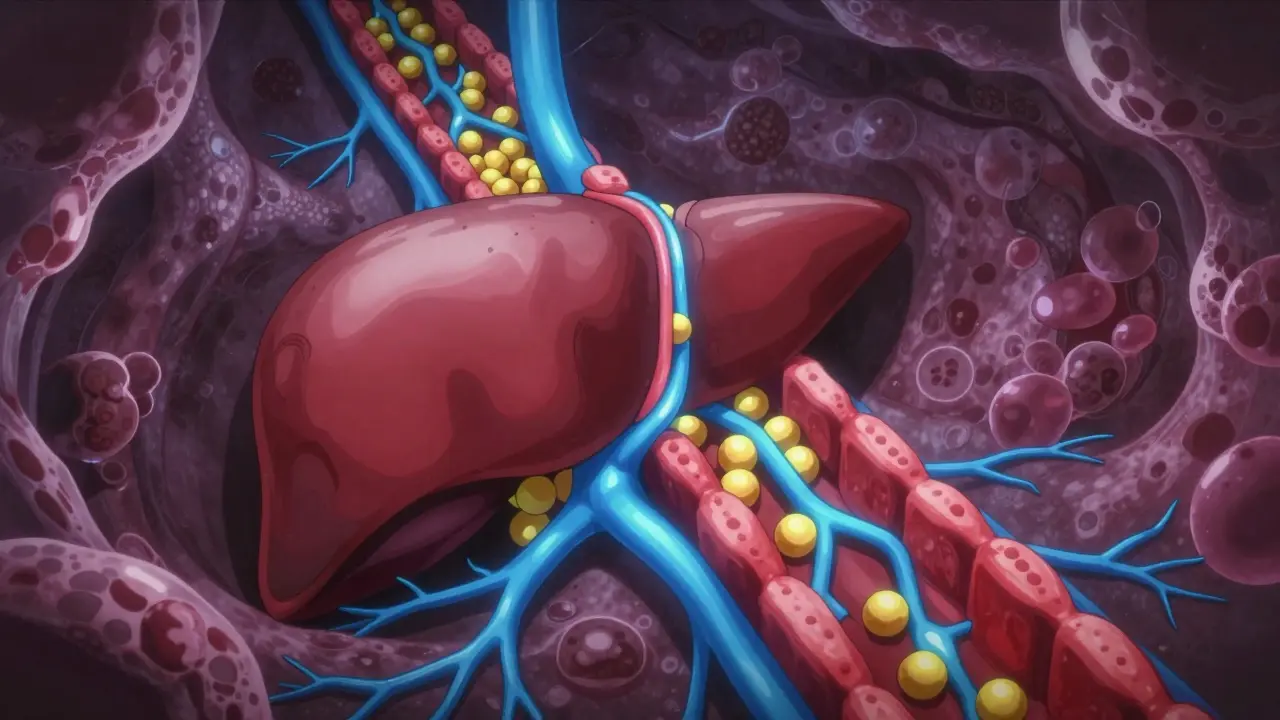
Think of your liver's Cytochrome P450 system as a busy highway for traffic. Drugs enter this highway to be broken down so they can leave your body safely. One specific lane on this highway, labeled CYP3A4, handles the breakdown for many common medications.
Here is the crux of the problem: certain azole antifungals act like massive roadblocks on this CYP3A4 lane. For example, Itraconazole is a potent inhibitor. When you take it with a statin that also uses this specific pathway, the statin cannot exit the system normally. Instead, it accumulates.
This accumulation is not minor. Studies show that combining itraconazole with simvastatin can cause simvastatin levels in your blood to jump tenfold. When a medicine builds up to toxic levels, it stops working on the fatty tissue and starts attacking healthy muscle tissue. This leads to the destruction of muscle cells, a condition known as rhabdomyolysis.
| Statin Type | Metabolic Pathway | Interaction Severity | Clinical Recommendation |
|---|---|---|---|
| Simvastatin | CYP3A4 | High Risk | Avoid use together completely |
| Atorvastatin | CYP3A4 | High Risk | Limited dose (max 20mg) or avoid |
| Lovastatin | CYP3A4 | High Risk | Contraindicated with strong inhibitors |
| Fluvastatin | CYP2C9 | Moderate Risk | Monitor carefully |
| Rosuvastatin | Minimal Metabolism | Low Risk | Safer alternative option |
| Pravastatin | Renal Excretion | Low Risk | Potential substitute during treatment |

Spotting the Warning Signs of Toxicity
You need to know what to look for if you are taking either of these medication classes. Rhabdomyolysis is rare, but when it happens, it is serious. It releases muscle fibers into your bloodstream, which clogs the kidneys. Early detection saves kidneys.
Be alert for these specific symptoms:
- Unexplained Muscle Pain: This is the most common sign. It feels deep, in the thighs, shoulders, or lower back, not just surface soreness from exercise.
- Dark Urine: Often described as tea-colored or cola-colored. This indicates myoglobin leaking into the urine.
- Severe Fatigue: Feeling more tired than usual despite rest.
- Tenderness: Touching the muscles feels extremely painful.
If you experience sudden muscle weakness combined with these signs while on these meds, seek emergency care immediately. Do not wait until Monday morning.
Synergy: Is There a Silver Lining?
While we focus heavily on toxicity, science sometimes reveals unexpected benefits. Recent research, such as the study led by Dr. Halliday in 2023, has explored whether these two drugs can actually help each other fight resistant fungi like Candida auris. The mechanism involves both drugs interfering with sterol biosynthesis-statins inhibit HMG-CoA reductase while azoles block ergosterol production.
However, doctors emphasize that this synergistic benefit exists mostly in lab settings or specific controlled trials. For the average patient, the immediate risk of kidney damage outweighs potential experimental antifungal benefits. We should not try to "game" this synergy at home without strict clinical supervision.

Safe Management Strategies for Patients
If you need an antifungal and are currently managing your cholesterol, you still have options. You do not need to stop treating your infection. You just need to navigate the prescription carefully. Here is a practical checklist to discuss with your GP or pharmacist.
- Verify the Infection: Many skin spots look like fungus but aren't. A culture test takes 2-5 days and ensures you actually need systemic oral medication. Sometimes topical treatments (creams) work perfectly and bypass the liver interaction entirely.
- Choose Alternative Antifungals: Medicines like terbinafine treat fungal nails and skin but do not block the CYP450 enzymes that process statins. Ask your doctor if this is an option for your infection type.
- Switch the Statin Temporarily: If you are on simvastatin and absolutely need an oral azole, your doctor may switch you to pravastatin or rosuvastatin for the duration of the antifungal course. These two statins do not use the blocked CYP3A4 highway.
- Timing Matters: In cases where switching isn't possible, some protocols suggest stopping the statin 48 hours before starting the antifungal, then waiting 48 hours after finishing the antifungal before restarting the statin. This allows levels to clear.
Remember that knowledge gaps exist even among professionals. Surveys indicate less than half of primary care physicians correctly identify all high-risk combinations. Therefore, you must advocate for yourself. Tell every provider you see exactly what you are taking.
Future Outlook and Digital Safety Nets
As we move through 2026, technology is attempting to close these safety gaps. Major electronic health record systems, such as Epic, began rolling out updated alerts for statin-azoles interactions in late 2024. These software flags should pop up automatically when a doctor tries to prescribe a dangerous combo.
Despite these digital safeguards, human error remains a factor. Prescription errors, pharmacy dispensing mistakes, or simply forgetting to mention an over-the-counter supplement can bypass the system. Staying informed about your own medication profile is the ultimate safety net. Regulatory bodies like the FDA and EMA have strengthened labeling on boxes since 2022, but reading the leaflet is often skipped. Make it a habit to review new warnings periodically.
Rob Newton
April 1, 2026 AT 04:29Most doctors don't actually care about these interactions unless you get hurt first!
angel sharma
April 3, 2026 AT 03:09It is absolutely vital that everyone understands how these medications work together in the body. Many people walk around unaware of the risks associated with standard prescriptions like statins. You must always keep track of what goes into your system daily without fail. The liver works incredibly hard to process chemicals that we ingest constantly throughout the day. When two powerful drugs meet there they can cause severe damage to muscle tissue quickly. It is not enough to simply trust that every pharmacy will catch every single potential error automatically. Patients need to take control of their own health information to stay safe in hospitals. Reading the small print on medication leaflets can save someone from going to emergency rooms. We should never ignore the warning signs of dark urine appearing after taking new meds. Fatigue often appears before any real pain sets in during the early stages of toxicity. Medical staff might miss details if you do not tell them exactly what you are taking right now. Your personal advocacy becomes the strongest defense against accidental harm in clinics. Switching to a safer statin during treatment is a simple step that saves lives regularly. Technology helps but human communication remains the final barrier against tragic errors. Staying informed keeps your family safer when managing chronic conditions at home.
HARSH GUSANI
April 3, 2026 AT 14:27People really need to stop trusting pills blindly 😡 The risk is real and scary 🛑 Always talk to your doc first! 🩺
Joey Petelle
April 4, 2026 AT 09:05How delightful that the pharmaceutical giants would ever let us know about the side effects so easily 😊 Truly a beacon of transparency in healthcare systems today! One almost feels safe reading about roadblocks in the liver highway.
Sakshi Mahant
April 4, 2026 AT 20:54This is a very important topic for many families dealing with heart issues and fungal infections simultaneously. Knowing which statins are safer helps reduce anxiety for patients everywhere. It is good to see detailed tables showing risk levels clearly for everyone.
The Charlotte Moms Blog
April 5, 2026 AT 02:54Please read this!!! Safety matters!!!! Do not ignore the dark urine sign!!!!! Call the doctor!!!!! Be safe!!!!!
Aysha Hind
April 6, 2026 AT 16:20The reason companies hide these interaction warnings until people sue them is clear. There is definitely more profit motive involved than patient safety here. Big pharma loves selling two dangerous drugs together for maximum gain.
Lawrence Rimmer
April 7, 2026 AT 11:24The interplay of chemistry reveals the fragility of our biological existence.
Hudson Nascimento Santos
April 9, 2026 AT 06:11We navigate a world where science advances faster than our ability to understand it personally.
Dipankar Das
April 11, 2026 AT 00:12It is imperative that individuals assert their rights regarding medication safety standards immediately. You must demand alternatives if your current regimen poses significant threats to well-being. Compliance is necessary for survival in this complex medical landscape.
Hope Azzaratta-Rubyhawk
April 11, 2026 AT 02:55Knowledge empowers us to make better choices for our long-term health outcomes.