Statin Interaction & Risk Checker
Disclaimer: This tool is for educational purposes only. Always consult your healthcare provider before changing or stopping medication.
Check all that apply:
Interaction Analysis
Biological Risk Factors
Complete the form and click "Analyze" to see your potential risk profile.
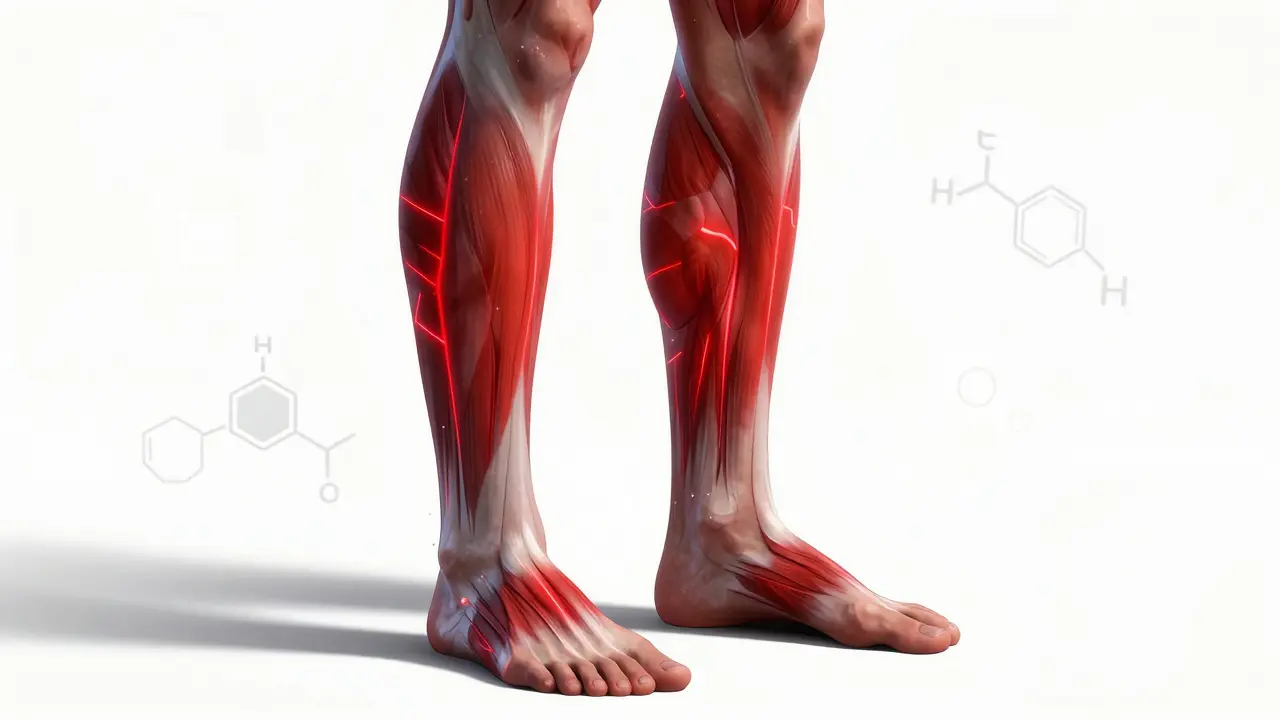
Taking a statin to protect your heart is one of the most common medical prescriptions in the world. But for some people, the trade-off comes in the form of unexplained muscle aches, weakness, or a heavy feeling in the limbs. While these symptoms might seem like a minor annoyance, they can actually be a warning sign of statin interactions with other medications. When certain drugs clash, they can spike the levels of statins in your blood, turning a helpful dose into one that potentially damages your muscle fibers.
What Exactly is Statin-Induced Myopathy?
When we talk about Myopathy, we're referring to a disease of the muscle tissue. In the context of cholesterol medication, this means the muscle fibers are affected and can't function correctly, leading to weakness and pain. For most people, this is mild, but in rare, severe cases, it can progress to Rhabdomyolysis. This is a serious condition where muscle fibers break down so rapidly that a protein called myoglobin floods the bloodstream, which can clog the filters in your kidneys and lead to kidney failure.
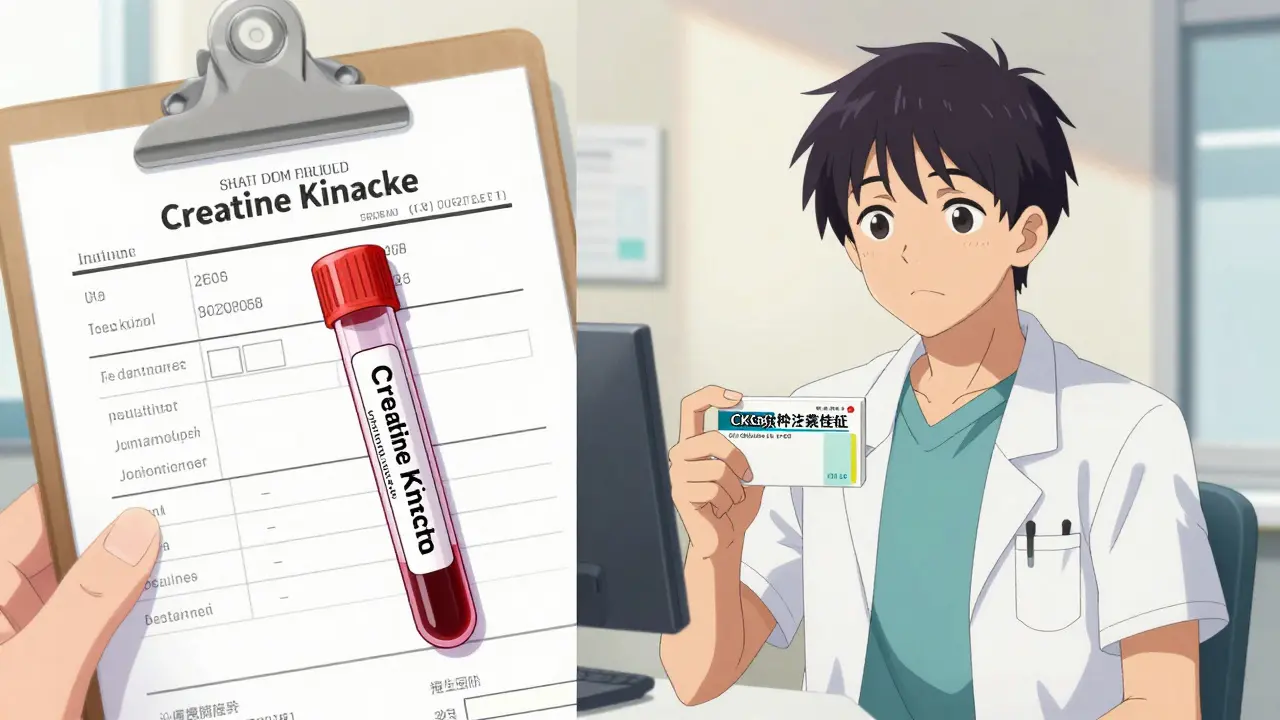
How do doctors tell the difference between a sore muscle from a workout and actual drug-induced myopathy? They look for muscle pain or weakness combined with a blood test for Creatine Kinase (CK). If your CK levels are more than ten times the normal upper limit, it's a clinical sign that your muscles are under significant stress.
The Chemistry of the Clash: Why Interactions Happen
Not all statins are created equal. They are generally split into two groups: lipophilic (fat-soluble) and hydrophilic (water-soluble). Lipophilic statins, such as Atorvastatin, Lovastatin, and Simvastatin, can easily enter muscle cells, which some evidence suggests might make them more likely to cause muscle issues. On the other hand, Hydrophilic statins like Pravastatin, Rosuvastatin, and Fluvastatin stay more in the bloodstream and the liver.
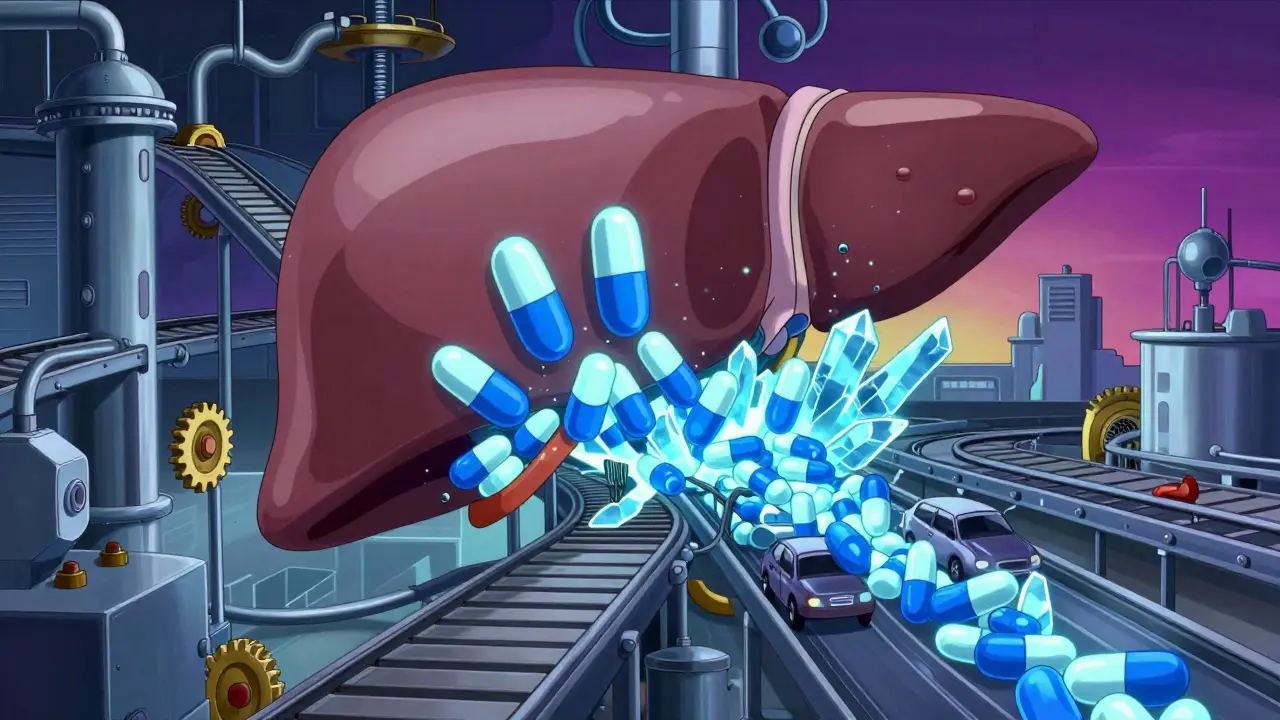
The real danger starts with the Cytochrome P450 (CYP) enzyme system in your liver. This is the body's primary "processing plant" for medications. Specifically, the CYP3A4 enzyme is responsible for breaking down several common statins. If you take another medication that blocks this enzyme, the statin can't be cleared from your system. It's like a traffic jam in your liver; the statins pile up in your blood, increasing the risk of muscle toxicity.
High-Risk Medications That Spike Myopathy Risk
Some medications are more dangerous when paired with statins than others. The risk level depends heavily on which specific statin you are taking and which interacting drug is introduced.
| Interacting Medication | Effect on Statin Levels | Highest Risk Statins | Risk Level |
|---|---|---|---|
| Cyclosporine | 3-13x increase | Most Statins | Very High |
| Clarithromycin / Erythromycin | Up to 10x increase | Simvastatin, Lovastatin | High |
| Gemfibrozil | ~2x increase | Most Statins | Moderate |
| Diltiazem / Verapamil | Moderate increase | Simvastatin | Moderate |
| Azithromycin | Negligible | Most Statins | Low |
For example, if you're on simvastatin and are prescribed clarithromycin for a sinus infection, your exposure to the statin could jump ten-fold. However, if you were taking azithromycin instead, there would be no significant interaction because azithromycin doesn't block the CYP3A4 enzyme. This is why the specific type of antibiotic matters immensely.
Who is Most at Risk?
Beyond drug interactions, your own biology plays a huge role. You aren't just a set of lab values; your lifestyle and age change how you process these drugs. Certain "red flags" that make a person more susceptible to myopathy include:
- Advanced Age: Those over 75 or 80 generally have a harder time clearing medications.
- Low BMI: A small body frame can lead to higher relative concentrations of the drug.
- Kidney Health: Chronic renal insufficiency means the body can't filter waste as effectively.
- Underactive Thyroid: Hypothyroidism is a well-known risk factor for muscle symptoms.
- Lifestyle Factors: Excessive alcohol use or extremely vigorous exercise can strain muscles, making them more vulnerable to statin effects.
There is also a genetic component. Some people have a variation in the SLCO1B1 gene, which affects how statins are transported into the liver. If you have this polymorphism, your risk of myopathy when taking simvastatin can increase by 4.5 times.
Managing the Risk: Strategies for Patients and Doctors
The goal isn't necessarily to stop taking statins-after all, they save lives by preventing heart attacks. Instead, the focus is on smarter management. If you are prescribed a short-course antibiotic like erythromycin, the standard advice is often to temporarily stop taking your simvastatin or lovastatin for those few days and restart them once the antibiotic course is finished.
For people who need chronic medications that interact with statins, switching to a hydrophilic option is often the best move. Pravastatin is frequently cited as having some of the lowest rates of muscle pain (around 0.6% to 1.4%). If you've had a bad experience with one statin, don't give up on the whole class; research shows that about 71% of people who can't tolerate one statin can actually tolerate a different one at a lower dose.
If you're truly "statin-intolerant," newer options like Bempedoic Acid have entered the market. Unlike statins, this medication does not penetrate skeletal muscle, which virtually eliminates the risk of myopathy, though it comes at a significantly higher price point.
Practical Checklist for Statin Users
If you are currently taking a statin, keep these practical tips in mind to stay safe:
- Report New Pain: If you feel unexplained muscle tenderness or weakness, tell your doctor immediately. Don't assume it's just "getting older."
- Mention All Meds: When getting a new prescription (especially antibiotics or heart meds), always remind the doctor you are on a statin.
- Check Your Dose: High-dose therapy (like simvastatin 80mg) carries a much higher risk of myopathy than low-dose alternatives. Ask if a lower dose is sufficient for your goals.
- Monitor CK Levels: If symptoms appear, ask for a Creatine Kinase blood test to see if your muscles are actually being damaged.
- Discuss Supplements: Some people use Coenzyme Q10 (100-200mg daily) to help with muscle symptoms, though you should discuss this with your provider first.
Can I take antibiotics while on a statin?
Yes, but it depends on the antibiotic. Macrolides like clarithromycin and erythromycin can dangerously increase statin levels in your blood. However, azithromycin typically does not have this interaction. Always check with your pharmacist to see if your specific antibiotic and statin combination is safe.
What is the difference between myalgia and myopathy?
Myalgia is simply muscle ache or pain without evidence of muscle damage. Myopathy is more serious; it involves actual muscle disease and weakness, usually confirmed by a blood test showing Creatine Kinase (CK) levels significantly above the normal range.
Which statin is the safest for muscles?
While every patient is different, hydrophilic statins like pravastatin often show lower rates of muscle-related side effects compared to lipophilic ones like simvastatin. Pravastatin, in particular, has some of the lowest reported incidences of myalgia.
Is rhabdomyolysis common?
No, rhabdomyolysis is very rare. While muscle aches (myalgia) are relatively common, the severe breakdown of muscle tissue that leads to kidney damage occurs in a tiny fraction of patients, even those with drug interactions.
Should I stop my statin if I feel muscle pain?
You should never stop a prescribed medication without consulting your doctor first. However, you should report the pain immediately. Your doctor may decide to pause the drug, lower the dose, or switch you to a different statin to see if the symptoms resolve.