
Working nights doesn’t just mean you’re up when everyone else is asleep-it means your body is fighting biology every single shift. If you’ve ever laid in bed during the day, headphones on, blackout curtains drawn, still wide awake while your mind races, you’re not broken. You might have shift work sleep disorder (SWSD). It’s not laziness. It’s not poor discipline. It’s a real, medically recognized circadian rhythm disorder caused by working when your body thinks it should be sleeping.
What Exactly Is Shift Work Sleep Disorder?
SWSD isn’t just feeling tired after a long night. It’s a persistent pattern of insomnia and excessive sleepiness that happens because your work schedule clashes with your natural sleep-wake cycle. The American Academy of Sleep Medicine officially recognized it as a distinct disorder in 2005, and since then, research has shown it affects 10-30% of people who work nights or rotating shifts.
Your body runs on a 24-hour clock called the circadian rhythm. It’s controlled by a tiny part of your brain called the suprachiasmatic nucleus. This clock tells your body when to release melatonin (the sleep hormone) and when to raise cortisol (the wake-up hormone). When you work nights, your brain still tries to follow the sun. Melatonin peaks between 2 a.m. and 4 a.m.-right when you’re supposed to be awake. And when you try to sleep during the day, sunlight and noise flood in, suppressing melatonin by up to 85%.
Most people on night shifts lose 1-4 hours of sleep per night. Over time, that adds up to chronic sleep debt. You’re not just groggy-you’re at higher risk for mistakes, accidents, and long-term health problems like heart disease, diabetes, and even certain cancers. The International Agency for Research on Cancer classifies shift work as “probably carcinogenic” because of how deeply it disrupts your biology.
How Do You Know If You Have It?
SWSD isn’t just about being tired. It’s about symptoms that last for at least a month (some guidelines say three months) and are directly tied to your work schedule. Here’s what to look for:
- Difficulty falling asleep or staying asleep during the day
- Excessive sleepiness during your night shift-even after a full night’s sleep
- Frequent dozing off at work, especially between 4 a.m. and 6 a.m.
- Headaches, irritability, trouble concentrating, or memory lapses
- Digestive issues like nausea or heartburn that only happen on shift days
- Relationship strain because you’re always asleep when family is awake
Many shift workers dismiss these as “just part of the job.” But if you’ve tried everything-caffeine, naps, quiet rooms-and you’re still struggling to get restorative sleep, it’s not normal. It’s SWSD.
One nurse on Reddit shared: “I work 12-hour night shifts in the ER. I use blackout curtains, white noise, and earplugs. I still only get 4 hours of sleep. I’m constantly exhausted, and I’m scared I’m going to miss something critical.” That’s not just fatigue. That’s a disorder.
Why Most People Fail at Managing Night Shifts
Most advice you hear about night shifts is wrong. “Just sleep more on your days off.” “Drink less coffee.” “Try melatonin.” These sound helpful, but they miss the real problem: circadian misalignment.
Here’s what doesn’t work:
- Trying to sleep in on your days off-this just resets your clock backward, making it harder to return to nights.
- Using caffeine all shift long-by the end, you’re jittery, and your body crashes harder.
- Wearing sunglasses after work and hoping that’s enough-sunlight still sneaks in through windows, car windshields, and even your eyelids.
- Believing you’ll “get used to it” after a few months-studies show only 2-5% of night workers ever fully adapt, even after years.
The truth? Your body doesn’t adapt. It fights. And the longer you fight it, the more damage you do.

What Actually Works: Evidence-Based Strategies
There are proven ways to manage SWSD-not by forcing your body to change, but by working with it. Here’s what the science says works:
1. Light Therapy During Your Shift
Exposure to bright light (2,000-10,000 lux) during your night shift signals to your brain that it’s daytime. This suppresses melatonin when you need to be alert and helps delay your internal clock.
Use a 10,000-lux light box for 30-60 minutes every 2 hours during your shift. Many hospitals now install these in break rooms. If your workplace doesn’t have them, ask HR. Some workers use portable LED panels or even bright desk lamps positioned at eye level. Don’t stare directly at the light-just have it in your peripheral vision while you work.
2. Melatonin Before Daytime Sleep
Take 0.5-5 mg of melatonin 30 minutes before you go to bed during the day. It’s not a sleeping pill-it’s a timing signal. It tells your brain, “It’s time to shut down.”
Studies show this improves sleep quality and duration by 30-50% in shift workers. Start with the lowest dose. Higher doses don’t work better-they just make you groggy.
3. Strategic Caffeine Use
Caffeine is your ally-but only if used right. Drink it early in your shift, ideally within the first 2-3 hours. Avoid it after the midpoint. A 200 mg dose (about two cups of coffee) is enough. More than that leads to crashes, anxiety, and worse sleep later.
One study found nurses who followed this rule reported 40% less sleepiness during the second half of their shifts.
4. Naps Before and During Your Shift
A 20-30 minute nap before your shift can boost alertness by up to 68%. If you can nap during a break, even better. Don’t nap longer than 30 minutes-longer naps can leave you groggy.
Many ER nurses now use “nap pods” or quiet rooms during breaks. If your workplace doesn’t provide them, find a dark corner, use an eye mask, and set an alarm.
5. Control Light Exposure After Your Shift
Wear blue-light-blocking sunglasses on your way home. Even a 10-minute walk in morning sunlight can reset your clock the wrong way. If you can, drive with windows up and use tinted film on your car windows.
At home, use blackout curtains, cover LED lights, and avoid screens for at least an hour before bed. If you must use your phone, turn on night mode and lower brightness to minimum.
What Your Workplace Should Be Doing
SWSD isn’t just your problem-it’s your employer’s responsibility. The CDC and NIOSH have clear guidelines:
- Limit consecutive night shifts to 3-4 days
- Allow at least 24 hours off after a night shift
- Provide dark, quiet, cool sleeping spaces for on-call workers
- Offer access to light therapy equipment
- Train managers to recognize signs of fatigue-related errors
But here’s the reality: only 22% of shift workers have access to proper sleeping facilities. And only 47% of hospitals screen for SWSD, up from 12% in 2018. If your workplace doesn’t support you, you’re not alone-but you should speak up. There’s data to back you up: every $1 spent on SWSD management saves $5.20 in reduced errors and absenteeism.
Who’s Most at Risk?
Not everyone on night shifts gets SWSD. Some people are naturally better suited to it. Research shows “night owls”-people who naturally prefer staying up late-adapt 37% better than “morning larks.”
Women are 28% more likely to develop SWSD than men. And risk increases with age. While 15% of workers aged 18-29 have it, that jumps to 34% for those 50-64. Your body’s ability to regulate circadian rhythms declines over time.
If you’re over 40, have young kids, or are managing chronic health conditions, your risk is higher. That doesn’t mean you can’t work nights-but it means you need to be more intentional with your recovery.
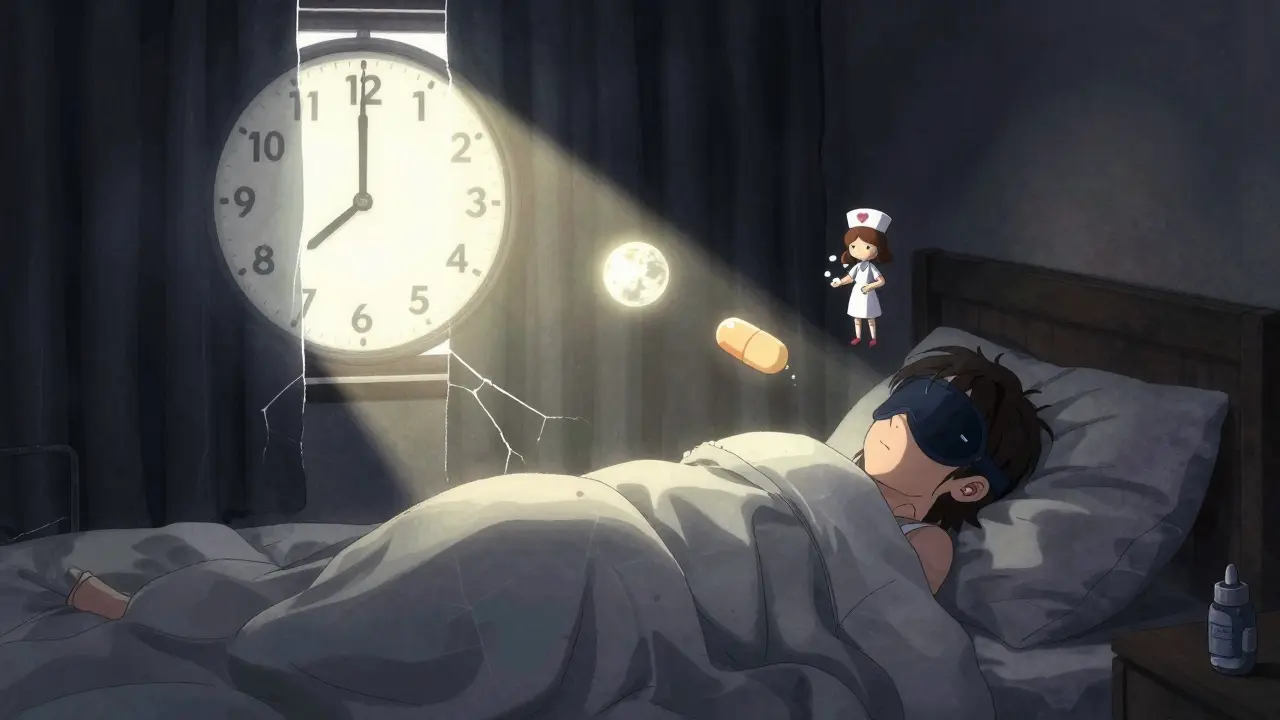
The New Medications: What’s Changed in 2025
In May 2023, the FDA approved a new drug called sodium oxybate for SWSD-related excessive sleepiness. It’s not a stimulant-it’s a brain chemical that helps regulate deep sleep and wakefulness. It’s been used for narcolepsy for years, but now it’s officially approved for shift workers.
It’s not a first-line treatment. It’s expensive and requires careful monitoring. But for people who’ve tried everything else and still can’t stay awake on the job, it’s a game-changer.
Modafinil and armodafinil have been used for years, but they’re not magic. They keep you awake but don’t fix the underlying sleep debt. They’re best used short-term while you implement lifestyle changes.
What’s Next for Shift Workers?
The future is personalization. Researchers are now testing genetic-based treatments. Some people have variations in the PER3 and CLOCK genes that make them more vulnerable to circadian disruption. In the next few years, you might get a simple saliva test that tells you if you’re a “high-risk” shift worker-and what specific strategies will work best for you.
Wearable tech is also advancing. Companies are rolling out devices that track your body temperature, light exposure, and melatonin levels to give you real-time feedback on your circadian health. By 2025, 68% of major healthcare systems plan to offer these to employees.
But the biggest shift? The growing understanding that permanent night work isn’t sustainable for most people. As Dr. Till Roenneberg says, “Human physiology is fundamentally incompatible with long-term night shift work.”
That’s why the best long-term solution isn’t just better sleep tricks-it’s better scheduling. Rotating shifts that move forward (morning → evening → night) are easier on the body than backward rotations. And giving workers control over their schedules reduces stress and improves outcomes.
Final Thoughts: You’re Not Alone
SWSD is real. It’s not your fault. And it’s not something you have to live with forever. You don’t need to quit your job. You don’t need to suffer silently. With the right tools-light, melatonin, naps, caffeine timing, and workplace advocacy-you can reclaim your sleep and protect your health.
Start small. Pick one strategy-maybe melatonin before bed or a 20-minute nap before your shift-and stick with it for two weeks. Track how you feel. If it helps, add another. If you’re still struggling, talk to a sleep specialist. There are clinics that specialize in shift work disorders.
You’re not broken. You’re just working against your biology. And now you know how to fight back.
Diana Alime
December 24, 2025 AT 00:15so i tried the melatonin thing and now i just lay there for 4 hours thinking about how my boss is gonna fire me if i miss my shift again. why is everything so hard??
siddharth tiwari
December 24, 2025 AT 20:11they say its a disorder but i think its just the government controlling our sleep patterns so we dont think too much. black out curtains? nah. they got emitters in the walls. you feel that buzz at 3am? thats not the fridge. its them.
Harsh Khandelwal
December 26, 2025 AT 15:30lol the fda approved sodium oxybate? next theyll say coffee is a controlled substance and we gotta apply for a permit to stay awake. they got us all hooked on capitalism and now they wanna sell us pills to survive it. classic.
Raja P
December 27, 2025 AT 04:34i work nights too and honestly the nap before shift was the only thing that helped. even 15 mins. just put on a mask and set a timer. no guilt. you’re not lazy, you’re just smart.
Andy Grace
December 27, 2025 AT 08:47i’ve been doing this for 12 years. the light therapy thing actually works if you do it right. not the fancy box, just a bright led lamp on your desk. you don’t need to stare at it. just let it be there. your brain notices.
Jillian Angus
December 28, 2025 AT 14:03my cat sleeps on my chest during the day and i swear she’s my circadian rhythm coach. no caffeine. no melatonin. just purring. weirdly it works.
Gray Dedoiko
December 29, 2025 AT 22:42the part about rotating shifts forward instead of backward? that’s gold. my buddy switched from night → morning → evening and he finally sleeps like a normal human. no magic, just science.
Aurora Daisy
December 31, 2025 AT 05:30of course americans think they can hack biology with a lightbox and a pill. in my country we just accept that night work kills you slowly and we get paid extra. no therapy needed.
Jeffrey Frye
January 1, 2026 AT 21:41you mention 10-30% of shift workers have swsd. but did you control for depression? or alcohol use? or screen time before bed? correlation isn’t causation. also, melatonin is unregulated in the us - how do you know what’s actually in those pills? i’d rather just drink coffee and hope for the best.
John Pearce CP
January 2, 2026 AT 18:45the real issue is not sleep. its the erosion of american work ethic. when people expect science to fix their laziness we all lose. just wake up earlier. quit complaining. your body is not a broken machine. its a reflection of your will.
Delilah Rose
January 2, 2026 AT 20:20i just want to say thank you for writing this. i’ve been working nights for 8 years and every time i feel like i’m losing my mind, i read something like this and realize i’m not crazy. it’s not me. it’s the schedule. and knowing that makes me feel less alone. i started using the nap before shift and honestly? i cried the first time i slept for 5 hours straight. i didn’t know i could still do that.
Bartholomew Henry Allen
January 3, 2026 AT 14:27the american medical establishment has turned sleep into a commodity. they sell you light boxes and pills while corporations profit from 24/7 operations. this is not a health issue. this is a capitalist exploitation crisis. the solution is not melatonin. it is unionizing. it is demanding better hours. it is refusing to be a cog in a machine that grinds people into dust.