Why Infections Are the Biggest Threat After a Kidney Transplant
You’ve made it through surgery. Your new kidney is working. But the real danger doesn’t come from the operation-it comes from what happens next. Because of the drugs you need to take to stop your body from rejecting the new organ, your immune system is turned down. Not just a little. A lot. That means everyday germs that used to give you a cold can now turn into life-threatening infections.
One in three kidney transplant recipients gets a serious infection within the first year. Bacteria, viruses, fungi-they all take advantage of your weakened defenses. The most common? Urinary tract infections, pneumonia, and viruses like cytomegalovirus (CMV). CMV alone increases your risk of organ rejection by up to 34%. It’s not just about feeling sick. It’s about losing your transplant.
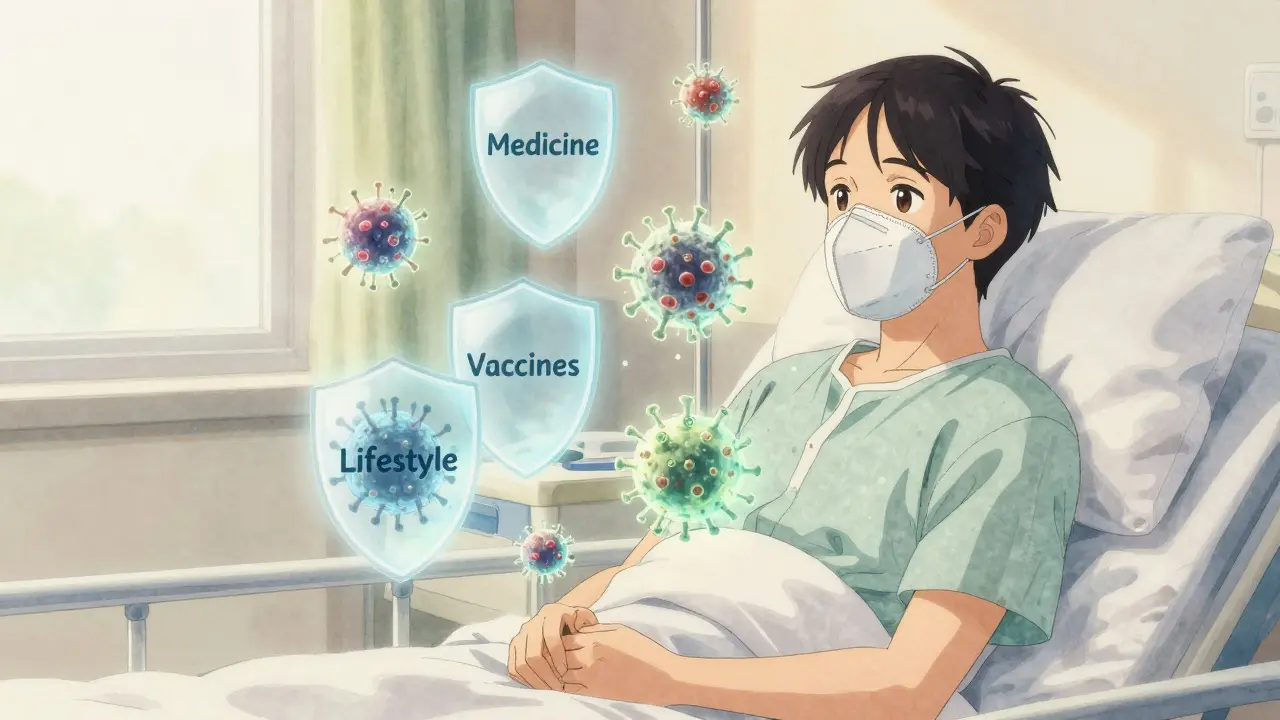
Three Layers of Protection: Medicine, Vaccines, and Lifestyle
There’s no single fix. Staying safe after a transplant means using three tools together: preventive drugs, smart vaccination, and daily habits that cut your exposure to germs.
Preventive Medicines: The First Line of Defense
Right after your transplant, you’ll start on antiviral, antibacterial, or antifungal meds-not because you’re sick, but to stop infections before they start. This is called prophylaxis.
- For CMV: If you’re a recipient with a donor who had the virus (D+/R-), you’ll take valganciclovir for 3 to 6 months. It’s more effective than older drugs like ganciclovir because your body absorbs it better. For others, doctors may monitor your blood for early signs of CMV and start treatment only if the virus shows up-this is called preemptive therapy.
- For herpes viruses: Acyclovir or valacyclovir are given for 1 to 3 months to prevent cold sores or shingles from flaring up.
- For Pneumocystis pneumonia: Trimethoprim-sulfamethoxazole is standard for the first 6 months. It also helps prevent some urinary tract infections.
These aren’t optional. Skipping doses or stopping early because you feel fine is one of the biggest mistakes patients make. The risk doesn’t vanish after a few months. It just shifts.
Vaccines: Timing Is Everything
You can’t get live vaccines after a transplant-things like MMR, chickenpox, or nasal flu spray. They contain weakened viruses that could make you sick. But inactivated vaccines? They’re safe-and critical.
- Before transplant: Get caught up on all your shots if you can. Hepatitis B, pneumococcal, tetanus, and flu vaccines are most effective when your immune system is still strong.
- After transplant: Wait at least 6 months. Then get the flu shot (injectable only), Tdap, and pneumococcal vaccines. Some centers recommend a second pneumococcal dose a year later.
- Family members: Your loved ones should be up to date on their flu, COVID, and whooping cough vaccines. This creates a "cocoon" around you. If they’re sick, they won’t bring it home.
Don’t wait for your doctor to bring it up. Ask for your vaccine schedule at your 3-month checkup. Many patients miss this window-and pay for it later.
Lifestyle Changes: What You Eat, Touch, and Breathe
Medicines and vaccines help, but your daily choices matter just as much.
- Food safety: Avoid raw seafood, undercooked meat, unpasteurized cheeses (like brie or feta), and deli meats unless they’re reheated until steaming. Listeria from these foods can cause sepsis in transplant patients.
- Water: Don’t drink from garden hoses or unfiltered tap water if you’re in an area with old pipes. Use bottled or filtered water for drinking and brushing teeth if your water quality is questionable.
- Soil and plants: Wear gloves when gardening. Soil carries fungi like histoplasmosis and aspergillus. If you live in the Ohio River Valley or the Southwest, these are especially dangerous.
- Pets: Cats can carry toxoplasmosis. Don’t clean litter boxes. Dogs can carry bacteria from their mouths or paws. Wash your hands after petting them. Don’t let them lick your face.
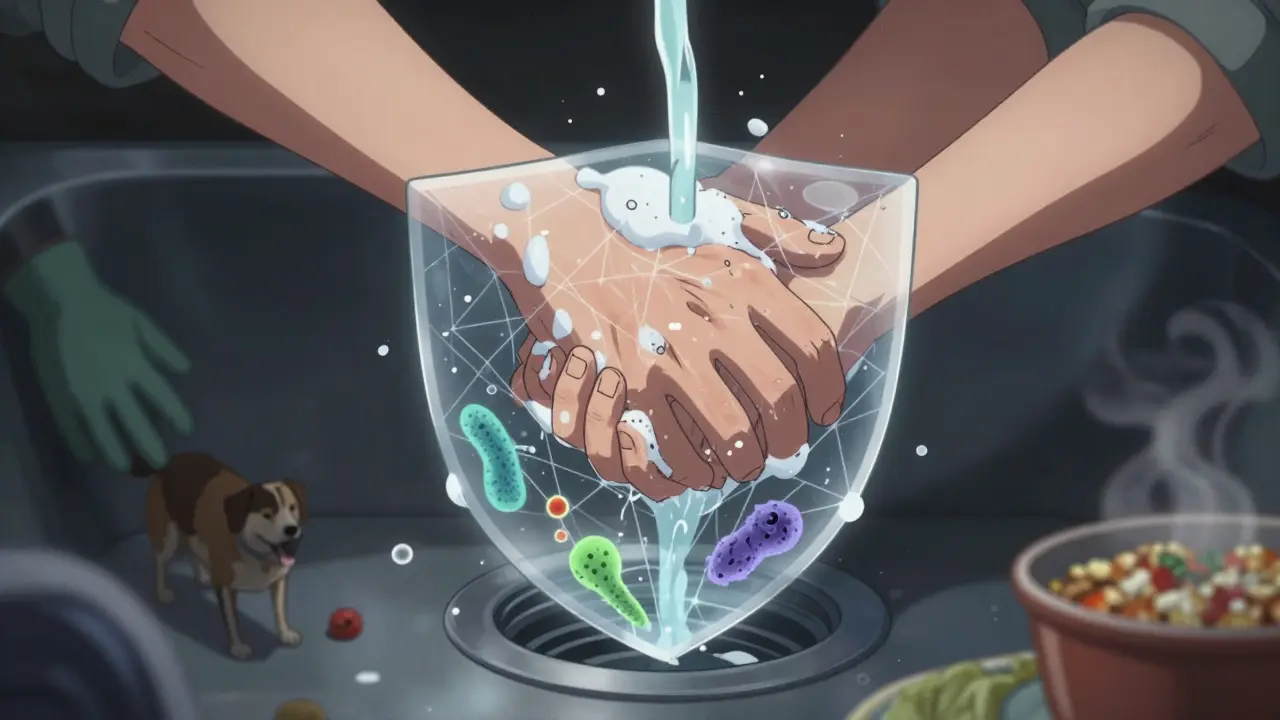
- Hand hygiene: Wash with soap and water for 20 seconds. Use alcohol-based sanitizer when you can’t wash. Do it before eating, after using the bathroom, and after being around crowds.
- Masks in public: During flu season or in hospitals, wear a well-fitting N95 or KN95 mask. Respiratory viruses like RSV and COVID hit transplant patients harder than anyone else.
Monitoring: Catching Infections Before They Cause Damage
Waiting for symptoms to show up is too late. By then, the infection might already be spreading.
Regular blood tests are your early warning system:
- CMV: PCR tests check for viral DNA in your blood every 1-2 weeks for the first 3 months, then monthly. If levels rise, you start antivirals before you feel sick.
- Fungal infections: Blood tests for beta-D-glucan and galactomannan can detect aspergillosis before a chest X-ray shows anything.
- Drug levels: Your immunosuppressants need monitoring. Too much increases infection risk. Too little raises rejection risk. It’s a tightrope walk.
- Screening for resistant bacteria: If you’ve been hospitalized or had a long ICU stay, your doctor may test your stool or skin for multidrug-resistant organisms like MRSA or ESBL-producing bacteria. These are hard to treat and can spread fast in transplant units.
Keep a symptom log. A low-grade fever, new cough, diarrhea, or even just feeling "off" for more than a day could be the first sign. Call your transplant team immediately-don’t wait for your next appointment.
The New Frontiers: What’s Coming Next
Science is catching up. In the next few years, you’ll see:
- CMV vaccines: Several are in clinical trials. None are approved yet, but if one works, it could replace years of antiviral drugs.
- Fecal transplants: For patients with recurrent C. diff or heavy colonization by drug-resistant bacteria, transplanting healthy gut bacteria from a donor is showing promise in early studies.
- Personalized immune monitoring: Instead of one-size-fits-all drugs, doctors will use blood tests to measure your actual immune function. If your T-cells are recovering faster than average, they might reduce your anti-rejection meds sooner-and lower your infection risk.
These aren’t science fiction. They’re already being tested in major transplant centers.
What Happens After 6 Months?
Many patients think they’re "out of the woods" after six months. Not true.
By then, you’re probably off your strongest prophylaxis drugs. But your immune system is still playing catch-up. Community infections-flu, colds, strep throat-become your biggest threat. And viruses like CMV can reappear months or even years later if your immune system dips again.
Stay vigilant. Keep your vaccines current. Keep washing your hands. Keep avoiding risky foods. Keep calling your team when something feels wrong.
When to Call Your Transplant Team
Don’t wait. Don’t Google it. Don’t assume it’s nothing. Call immediately if you have:
- Fever over 100.4°F (38°C) for more than 24 hours
- New cough, shortness of breath, or chest pain
- Diarrhea lasting more than 2 days
- Redness, swelling, or pus around your surgical site
- Unexplained fatigue or confusion
- Any new rash or skin lesion
Early action saves transplants. And lives.