
Medication Organizer Selector
Find Your Perfect Medication Organizer
Take this simple quiz to identify which pill organizer system best matches your needs based on your medication regimen, tech comfort, and living situation.
Why Medication Organization Matters More Than You Think
Every year, thousands of people end up in the hospital because they took the wrong pill, the wrong dose, or forgot to take it altogether. In the U.S., medication errors cause around 7,000 deaths annually - and many of these are preventable. If you or someone you care for takes multiple medications daily, organizing them isn’t just convenient - it’s a safety plan.
Think about it: if you’re managing five or six different pills, at different times of day, with varying dosages, it’s easy to mix them up. A missed dose of blood pressure medicine can spike your numbers. Taking an extra painkiller can damage your liver. A forgotten anticoagulant can lead to a clot. These aren’t hypotheticals. They happen every day.
The good news? Simple tools and smart habits can cut those risks dramatically. Whether you’re using a plastic box from the pharmacy or a smart dispenser that texts your family, the right system keeps you safe, reduces stress, and gives you back control.
Manual Pill Organizers: Simple, Affordable, and Still Effective
The most common tool for organizing meds is the humble weekly pill organizer. You’ve probably seen them - a plastic box with seven compartments, each split into morning, noon, evening, and bedtime slots. They cost between $3 and $25. No batteries. No Wi-Fi. No setup.
They work because they’re visual. You see the empty slots and know you’ve taken your pills. You can fill them once a week on Sunday. Many come with large, easy-to-read labels. Some even have locking lids or built-in alarms.
But they’re not perfect. If you forget to refill them, you’re back to square one. If you take a pill early, you might accidentally double up later. And if you’re managing more than 16 pills a day, you’ll need multiple boxes - which increases the chance of mixing them up.
Still, for many people, especially those with simple regimens or limited tech comfort, this is the gold standard. A 2023 study found that users of basic pill organizers had a 62% adherence rate - better than no system at all, but far from ideal.
Digital Pill Dispensers: Automation That Actually Works
If you’re tired of guessing whether you took your meds, or if someone you care for lives far away and you worry about missed doses, a smart pill dispenser might be the answer.
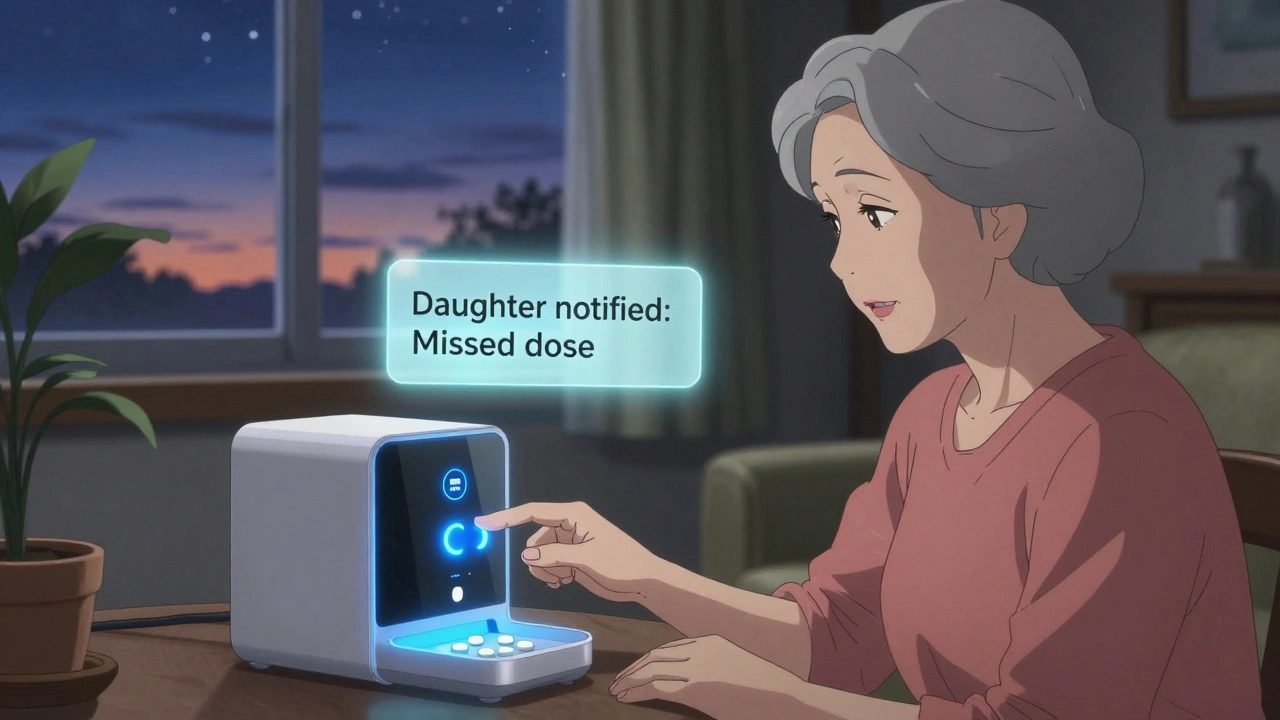
Devices like the MedaCube or Hero Health hold up to 90 days of medication. They automatically dispense pills at the right time, with bright lights and loud audio alerts. If you don’t take the pill, the device sends a text or call to a family member or caregiver. Some even let you check your history through an app.
These aren’t just fancy boxes. They’re safety nets. One 73-year-old woman in Sydney told a review site: “My daughter lives 300 miles away. Now she gets a notification if I skip my heart pill. She sleeps better. So do I.”
Adherence rates jump to 89% with these systems, according to independent testing. That’s a huge difference from the 50% average for people with chronic conditions.
The catch? They cost $1,499 upfront. No monthly fees for MedaCube, but some models like the Lifeline Dispenser charge $39.99 a month. You need Wi-Fi, a power outlet, and someone who can help set it up. About 37% of seniors struggle with touchscreen interfaces, so if the user isn’t tech-savvy, you’ll need a helper.
Also, don’t assume it’s foolproof. In 2024, a Reddit user reported his MedaCube screen stopped working after four months. Repair costs were $299 - almost as much as a new one. Backup power packs and cellular options exist, but they add to the cost.
Pharmacy-Integrated Systems: For Complex Regimens and Care Facilities
If you’re on more than 10 medications, or your doses change often (like blood thinners or diabetes drugs), a pharmacy-integrated system might be better than a home dispenser.
Systems like DosePacker’s CareCommunityOS don’t sit on your nightstand. They’re used by pharmacies to pre-sort your pills into daily blister packs. Each pack has your name, the date, and the time to take each pill. The pharmacy sends them to you weekly or monthly.
These systems support up to 48 different medications with variable dosing - perfect for people with multiple conditions. They’re also HIPAA-compliant and connect directly to your doctor’s records. If your doctor changes your warfarin dose, the pharmacy updates your blister packs automatically.
But here’s the catch: these systems aren’t sold to individuals. They’re for clinics, nursing homes, and home care agencies. The setup cost per facility averages $12,500. So unless you’re in a care program or have a case manager, you won’t access this directly.
Still, if you’re working with a home health nurse or a pharmacist-led care team, ask if they use this system. It’s one of the most reliable ways to avoid errors with complex regimens.
App-Based Tracking: For the Tech-Savvy and Younger Users
If you’re under 65 and comfortable with your phone, an app might be all you need. Apps like PillDrill, Medisafe, or MyTherapy let you log your meds, set reminders, and track refills. Some sync with smartwatches or send alerts to loved ones.
They’re free or low-cost. Many integrate with your pharmacy’s refill system. You can see a calendar of what you’ve taken and what’s coming up.
But apps rely on you to open them and tap “taken.” If you forget your phone, or don’t feel like tapping the button, the system fails. A 2022 study found that while apps improved adherence by 18-26%, users often stopped using them after a few months.
They’re great for people who are already tech-literate - like a 50-year-old with high blood pressure who checks his phone five times a day. But for someone over 75 who doesn’t use apps regularly, they’re more hassle than help.
What Works Best? Matching the Tool to the Person
There’s no one-size-fits-all solution. The right system depends on three things: how many pills you take, how often your regimen changes, and how comfortable you are with technology.
Here’s a quick guide:
- Simple regimen (1-4 pills/day, same time): A $10 weekly pill box works fine.
- Complex regimen (5+ pills/day, different times): Use a pharmacy blister pack system if available, or a smart dispenser like MedaCube.
- Lives alone, no tech support: Stick with a basic pill box with large print and a written schedule taped to the fridge.
- Family lives far away: Invest in a smart dispenser with caregiver alerts. The peace of mind is worth the cost.
- Has memory issues or dementia: Avoid apps. Use a dispenser with audio alerts and locked compartments to prevent overuse.
Also, consider backup plans. Power outages? Get a battery pack. Wi-Fi down? Use a pill box as a fallback. Tech fails. Humans need backups.
Common Pitfalls and How to Avoid Them
Even the best system can fail if you don’t use it right.
- Wrong loading: 34% of errors in smart dispensers happen because someone puts the wrong pill in the wrong slot. Always double-check with your pharmacist. Use color-coded labels if you’re blind or have low vision.
- Power or Wi-Fi failure: 22% of MedaCube users reported missed alerts during outages. Buy a battery backup or keep a paper list.
- Over-reliance: A 2023 FDA alert warned that automated systems can create a false sense of security. Always verify your pills visually - don’t assume the machine got it right.
- Not updating the system: If your doctor adds a new pill or changes your dose, update your dispenser or app immediately. Out-of-date info is dangerous.
- No caregiver involvement: 58% of system failures happen because no one in the household knows how to refill or troubleshoot. Train someone - even if it’s just for emergencies.

What’s Coming Next? AI, Integration, and Better Safety
The field is evolving fast. In early 2024, MedaCube released Version 3.0 with AI that predicts when you’re likely to miss a dose - and nudges you before it happens. DosePacker now integrates with 92% of major pharmacy chains, so your blister packs update automatically when your prescription changes.
More systems are adding voice control. You can now say, “Alexa, did I take my pill?” and get an answer. Some hospitals are testing systems that link dispensers directly to your EHR - so if you go to the ER, doctors instantly see your full med list.
But the biggest trend? Hybrid models. The most successful programs combine physical dispensers with human support. A 2024 study from NBMTM showed that patients who got weekly pharmacist check-ins - even just over the phone - had 92% adherence. Tech helps. People help more.
Where to Start Today
Don’t wait for the perfect system. Start simple.
- Write down every medication you take - name, dose, time, reason.
- Go to your pharmacy and ask for a free weekly pill organizer. Most will give you one.
- Fill it with your current meds. Double-check with your pharmacist.
- Put it where you’ll see it - next to your toothbrush, coffee maker, or breakfast plate.
- Set a phone alarm for the first dose. Don’t rely on memory.
If you’re still missing doses after a week, talk to your doctor or pharmacist. Ask about smart dispensers or pharmacy blister packs. Don’t be afraid to ask for help. Medication safety isn’t something you should handle alone.
Frequently Asked Questions
Are pill organizers safe for all medications?
Most pills are fine in organizers, but some shouldn’t be removed from their original packaging. Medications that are sensitive to light, moisture, or air - like nitroglycerin, certain antibiotics, or sublingual tablets - should stay in their original bottles. Always check with your pharmacist before transferring any pills.
Can I use a pill organizer if I have trouble seeing?
Yes. Many organizers come with large print labels, tactile indicators (like raised dots for morning vs. night), or even color-coded compartments. Some pharmacies offer Braille labels or audio-assisted dispensers. Ask your pharmacist about accessibility options - they’re required by law to help.
What if I travel often? Can I take a smart dispenser with me?
Most smart dispensers like MedaCube are portable and work on 110-240V power, so they’ll work overseas. But they need Wi-Fi to send alerts, which may not be reliable abroad. For travel, a compact weekly organizer with a locking lid is often more practical. Always carry a printed list of your meds in case of emergencies.
Do insurance plans cover smart pill dispensers?
Most standard health insurance plans don’t cover them. However, some Medicare Advantage plans or Medicaid waivers may pay for them if prescribed by a doctor for a chronic condition. Ask your pharmacist or care coordinator - they often know which programs offer coverage. Veterans may qualify through the VA.
How do I know if my pill organizer is working?
Check it daily. Look at the empty compartments - if they’re still full at the right time, you missed a dose. If you’re using an app or smart device, review the log each night. If you notice a pattern of missed doses, talk to your doctor. You may need a different system or extra support.
Next Steps: Build Your Safety Plan
Start today. Grab a pen and paper. List every medication you take. Write down when and why. Then, go to your pharmacy and ask for a free pill organizer. Fill it. Set one alarm on your phone. That’s your safety plan in action.
If you’re helping someone else, sit with them for 20 minutes. Help them load their pills. Show them how to check the box. Teach them to call you if they’re unsure. Don’t assume they know how to use it.
Medication safety isn’t about buying the most expensive gadget. It’s about consistency, awareness, and support. The right system - simple or high-tech - gives you back your peace of mind. And that’s worth more than any price tag.
Monica Evan
December 11, 2025 AT 19:25Jean Claude de La Ronde
December 13, 2025 AT 04:31Jim Irish
December 13, 2025 AT 13:16Mia Kingsley
December 14, 2025 AT 01:25Katherine Liu-Bevan
December 14, 2025 AT 07:38Courtney Blake
December 14, 2025 AT 22:53Kristi Pope
December 16, 2025 AT 22:42Eddie Bennett
December 17, 2025 AT 10:22Doris Lee
December 18, 2025 AT 19:04