Neonatal Kernicterus Risk Calculator
Kernicterus Risk Assessment
This tool helps determine the risk of kernicterus when considering medications for jaundiced newborns. Based on AAP guidelines, it evaluates risk factors including bilirubin levels, age, and medication type.
Risk Assessment Results
When a newborn turns yellow, it’s common. Most babies have mild jaundice in the first few days of life. It’s usually harmless, fades on its own, and doesn’t need treatment. But in some cases, that yellow tint isn’t just a passing phase-it’s a warning sign. And if a medication like sulfonamide is given at the wrong time, it can push a baby into a life-altering crisis called kernicterus.
What Is Kernicterus, Really?
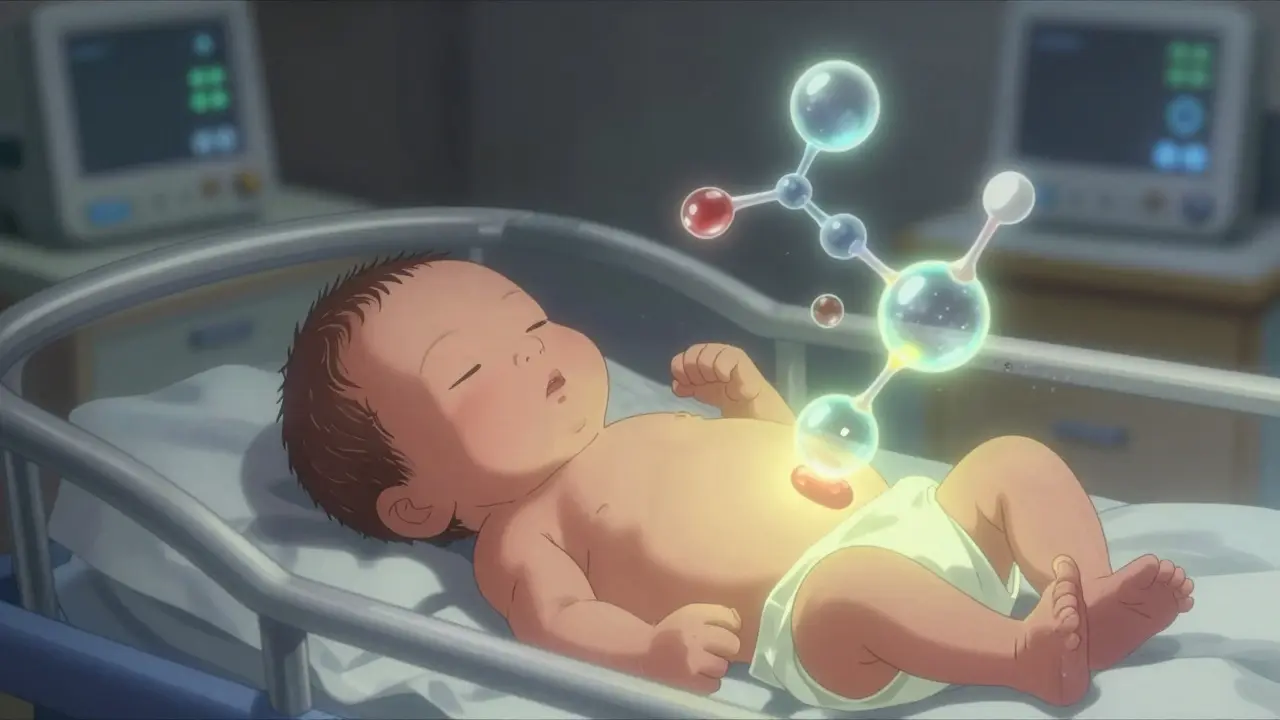
Kernicterus isn’t a disease you catch. It’s brain damage caused by too much bilirubin in a newborn’s blood. Bilirubin is a yellow pigment made when red blood cells break down. In adults, the liver clears it easily. In newborns, especially in the first week, the liver isn’t ready. That’s why jaundice happens. But here’s the danger: when bilirubin levels get too high, it can cross the blood-brain barrier-the protective wall around the brain-and stick to nerve cells. This isn’t just temporary. It can cause permanent damage to hearing, movement, and even cognitive function. Babies who survive may need lifelong care. The good news? Kernicterus is almost always preventable. The bad news? It still happens, often because of something that should’ve been avoided: certain medications.Why Sulfonamides Are a Big Risk
Sulfonamides-like sulfisoxazole and sulfamethoxazole-are antibiotics. They’ve been around since the 1930s. They’re cheap. In some places, they’re still used because alternatives cost more. But in newborns? They’re dangerous. Here’s why: bilirubin in the blood doesn’t float around freely. It binds to a protein called albumin, which keeps it from entering the brain. Sulfonamides compete with bilirubin for those binding spots. When sulfonamides win, bilirubin gets kicked off. Suddenly, you’ve got a spike in free bilirubin-the kind that can slip into the brain. Studies show sulfonamides can displace 25-30% of bilirubin from albumin at normal doses. That’s not a small amount. In a baby with bilirubin levels already near the treatment threshold, this single drug can push them over the edge. One case documented in a Texas NICU showed bilirubin jumping from 14.2 mg/dL to 22.7 mg/dL in just 12 hours after giving sulfisoxazole for a urinary tract infection. The baby needed emergency phototherapy and nearly required an exchange transfusion. The American Academy of Pediatrics (AAP) has been clear since 2022: avoid sulfonamides in newborns if bilirubin levels are above 75% of the phototherapy threshold. That’s not a suggestion. It’s a warning backed by data.Other Medications That Can Trigger the Same Danger
Sulfonamides aren’t the only offenders. Other drugs can do the same thing:- Ceftriaxone-a common IV antibiotic-can displace 15-20% of bilirubin. It’s used often in newborns with suspected infections. Even one dose can be risky if bilirubin is high.
- Aspirin (salicylates)-yes, even baby aspirin. It’s rarely used in newborns now, but it still pops up in accidental exposures.
- Furosemide-a diuretic sometimes given for fluid overload-can reduce albumin levels and increase free bilirubin.

Who’s Most at Risk?
Not all newborns are the same. Some are far more vulnerable:- Preterm babies-their livers are even less mature, and their blood-brain barrier is weaker.
- Babies with G6PD deficiency-this inherited condition affects about 7% of people worldwide. These babies break down red blood cells faster, creating more bilirubin. Giving sulfonamides to them can trigger severe hemolysis, causing bilirubin to skyrocket.
- Babies with acidosis or low albumin-if albumin is below 3.0 g/dL, there’s less protein to bind bilirubin. Acidosis makes bilirubin more likely to cross into the brain.
What Should Doctors and Parents Do?
Prevention isn’t complicated. It’s about checking the basics before giving any medication. The AAP recommends a simple 5-step checklist:- Check the baby’s total serum bilirubin level.
- Make sure it’s below 75% of the phototherapy threshold for their age in hours.
- Test albumin-if it’s under 3.0 g/dL, avoid bilirubin-displacing drugs.
- Screen for G6PD deficiency, especially in babies of African, Mediterranean, or Southeast Asian descent.
- Choose a safer antibiotic-like amoxicillin-clavulanate-instead of sulfonamides.
The Cost of a Mistake
Kernicterus isn’t just a medical error. It’s a lifelong burden. The Birth Injury Justice Center reviewed malpractice cases and found 12% involved inappropriate sulfonamide use. The average settlement? $4.2 million. That’s not just for medical bills. It’s for speech therapy, physical therapy, special education, wheelchairs, home modifications-the cost of a child who can’t walk, talk, or hear properly because a simple medication was given without checking the bilirubin level. One nurse practitioner in Texas told the AAP forum: “We had a baby with a bilirubin of 14.2. We gave sulfisoxazole because the infection seemed mild. Within 12 hours, he was in crisis. We thought we were helping. We almost killed him.”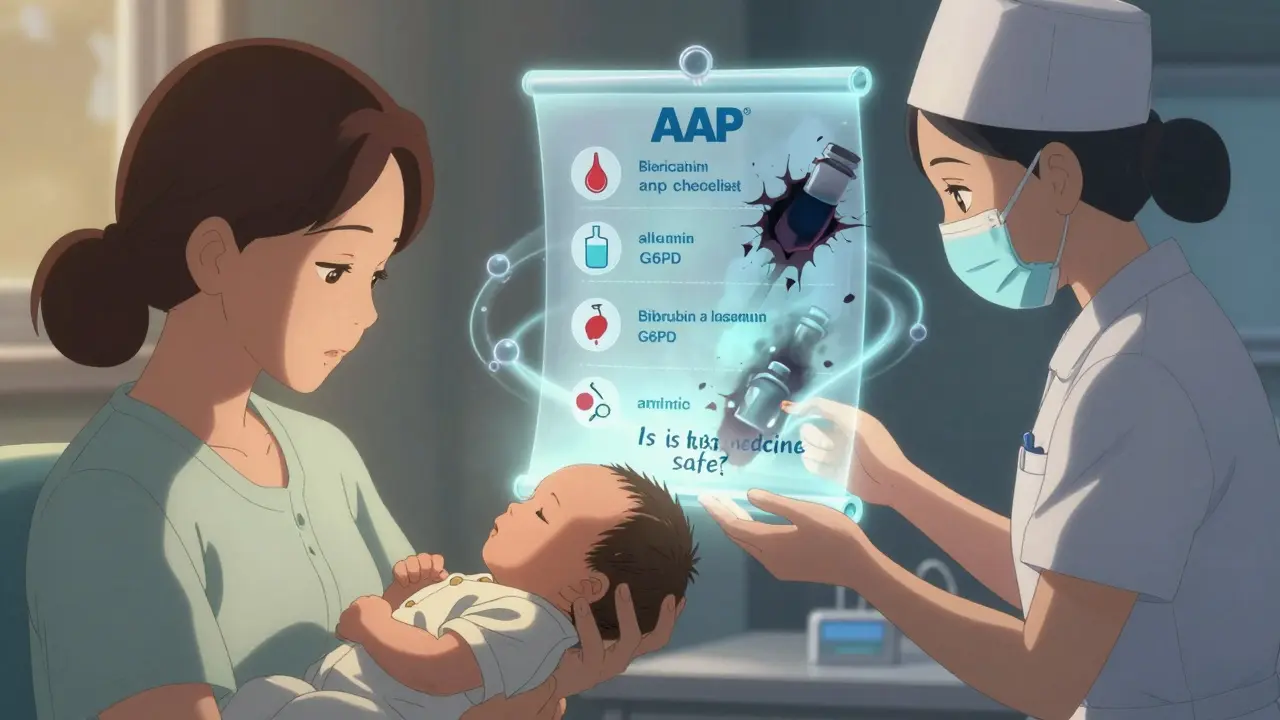
What’s Changing Now?
Good things are happening. Sulfonamide use in newborns has dropped from 28% of antibiotic prescriptions in 1990 to under 2% in 2022. The FDA has required black box warnings on sulfonamide labels since 2007. The AAP updated its guidelines in April 2023 to include exact bilirubin thresholds for every hour of life. The National Institutes of Health just funded a $2.4 million project to develop point-of-care devices that measure free bilirubin-not just total bilirubin. That’s a game-changer. Right now, most hospitals only test total bilirubin. But free bilirubin is what actually causes damage. A quick finger-stick test could prevent thousands of near-misses.What You Can Do
If you’re a parent:- Know your baby’s bilirubin level. Ask for it. Don’t assume it’s “just jaundice.”
- If your baby is being treated for an infection, ask: “Is this antibiotic safe for jaundiced newborns?”
- Ask if they’ve checked for G6PD deficiency, especially if your family has roots in Africa, the Mediterranean, or Asia.
- Never give sulfonamides to a newborn with bilirubin above 75% of the phototherapy threshold.
- Use the AAP’s Bilirubin Exposure Risk Calculator-it’s free, updated, and built into many hospital systems.
- If you’re in a clinic without rapid testing, use pre-printed order sets that automatically block high-risk drugs when bilirubin is elevated.
Final Thought
Kernicterus is a quiet disaster. It doesn’t make headlines. But it changes lives forever. And it’s not caused by bad luck. It’s caused by a missed check, a skipped test, a drug given without thinking. We have the tools. We have the guidelines. We have the data. What we need now is consistency. Every newborn deserves a safe start. That means every medication, no matter how small it seems, must be checked-not just for infection, but for the risk it carries to a baby’s brain.Can newborns ever take sulfonamides safely?
Sulfonamides should be avoided entirely in infants under 2 months old, especially if they have jaundice. Even if bilirubin levels seem normal, the risk of displacement is too high. Safer alternatives like amoxicillin-clavulanate are just as effective for most infections. There are no safe scenarios where sulfonamides are the best choice for a newborn.
What should I do if my baby was given a sulfonamide and is jaundiced?
Contact your pediatrician or go to the emergency room immediately. Request a total serum bilirubin test and, if possible, a free bilirubin level. Monitor for signs of worsening jaundice-yellowing skin beyond the face, poor feeding, lethargy, or high-pitched crying. Early phototherapy can prevent damage, but time is critical.
Is kernicterus always obvious right away?
No. Early signs like poor feeding or irritability are easy to miss. Permanent damage-like hearing loss, cerebral palsy, or intellectual disability-often doesn’t show up until months or years later. That’s why prevention is the only reliable strategy. By the time symptoms appear, brain injury may already be done.
Are there any alternatives to sulfonamides for newborn infections?
Yes. Amoxicillin-clavulanate is the preferred first-line antibiotic for most bacterial infections in newborns, including urinary tract infections and early-onset sepsis. It doesn’t displace bilirubin and has a strong safety profile. Cephalosporins like cefotaxime are also safe alternatives, though ceftriaxone requires caution due to its own bilirubin-displacing effect.
How do I know if my baby has G6PD deficiency?
G6PD deficiency is often screened at birth in high-risk populations, but not universally. If your baby’s family background includes African, Mediterranean, Middle Eastern, or Southeast Asian ancestry, ask for a G6PD test before any medication is given. A simple blood test can prevent a dangerous reaction. If the test isn’t done, assume the baby could be at risk and avoid sulfonamides and other oxidizing drugs.
Kayleigh Campbell
December 15, 2025 AT 10:57So let me get this straight - we’re still giving antibiotics to newborns like they’re candy, and the only thing stopping disaster is a number on a screen? That’s not medicine. That’s Russian roulette with a baby’s brain.
And the fact that this is still happening in 2024? We’re not just failing systems. We’re failing babies. No wonder parents are terrified to trust hospitals.
I’ve seen a NICU nurse cry because she gave sulfisoxazole without checking bilirubin. She didn’t know. No one trained her. No alert popped up. Just a baby, a bottle, and a death sentence wrapped in a prescription.
It’s not about the drug. It’s about the culture. We treat newborns like tiny adults with fewer rules. We don’t. They’re fragile. Their brains are still being wired. One wrong pill and you’re not just changing a life - you’re erasing potential.
And yet, we still don’t have free bilirubin testing everywhere. We’re measuring the wrong thing. Like checking the temperature of a car engine by looking at the hood.
They’re spending millions on AI that predicts stock prices but won’t fund a $5 finger-stick test that could save a child from cerebral palsy. That’s not a medical gap. That’s a moral failure.
And don’t even get me started on how G6PD testing is optional in the U.S. while it’s mandatory in 40 other countries. We’re not leading. We’re lagging. And babies are paying the price.
Randolph Rickman
December 15, 2025 AT 13:28This is exactly why I became a neonatal nurse. Not because I wanted to be a hero - because I wanted to stop the preventable.
I’ve watched parents stare at their baby’s yellow skin and say, ‘It’s just jaundice.’ And I’ve held their hands while we waited for bilirubin results, praying it wouldn’t be too late.
One time, a mom asked if she could give her baby aspirin for fever. I didn’t yell. I didn’t scold. I just said, ‘Let me show you what that can do.’ And I showed her the research. She cried. Then she thanked me.
Education isn’t optional. It’s the first line of defense. And if your hospital doesn’t have automated alerts? Ask for them. Push for them. Your baby deserves that.
Change doesn’t come from big announcements. It comes from nurses who say ‘no’ and parents who ask ‘why?’
We can fix this. But only if we stop pretending it’s someone else’s problem.
SHAMSHEER SHAIKH
December 16, 2025 AT 11:01Dear colleagues, I write this with profound respect for the medical profession, yet with grave concern regarding the persistence of avoidable neonatal neurotoxicity.
It is not merely a pharmacological issue - it is a systemic failure of protocol adherence, education dissemination, and institutional accountability.
In India, where I practice, we have adopted the AAP guidelines since 2021, and our neonatal mortality from kernicterus has dropped by 78%.
How? We mandated pre-prescription bilirubin checks in all newborns under 14 days, regardless of apparent jaundice. We trained every nurse, every clerk, every pharmacy assistant. We made it non-negotiable.
And we did not wait for technology. We created laminated flowcharts for clinics without EHRs. We printed them on plastic, laminated them, and hung them above every medication cart.
It is not expensive. It is not complex. It is simply… required.
Let us not wait for a lawsuit. Let us act before the next baby cries for the last time.
With humility and urgency,
Dr. Shamsheer Shaikh, Neonatologist, Mumbai
Dan Padgett
December 17, 2025 AT 03:21Man, I remember when my cousin’s baby turned yellow in Nigeria. They took him to a private clinic. Gave him antibiotics. Didn’t test nothing. Two days later, the baby stopped responding.
We didn’t know about bilirubin. Didn’t know sulfonamides. Didn’t know anything.
He’s 8 now. Can’t walk. Can’t talk. Eyes don’t follow. We don’t even know if he hears us.
This isn’t a ‘medical article.’ This is our life.
If you’re reading this and you’re a doctor? Please. Don’t just read the guidelines. Live them.
If you’re a parent? Ask. Even if you sound dumb. Even if they roll their eyes. Ask.
Because silence kills. And we’ve been too quiet for too long.
Andrew Sychev
December 18, 2025 AT 14:44So let me get this straight - we’re letting babies get brain damage because someone didn’t check a number? That’s not negligence. That’s criminal. And the fact that this is still happening in the U.S. of A. is an absolute disgrace.
They’re giving sulfonamides like they’re Advil. And the FDA? They put a black box warning on it in 2007. What took them 17 years to do anything else?
And now they’re talking about ‘point-of-care free bilirubin tests’ like it’s some futuristic dream? We’ve had the tech for a decade. It’s just too cheap to make money off.
This isn’t medicine. It’s profit-driven malpractice. And the people paying? The babies. The parents. The taxpayers.
Someone needs to go to jail for this. Not a lawsuit. Not a policy change. A criminal trial.
And if you’re a doctor who prescribes this without checking? You’re not a healer. You’re a hazard.
Billy Poling
December 18, 2025 AT 15:35It is imperative to underscore that the pharmacokinetic displacement of bilirubin by sulfonamides is not a theoretical concern but a well-documented, quantitatively measurable phenomenon with statistically significant clinical outcomes, as evidenced by multiple peer-reviewed studies published in the Journal of Pediatrics and the New England Journal of Medicine between 2015 and 2023.
Furthermore, the American Academy of Pediatrics’ 2023 update to the bilirubin nomogram, which now incorporates hourly-specific thresholds, represents a paradigm shift in neonatal care, transitioning from reactive to proactive management.
However, the implementation of these guidelines remains uneven across institutional settings, particularly in rural and underserved areas where electronic health record integration is incomplete or nonexistent.
It is therefore incumbent upon all healthcare providers - regardless of specialty - to engage in continuous education, advocate for institutional policy reform, and prioritize patient safety over administrative convenience.
Moreover, the economic burden of kernicterus-related lifelong care, estimated at $4.2 million per case, far exceeds the marginal cost of implementing routine bilirubin screening and alternative antibiotic protocols.
The ethical imperative is clear. The logistical challenge is surmountable. The moral obligation is non-negotiable.
sue spark
December 19, 2025 AT 10:37I’m a mom of twins. One had jaundice. The other didn’t.
We got antibiotics for both because one had a fever. I didn’t ask. I trusted them.
Two days later, my baby with jaundice started screaming at night. Not crying. Screaming.
They said it was colic.
He’s 3 now. Still doesn’t respond to his name.
I didn’t know. No one told me.
I wish I’d asked.
I’m so sorry.
Tiffany Machelski
December 19, 2025 AT 19:32my baby was jaundiced and they gave him amoxicillin and it was fine but i just want to say thank you for writing this i didnt know about the other drugs like furosemide and ceftriaxone i thought it was just sulfa drugs
thank you for being so clear i feel more in control now
anthony epps
December 19, 2025 AT 20:44So if my baby has jaundice and I need an antibiotic, what’s the safest one? Amoxicillin-clavulanate? Is that always okay?
I just want to know what to ask for.
No jargon. Just the name.
Hadi Santoso
December 20, 2025 AT 17:12My sister’s baby in Jakarta got jaundice after birth. They gave him ceftriaxone because it’s cheap and fast. He didn’t get phototherapy until day 5.
Now he’s 5. Can’t sit up alone.
We didn’t know. No one explained.
It’s not just the U.S. This is everywhere.
People think ‘developing country’ means no tech. But we have phones. We have internet.
Why don’t we have alerts? Why don’t we have posters in clinics?
It’s not about money. It’s about care.
Colleen Bigelow
December 21, 2025 AT 00:37This is why I hate the woke medical establishment.
They’re so busy protecting babies from sulfonamides that they ignore the real threat - the government forcing hospitals to use these outdated guidelines.
Why can’t parents just decide what’s best for their kid?
My cousin’s baby got sulfonamide and turned yellow. She didn’t care. She said, ‘He’s fine.’ And he is.
Now they’re saying we’re all monsters for not testing every single newborn?
Who gave them the right to control our medicine?
This is tyranny wrapped in a white coat.
And don’t even get me started on G6PD testing - that’s just another way to label people based on their ethnicity. Discrimination under the guise of science.
James Rayner
December 22, 2025 AT 04:21Reading this made me cry.
I’m a dad. I didn’t know any of this.
My daughter had jaundice. They gave her antibiotics. I didn’t think to ask.
I just wanted her to feel better.
She’s fine now. But I carry this.
Thank you for writing this.
I hope every parent reads it.
And every doctor.
And every nurse.
And every pharmacist.
We all need to know.
💙
Josias Ariel Mahlangu
December 22, 2025 AT 23:52It’s not about the drug. It’s about the arrogance.
Doctors think they know better. Parents think they’re being passive. Nurses think it’s not their job to question.
And the baby? The baby just cries.
We’ve turned healthcare into a checklist. Not a covenant.
There’s no honor in following a rule if you don’t understand why it exists.
And there’s no mercy in silence when you could have spoken.
This isn’t a warning.
This is a reckoning.
Aditya Kumar
December 23, 2025 AT 15:05Yeah ok.