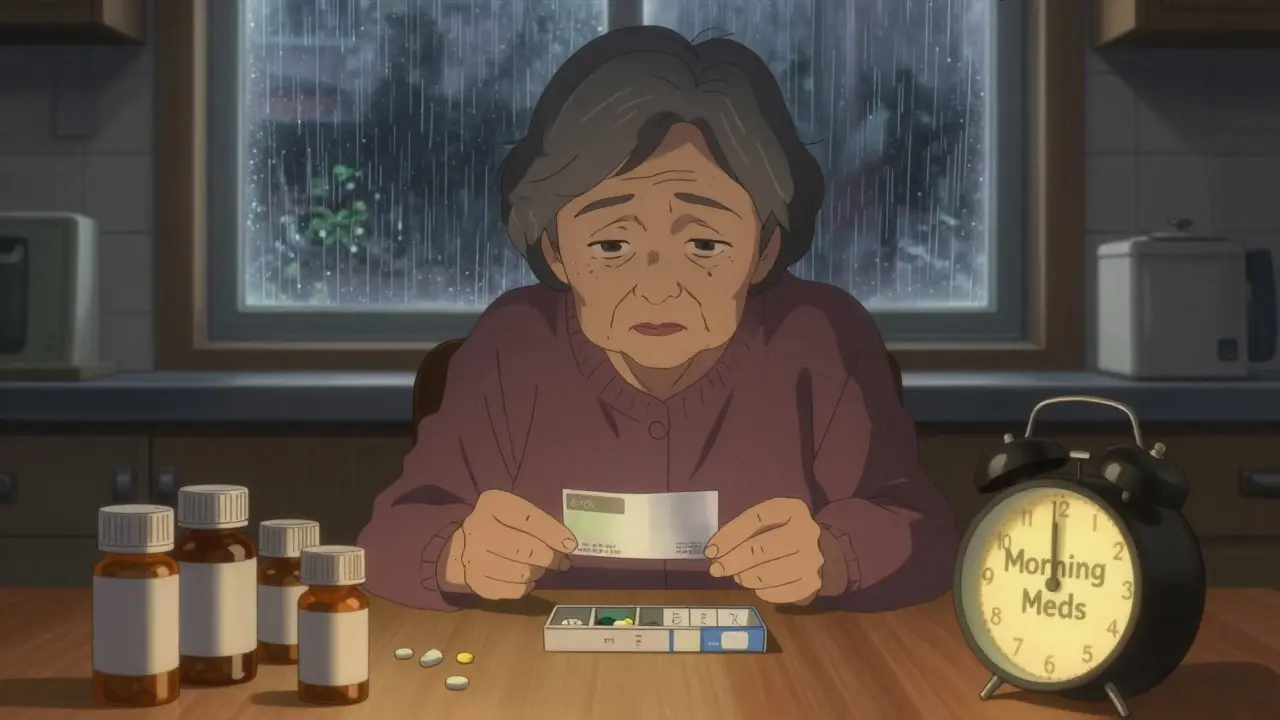
Imagine taking five different pills every day-some in the morning, some at night, others only on weekdays. Now imagine you’re 78, your vision is fading, your hands shake a little, and you can’t remember if you already took your blood pressure pill. This isn’t hypothetical. It’s daily life for millions of older adults. And when they miss doses, skip pills, or stop taking meds altogether, the consequences aren’t just inconvenient-they’re deadly.
In the UK, nearly 9 in 10 adults over 65 take at least one prescription drug. More than half take four or more. That’s polypharmacy: using multiple medications, often for different chronic conditions like diabetes, heart disease, or arthritis. But the more pills someone has to manage, the harder it is to stick with the plan. Studies show people taking three or four doses a day are far less likely to stay on track than those taking just once daily. And the fallout? Hospitalizations, worsening health, and even death.
Why Do Older Adults Struggle to Take Their Medications?
It’s not laziness. It’s not forgetfulness alone. It’s a mix of things-some physical, some financial, some systemic.
Complex regimens are the biggest offender. A 72-year-old with heart failure, arthritis, and type 2 diabetes might be on 8-10 medications. Some need to be taken with food. Others on an empty stomach. Some at breakfast, others at bedtime. One might require a blood test every month. When the schedule gets this tangled, people start cutting corners. They skip a pill because they’re not sure if they already took it. They delay refills because the pharmacy is too far. They stop a drug because they feel fine-and don’t realize the medication is what’s keeping them that way.
Cognitive decline plays a major role too. Memory isn’t just about forgetting names. It’s about forgetting why you take a pill. A person might stop taking their statin because they don’t remember it’s preventing a heart attack. Or they confuse their anticoagulant with their arthritis pill and take too much. These mistakes aren’t rare. One study found that nearly 30% of adverse drug reactions in older adults lead to hospital stays-and many of those were preventable.
Physical limitations make handling pills a daily battle. Arthritis makes opening childproof bottles hard. Poor eyesight means reading tiny labels is impossible. Shaky hands lead to spilled pills. Some people just give up. They leave pills in their original blister packs, not bothering to sort them into daily organizers. Others take them in bulk, dumping them into a cup-risking overdose or missed doses.
Cost is a silent killer. Even with NHS coverage, many older adults still face co-pays, prescription charges, or costs for non-covered items. The CDC reports that 4% of older adults skip doses because they can’t afford them. For Black and Hispanic seniors, that number jumps to over 5%. And if you’re food-insecure? You’re six times more likely to cut back on meds to pay for groceries. One woman in Bristol told her pharmacist she was splitting her 10mg blood pressure pill in half because the full dose cost £12 a month-and she couldn’t afford both meds and heating.
Social isolation makes adherence even harder. People who live alone often have no one to remind them, help them organize pills, or notice if they’ve stopped taking their meds. A study in Brazil found social support was the biggest single factor affecting adherence-more than memory loss or complexity. If you don’t have a family member checking in, or a neighbor who notices you haven’t been to the pharmacy, you’re on your own.
What Actually Works? Real Solutions, Not Just Theory
Solutions aren’t about fancy apps or expensive gadgets. They’re about simple, practical changes that fit real lives.
1. Simplify the regimen. Every pill you can cut, combine, or switch to once-daily dosing improves adherence. A doctor might be able to switch a twice-daily blood pressure pill to a once-daily version. Or replace three separate pills for high blood pressure and cholesterol with a single combination pill. Pharmacies can help too-many offer blister packs or dosette boxes pre-filled by day and time. These cost little or nothing under NHS support, and they eliminate guesswork.
2. Use pill organizers-but make them useful. A simple seven-day box with morning/afternoon/evening compartments works wonders. But don’t just hand it to someone and assume they’ll use it. Have a pharmacist or community nurse show them how to fill it. Check in weekly. If they’re not using it, ask why. Maybe they can’t open it. Maybe they’re afraid of mixing pills. Maybe they don’t trust the system. Fix the barrier, not just the tool.
3. Involve pharmacists. Pharmacists aren’t just pill dispensers. They’re medication detectives. A pharmacist can spot dangerous interactions, flag unnecessary drugs, and suggest cheaper alternatives. Many NHS pharmacies now offer Medication Reviews for older adults-free, one-on-one sessions to go through every pill, supplement, and OTC drug. This isn’t optional. It’s essential. One study found that after a pharmacist-led review, 40% of older adults had at least one unnecessary medication stopped.
4. Address cost head-on. If someone’s skipping pills because of money, don’t just say, “Call your GP.” Help them. Ask if they qualify for Prescription Prepayment Certificates (PPCs)-a flat fee for unlimited prescriptions for 3 or 12 months. Check if they’re eligible for HC2 certificates for full help with health costs. Some charities offer grants for low-income seniors. And if they’re buying OTC meds like painkillers or supplements, ask if those are even needed. Many older adults take supplements they don’t need-and that adds to the cost and complexity.
5. Build support into daily life. A neighbor who checks in. A local volunteer group that delivers prescriptions. A family member who calls every morning to ask, “Did you take your pills?” These aren’t luxuries-they’re lifelines. Community centers, churches, and even libraries in Bristol and beyond are starting simple programs: Medication Buddy Systems, where volunteers help seniors fill their pill boxes once a week. No tech. No apps. Just human contact.
Technology Can Help-But Don’t Overcomplicate It
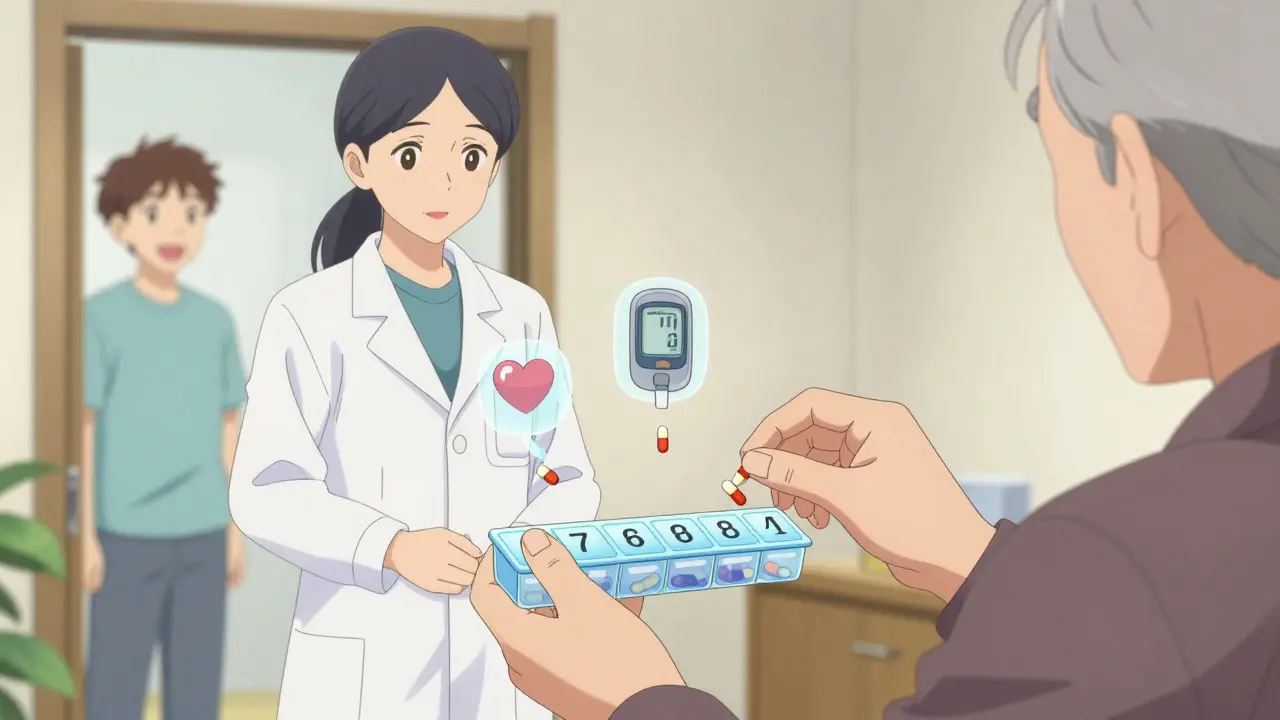
Smart pill dispensers that beep, flash, and send alerts to family members sound great. But many older adults find them confusing. If someone can’t use a smartphone, they won’t use a smart dispenser. Instead, go for the basics: a simple alarm clock with multiple alarms labeled “Morning Meds,” “Evening Meds.” Or a talking pill box that says, “It’s time for your blood pressure pill,” in a calm voice. These cost under £30 and work without Wi-Fi, apps, or passwords.
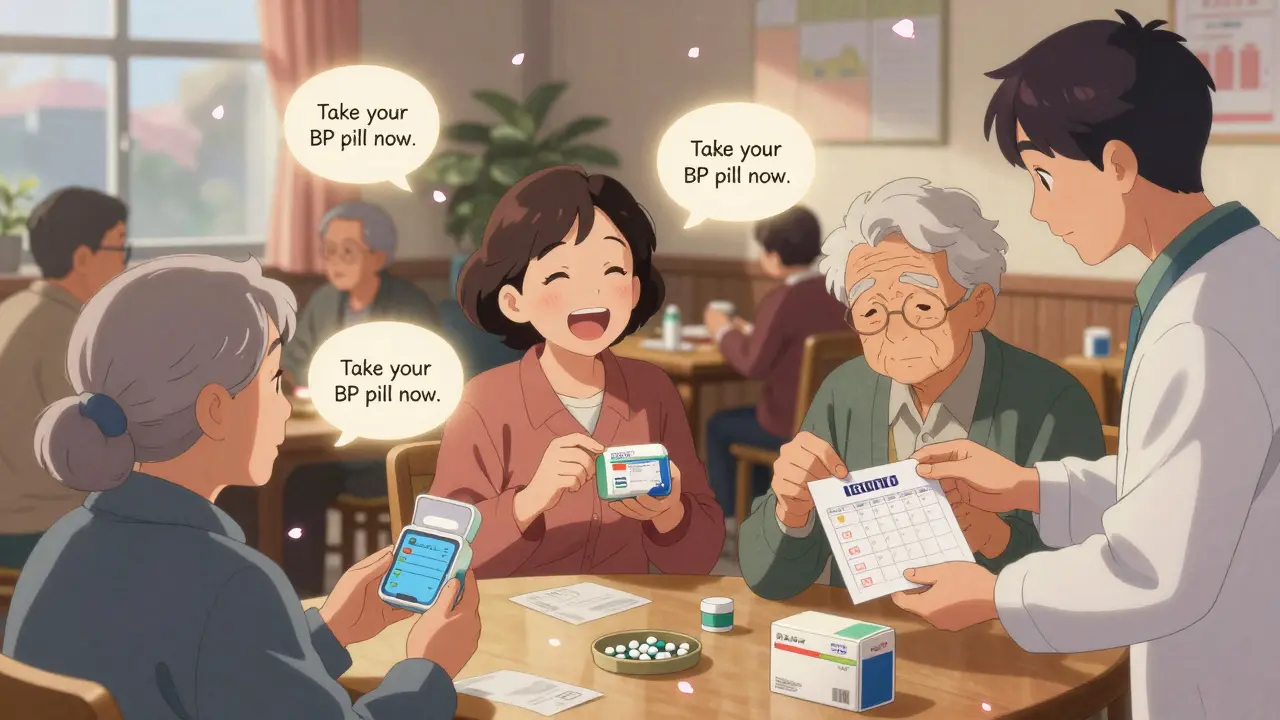
Text reminders? Yes-if they’re simple. “Take BP pill now” works better than “Your scheduled antihypertensive medication is due at 08:00.” Keep it short. Keep it clear. And always ask if they want the reminder. Some hate being pestered. Others rely on it.
When Medication Stops Working-It’s Not Always the Drug
Many older adults stop taking meds because they feel worse. They get dizzy. They feel nauseous. They think the pill is making them sick. But often, it’s not the drug-it’s the interaction between drugs. Or it’s a side effect they don’t understand. A fall might be blamed on “getting older,” when it’s actually caused by a blood pressure med. Confusion might be labeled as dementia, when it’s a reaction to an antibiotic.
That’s why regular medication reviews are critical. Every 6-12 months, a GP or pharmacist should sit down and ask: “Are you still taking all these? Are you feeling better? Any side effects?” Sometimes, the answer is: “I stopped the statin because I thought it was making me tired.” The doctor says: “Actually, that’s a common myth. Let’s try a different one.” And suddenly, adherence improves.
What Families Can Do
If you’re helping an older parent or relative:
- Don’t assume they’re fine just because they say they are.
- Ask: “Do you know what each pill is for?” If they can’t answer, that’s a red flag.
- Go to the pharmacy with them. Ask the pharmacist to explain each med in plain language.
- Help them apply for a Prescription Prepayment Certificate if they take more than 3 meds a month.
- Set up a weekly check-in. Not to nag-to connect.
- Keep a written list of all meds, doses, and times. Update it every time the doctor changes something.
One daughter in Bath told me her mum was taking her heart meds only every other day. She didn’t realize it. She thought her mum was just “being careful.” Turns out, her mum was afraid of side effects and didn’t know how to ask. A 10-minute chat with the pharmacist changed everything.
The Bigger Picture: This Isn’t Just About Pills
Medication adherence isn’t a personal failure. It’s a system failure. We expect older adults to manage complex medical regimens with declining vision, memory, mobility, and income-while often living alone, with little support. And we’re surprised when they fall through the cracks.
The answer isn’t more pills. It’s fewer, simpler, cheaper, and better-supported regimens. It’s pharmacists in primary care teams. It’s community volunteers delivering prescriptions. It’s GPs asking, “Can you afford this?” instead of just writing the script.
Because here’s the truth: medications don’t work if they’re not taken. No matter how advanced the drug, if it’s sitting on a shelf, it’s useless. And for older adults who’ve spent decades managing their health, that’s not just a statistic-it’s a daily struggle.
The good news? We know what works. We just need to make it routine.
Why do older adults often stop taking their medications?
Older adults stop taking medications for many reasons-not because they’re careless, but because the system doesn’t fit their lives. Common reasons include complex dosing schedules, side effects they don’t understand, cost barriers, memory problems, physical challenges like shaky hands or poor eyesight, and lack of social support. Some stop because they feel fine and think the drug isn’t needed. Others skip doses to save money for food or heating. Without clear guidance or someone to check in on them, these small decisions add up to serious health risks.
How can I help a parent or relative take their meds correctly?
Start by making a complete list of every medication they take, including over-the-counter pills and supplements. Bring that list to their GP or pharmacist for a review. Ask if any pills can be combined or switched to once-daily versions. Set up a simple pill organizer and help them fill it once a week. Consider a talking alarm clock or a basic pill dispenser with alarms. Check in regularly-not to nag, but to ask how they’re feeling. If cost is an issue, look into Prescription Prepayment Certificates or HC2 forms for financial help. Most importantly, listen. If they say a pill makes them feel worse, don’t dismiss it-talk to their doctor.
Are pill organizers worth it for seniors?
Yes-if they’re used correctly. A simple 7-day box with morning, afternoon, and evening compartments can reduce missed doses by over 50%. But many seniors can’t open them, can’t read the labels, or don’t know how to fill them. The key is support: have a pharmacist, nurse, or family member show them how to use it. Don’t just hand it over. Check in weekly. If they’re not using it, find out why. Maybe they need a larger label, a different design, or a different system altogether. The goal isn’t the box-it’s adherence.
Can pharmacists help reduce the number of medications an older adult takes?
Absolutely. Pharmacists are trained to spot unnecessary, duplicate, or risky medications. Many NHS pharmacies offer free Medication Reviews for older adults. During a review, the pharmacist will ask what each pill is for, check for interactions, and suggest stopping ones that no longer serve a purpose. For example, a 75-year-old might be taking three different blood pressure pills-when one combination pill would do. Or they might still be on a statin that was prescribed 10 years ago, but no longer benefits them. These changes can reduce side effects, lower costs, and make daily routines much simpler.
What should I do if an older adult is skipping doses because of cost?
Don’t assume they’re being irresponsible. Many older adults face impossible choices: pay for meds or pay for heating. First, ask if they’re eligible for a Prescription Prepayment Certificate (PPC)-it costs £29.10 for 3 months or £108.10 for 12 months, and covers unlimited prescriptions. Also check if they qualify for an HC2 certificate, which gives full help with health costs. Some charities offer grants for low-income seniors. And ask the pharmacist: Is there a cheaper alternative? A generic version? A different brand? Sometimes, switching to a £1.50 generic instead of a £12 brand-name drug makes all the difference. Never let cost stop someone from getting the care they need.
Tom Sanders
March 10, 2026 AT 04:42Jazminn Jones
March 10, 2026 AT 15:47Stephen Rudd
March 12, 2026 AT 09:45Robert Bliss
March 12, 2026 AT 16:31Peter Kovac
March 13, 2026 AT 12:59APRIL HARRINGTON
March 14, 2026 AT 07:12Leon Hallal
March 15, 2026 AT 16:45Judith Manzano
March 16, 2026 AT 15:27rafeq khlo
March 17, 2026 AT 03:07Morgan Dodgen
March 18, 2026 AT 15:22Philip Mattawashish
March 20, 2026 AT 11:17Erica Santos
March 21, 2026 AT 14:47