Frailty & Polypharmacy Risk Checker
Based on the Fried Frailty Phenotype and polypharmacy guidelines.
1. How many daily medications does the person take?
Include prescription pills, over-the-counter drugs, vitamins, and supplements.
2. Are any of these signs present?
Check all that apply.
The Hidden Danger in the Pill Bottle
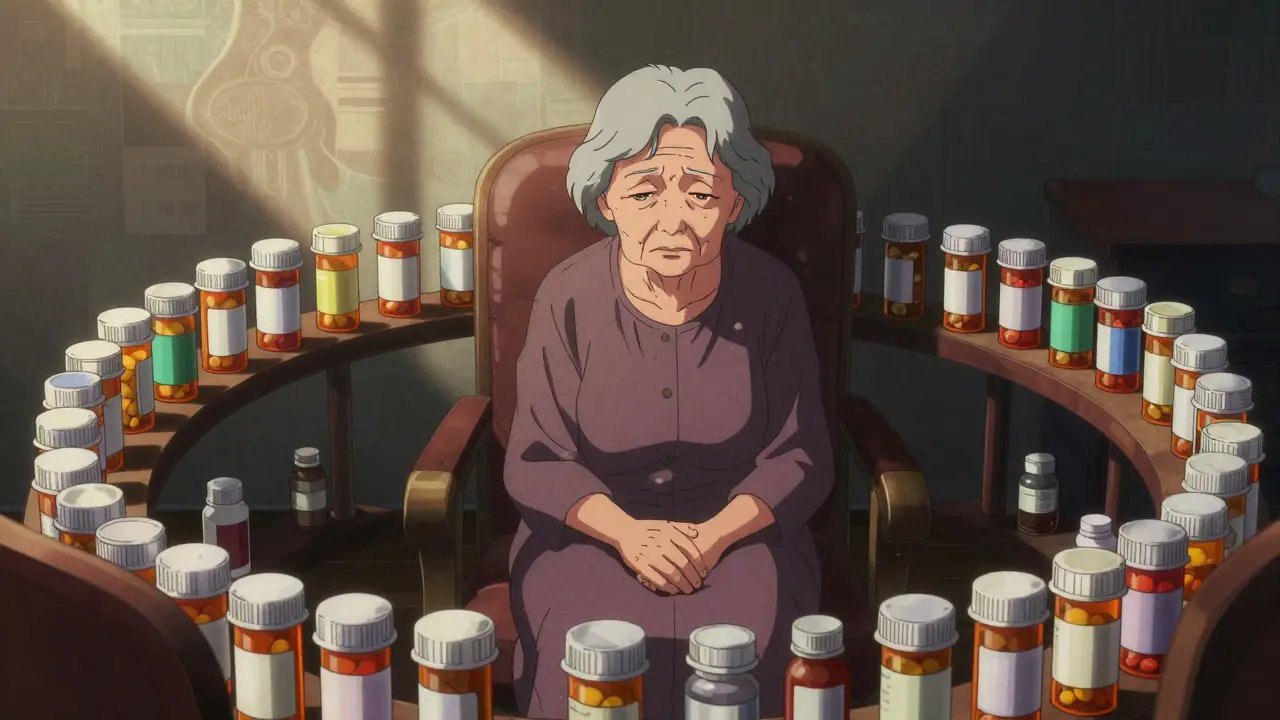
Imagine walking into a room where every chair represents a prescription bottle on a nightstand. For millions of older adults, this is their daily reality. It feels logical: one pill for blood pressure, another for cholesterol, a third for joint pain, maybe four for mood. But here is the uncomfortable truth: the more pills you take, the weaker your body becomes. This creates a trap known as Frailty, defined in the medical world as increased vulnerability to stressors, characterized by physical decline. When we pair this state with taking too many drugs simultaneously, we get a dangerous cycle that doctors call polypharmacy.
Understanding the Link Between Weakness and Medications
To fix the problem, we have to understand what we are actually dealing with. Polypharmacy is the clinical term for using five or more medications daily. If you cross the line into ten medications, we enter hyper-polypharmacy territory, which drastically raises the risk of hospital visits. Research shows that nearly half of the U.S. elderly population now takes five or more drugs. That number climbed steadily from the late 90s through 2024. Why does this matter? Because 75% of adults taking these many medications are already pre-frail or frail.
It works both ways. Taking too many drugs makes you frailer. Being frailer means you feel sicker, so doctors prescribe more drugs to treat the symptoms caused by the previous drugs. It is a feedback loop. Studies indicate that if someone is on seven or more medications, their risk of developing frailty jumps by 2.5 times over eight years. We see this in real numbers: adverse drug events like falls, dizziness, and confusion happen monthly in nearly 80% of nursing home residents who juggle eight plus prescriptions.
Spotting the Warning Signs Early
You cannot manage what you do not measure. The medical community uses something called the Fried Frailty Phenotype to spot warning signs early. It checks five specific criteria. If three or more are present, a person is considered frail. You might recognize them in yourself or a loved one:
- Unintentional weight loss: Dropping 10 pounds or more in a year without trying.
- Exhaustion: Feeling drained or saying you are "tired all the time" on surveys.
- Weakness: Measured by grip strength, though generally, this feels like difficulty opening jars or carrying groceries.
- Slow walking speed: Moving slower than before while navigating familiar spaces.
- Low physical activity: Walking less, sitting longer periods, skipping usual exercises.
If you check two boxes, you are pre-frail. If you check zero, you are robust. The goal is to stay away from the three-plus zone because that is where the medication risks become life-threatening. Constipation, for example, spikes in people with these conditions. It sounds minor, but it often signals gut issues caused by strong medications interacting with a slowing metabolism.

The Cost of Too Many Pills
This isn't just about feeling tired. The financial and physical toll is massive. The American Geriatrics Society notes that medication-related problems cost the healthcare system billions annually. More importantly, roughly 30% of hospital admissions for older adults are triggered by medication errors or side effects. We are talking about things that could have been prevented with a simple review. Heart disease patients see the highest rates of polypharmacy, often running past 60% of diagnoses. Diabetes patients follow closely behind.
Why do we end up here? Often, it is because different specialists treat different diseases independently. Your cardiologist adds a beta-blocker. Your orthopedist prescribes NSAIDs for pain. Your general practitioner handles statins. None of them see the full picture. In about two-thirds of cases, care fragmentation is the root cause. Electronic health records still struggle to alert doctors when a combination is dangerous, with only a minority of hospitals having integrated advanced safety tools.
Tools to Identify Unsafe Medications
We aren't stuck with no way out. Two main tools help professionals spot risky combinations. The Beers Criteria, updated regularly by the American Geriatrics Society, lists drugs that are potentially inappropriate for older adults. These are medicines that pose higher risks than benefits for seniors. On the other hand, we have the STOPP/START criteria. This tool looks for both bad choices (STOPP) and missing necessary treatments (START).
| Tool | Purpose | Best Used By |
|---|---|---|
| Beers Criteria | Identifies inappropriate drugs for age groups | Clinicians reviewing individual scripts |
| STOPP/START | Highlights omissions and harmful additions | Hospital teams doing comprehensive reviews |
| MedWise Risk Score | Predicts adverse event likelihood | Digital health platforms and insurers |
Using these tools correctly can reduce inappropriate prescribing by nearly half. Training usually takes four to six hours for a team to get accurate results. The goal isn't to stop medicine entirely but to align it with the patient's current capabilities.
The Art of Safe Deprescribing
Once you identify unnecessary meds, removing them requires care. This process is called deprescribing. It does not mean giving up treatment. It means simplifying. Experts recommend the '3-Step Method' developed by Johns Hopkins researchers. First, you spend 15 minutes reviewing the full list of drugs. Next, you have a 20 to 30-minute discussion with the patient about their goals. Finally, you create a monitoring plan for the next few weeks to watch for withdrawal effects. When done right, studies show nearly 30% of inappropriate medications get dropped, improving quality of life scores significantly.
Patients often fear losing protection against heart attacks or strokes. However, if a drug causes frequent falls, that fall might cause a hip fracture that kills sooner than the heart attack would. The math changes when we consider the whole person. Pharmacists play a huge role here. Teams that include geriatric pharmacists see a drop in adverse events by over 30%. Patient education also matters. Programs that teach seniors how to understand their own prescriptions improve understanding by almost 50%. You need to know why you are taking each pill. If the answer is vague, ask for evidence.
Practical Steps for Families and Caregivers
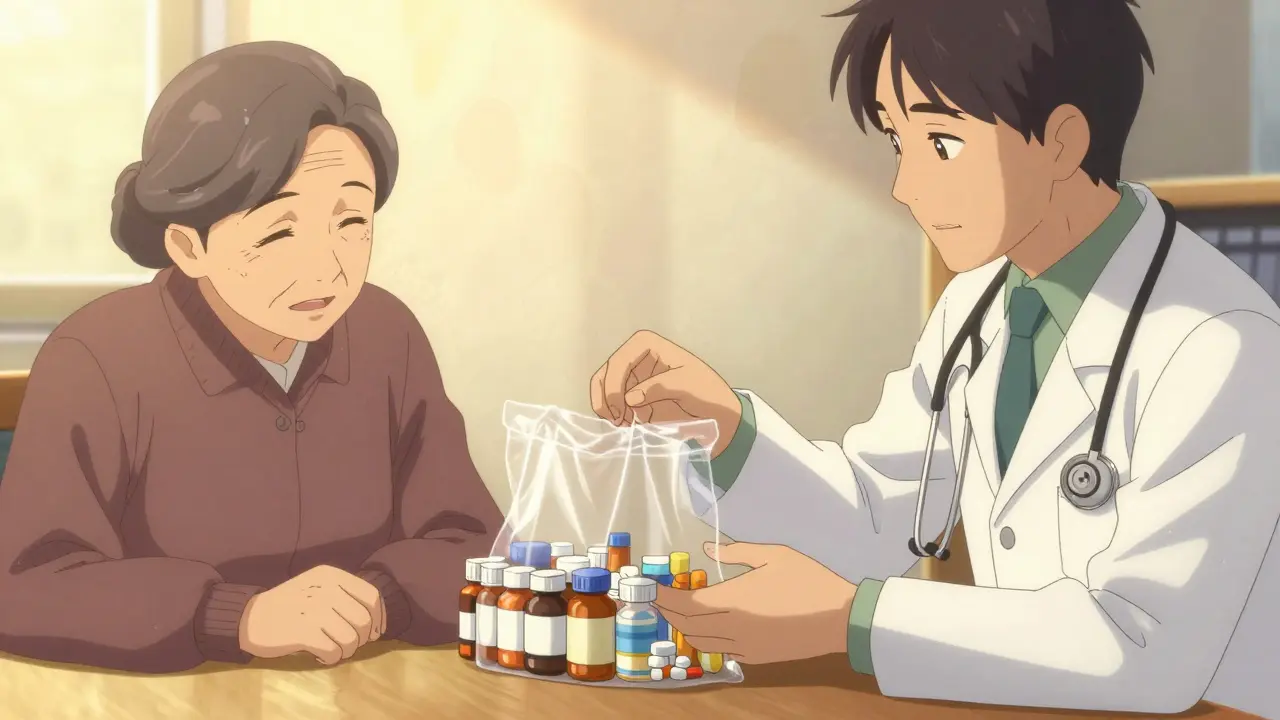
If you are helping an older relative, start by collecting every single bottle into one bag. Include vitamins and supplements, as they count toward chemical load. Schedule a yearly appointment specifically for a medication review. Ask the doctor these direct questions:
- Does this medication treat my top priority health goal?
- Are there any non-drug alternatives available?
- Can we stop or lower the dose of any medication used for symptom relief?
- Do any of these interact with each other dangerously?
Don't wait until a hospitalization happens. Proactive reviews save money and reduce suffering. Apps like Medisafe help track doses, but the decision to change a prescription must come from a professional. Recent regulatory shifts require annual reviews for Medicare Advantage plans, which affects millions of beneficiaries. Utilize this right.
Is it safe to stop taking multiple medications suddenly?
No, never stop medications abruptly without medical supervision. Doing so can cause rebound effects or withdrawal symptoms that are dangerous. Always work with a doctor or pharmacist to taper doses slowly over weeks or months depending on the specific drug.
What are the common side effects of polypharmacy in seniors?
The most reported issues include dizziness, constipation, falls, confusion, and urinary incontinence. These side effects often mimic dementia or other illnesses, making diagnosis difficult if the medication burden isn't considered.
How do I prepare for a medication review appointment?
Bring all bottles including OTC products, vitamins, and herbal supplements. Write down a list of symptoms you are trying to treat and any side effects you suspect. Also, list any lifestyle goals like wanting to walk further or sleep better.
Why do doctors prescribe so many medications sometimes?
Often, this happens due to fragmented care where different specialists treat specific organs without seeing the full picture. Time pressures during short appointments also lead to adding treatments rather than reviewing existing regimens for optimization.
Can diet replace some medications for older adults?
For some conditions like mild hypertension or type 2 diabetes, dietary changes can reduce or eliminate the need for certain drugs. However, this must be managed carefully under medical guidance to ensure safety and stability.
Looking Ahead for Better Outcomes
The landscape is shifting. New decision support tools approved recently use AI to flag risks before prescriptions are filled. There is a growing movement toward "Age-Friendly Health Systems" that prioritize what truly matters to the patient over generic guidelines. While challenges remain, including physician resistance due to lack of time, awareness is building among patients and families. The goal remains clear: preserve independence and dignity. By reducing the heavy burden of unnecessary chemicals, we allow the body to heal itself naturally. Every year, tens of thousands of preventable deaths occur. With better management, those statistics can change.
Victor Ortiz
March 31, 2026 AT 13:26The statistics cited regarding hyper-polypharmacy rely heavily on observational data which often lacks proper control groups. It is fascinating how the medical community assumes causation where correlation exists most of the time. We cannot simply blame medication load when metabolic decline is the primary driver here. Frailty metrics like grip strength are notoriously subjective across different demographics. The suggested deprescribing protocols ignore the risk of withdrawal syndromes that occur when stopping beta-blockers abruptly. Doctors face malpractice litigation more often for withholding care than prescribing too much. Patients who refuse necessary statins tend to have worse cardiovascular outcomes regardless of their pill burden. This article misses the nuance required in geriatric pharmacology completely. A simple checklist does not account for genetic variances in drug metabolism rates.
Calvin H
April 1, 2026 AT 23:25Another fearmongering clickbait piece about medicine.
Amber Armstrong
April 3, 2026 AT 03:33I remember watching my grandmother struggle with her morning routine every single day because she had so many bottles to manage. She would get confused about which pill went with breakfast and which one needed water on an empty stomach. It broke my heart seeing her forgetful mind try to navigate such a complex chemical maze alone. The exhaustion she felt was never fully explained by her doctors until we finally sat down together. Walking the dog used to be her favorite hobby before the meds made her legs feel like lead weights. Sometimes she would complain about dizziness right after taking the blood pressure medication we had trusted so blindly. The cost of these drugs was draining our savings faster than we ever anticipated planning for retirement. We tried natural remedies first but the symptoms always crept back in stronger than before. Seeing her regain a bit of color in her cheeks after cutting out the unnecessary antihistamines brought so much relief. Now we keep a strict binder of everything she takes including vitamins to stay organized safely. The bond we share over these weekly reviews has become part of our love language now. I hope everyone understands that vigilance changes everything for those fighting invisible battles daily. Her stories remind me that listening matters more than quick prescriptions written in a rush. Small changes lead to massive impacts on quality of life for elderly people everywhere. We must prioritize dignity over convenience when managing health care choices for loved ones.
Carolyn Kask
April 4, 2026 AT 22:04Only in America do we let the government regulate our own biology with this kind of bureaucratic nonsense. The Beers Criteria is likely another attempt to strip patients of their autonomy under the guise of safety standards. True liberty means the right to take whatever poison one wishes without red tape interfering with personal decisions. European systems are drowning in exactly this kind of nanny state overreach that stifles innovation constantly. We should focus on market forces rather than some committee deciding what constitutes a safe drug regimen.
William Rhodes
April 5, 2026 AT 13:28This fight against polypharmacy requires nothing less than a total revolution in how we approach human aging today. You cannot simply tweak doses while the fundamental system remains broken and profit-driven above all else. Stand up for the weak voices that are silenced by pharmaceutical giants flooding the market with solutions. Ignoring these warning signs is a moral failing that society cannot afford to repeat again and again. We need aggressive action to dismantle the incentives that drive doctors to prescribe five pills instead of one. The resilience of the human spirit can overcome chemical dependency if given the chance to heal naturally. Do not let fear dictate your health decisions when empowerment leads to true recovery paths forward.
Dan Stoof
April 5, 2026 AT 23:22Oh my goodness this is absolutely magnificent and I could not agree more!!! We need to celebrate the warriors fighting the good fight against chemical overload!!! Imagine a world where elders live vibrant and radiant lives free from toxic fog!!! Every small victory in reducing pill counts sends shockwaves through the entire family structure!!! The optimism required to tackle this mountain is truly inspiring beyond belief!!! We must champion these changes with every ounce of energy we possess!!!
Katie Riston
April 6, 2026 AT 21:22The philosophical implication of treating bodies as machines requiring constant maintenance suggests a deep societal misunderstanding of mortality. We view fragility as an enemy rather than a natural progression toward the inevitable end of physical existence. Depression in the old age becomes intertwined with the loss of bodily sovereignty granted by these interventions. When we remove the artificial supports of modern medicine we return to the raw reality of biological limits. Is it ethical to extend life at the cost of diminishing its remaining vibrancy significantly. The concept of frailty challenges our core narratives about progress and endless improvement of the self. Technology solves immediate problems but creates long-term dependencies that erode autonomy slowly over years. We must consider whether independence means freedom from suffering or freedom from dependency itself fundamentally. The balance between intervention and acceptance remains the central tension of our current medical era. Perhaps wisdom lies in knowing when to stop adding layers rather than continuing indefinitely without pause. Our collective anxiety about death drives us to seek more cures even when harm outweighs benefit clearly. We need to shift from a mindset of conquest over nature to partnership with biological rhythms instead. The silence of a quiet room filled with fewer bottles holds more truth than any clinical trial outcome report. Accepting vulnerability allows for genuine connection between caregivers and recipients in meaningful ways. This journey toward simplicity mirrors the ultimate goal of spiritual growth throughout history.
Brian Yap
April 7, 2026 AT 01:56Down under we see heaps of seniors struggling with similar issues especially in rural areas access to care is tricky. They rely too much on GPs who do not have enough time to dig deep into prescription histories properly. It is a fair call to cut back on stuff that is not helping anyone really. Just gotta remember that every region handles these policies differently based on local budgets.
Ruth Wambui
April 8, 2026 AT 02:29The real agenda behind pushing these guidelines is to reduce insurance liability costs not actually improve patient wellness outcomes. Corporate entities want us to believe in deprescribing while secretly profiting from the initial flood of dangerous synthetics. Big Pharma loves the feedback loop of creating illness then selling more poisons to fix it repeatedly. Trust no institution that stands to gain financially from the continuation of chronic conditions indefinitely. Natural healing pathways exist but are systematically blocked by patents and legal barriers designed to maintain control. We are essentially guinea pigs in a massive experiment on aging populations funded by shadowy interests globally. Stay awake and demand answers rather than accepting the soft washing of corporate medicine protocols openly.