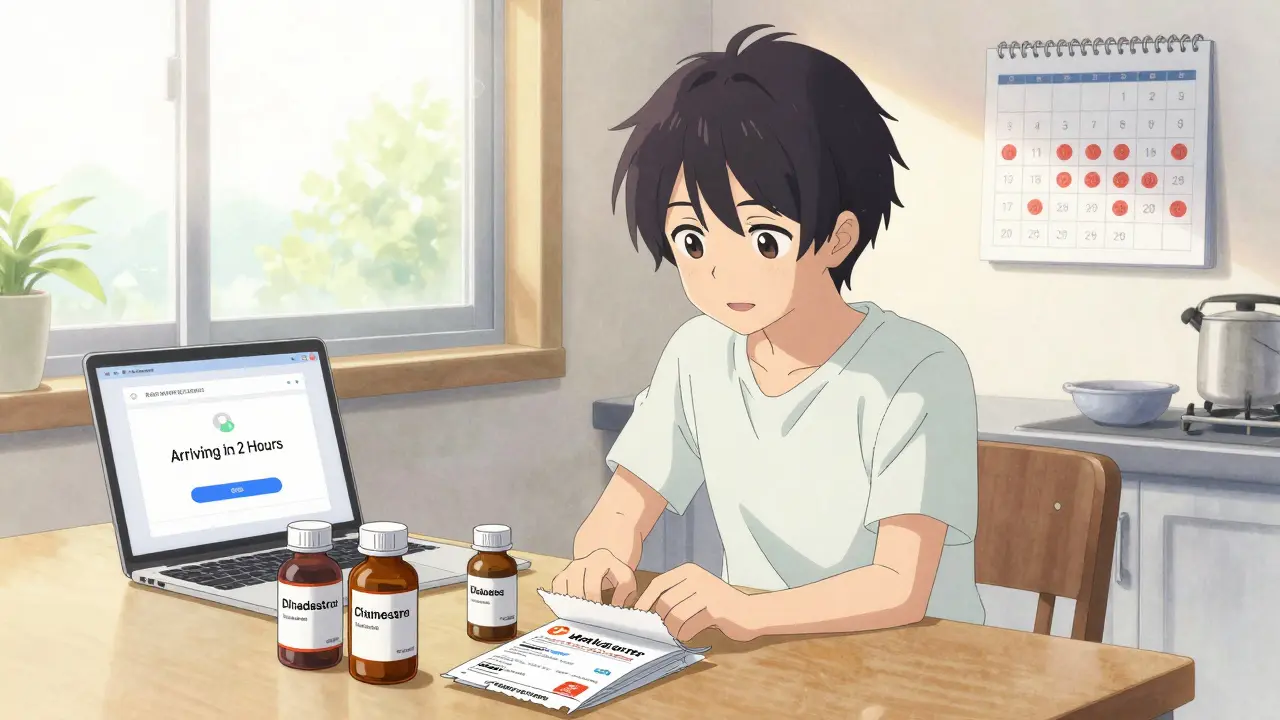
Buying your long-term medications through the mail might sound old-fashioned, but it’s one of the most effective ways to save money on prescriptions - if you know how to use it right. For people taking daily meds for high blood pressure, diabetes, or cholesterol, switching to a mail-order pharmacy can cut annual costs by hundreds of dollars. But it’s not perfect. Sometimes your pills get lost. Sometimes you need them now, not in five days. So is it worth it? Let’s break down what actually happens when you use a mail-order pharmacy - the real savings, the real risks, and who benefits the most.
How Mail-Order Pharmacies Actually Save Money
Most retail pharmacies give you a 30-day supply of your medication. Mail-order pharmacies give you 90 days - but you only pay for two. That’s the core math. If your 30-day prescription costs $15 out-of-pocket, you’d pay $45 over three months at the pharmacy. With mail-order, you pay $30 for the full 90 days. That’s $15 saved every three months, or $60 a year - just for one drug. Multiply that by three or four maintenance meds, and you’re talking $200-$400 saved annually. No tricks. No coupons. Just bulk pricing built into the system. This isn’t magic. It’s how the system works: Pharmacy Benefit Managers (PBMs) like Express Scripts, CVS Caremark, and OptumRx negotiate lower prices with drug makers because they handle huge volumes. They pass some of that savings on to you. And because they use automated systems to fill prescriptions, their error rates are lower - about 0.016% compared to 0.04% at retail pharmacies. Fewer mistakes mean fewer dangerous mix-ups and fewer repeat trips to the pharmacy. Most health plans, including Blue Cross NC and Sutter Health Plus, include mail-order as a standard benefit. You don’t pay extra to use it. But you have to check your plan. Some require you to use mail-order after the first refill. Others let you choose. Either way, the savings are real if you’re on long-term meds.Who Benefits the Most?
Not everyone saves the same amount. The biggest winners are people who:- Take three or more maintenance medications every month
- Live in rural areas with few nearby pharmacies
- Have trouble getting to the pharmacy due to mobility issues, lack of transport, or chronic pain
- Struggle to remember to refill prescriptions on time
The Downsides: When Mail-Order Doesn’t Work
Here’s the flip side. Mail-order isn’t for everything. First, it’s slow. Most deliveries take 5-7 business days. If you just started a new antibiotic or ran out of your inhaler, you’re stuck. You can’t call and pick it up the same day. One Reddit user reported losing a shipment of blood pressure meds and had to pay $80 out-of-pocket for an emergency refill at Walgreens. About 0.5% of shipments get lost or damaged, according to industry data - not high, but it happens. Second, you lose face-to-face contact. At your local pharmacy, the pharmacist might notice you’re taking two drugs that don’t mix. They might ask if you’re having side effects. With mail-order, you get a 24/7 phone line, but it’s not the same. You have to initiate the conversation. And if you’re confused about how to take your meds, you can’t just glance at the bottle while waiting in line. Third, not all drugs are available. New prescriptions, controlled substances, and some biologics often require in-person pickup. Cold-chain meds like insulin or injectables are getting better, but not all mail-order services handle them yet.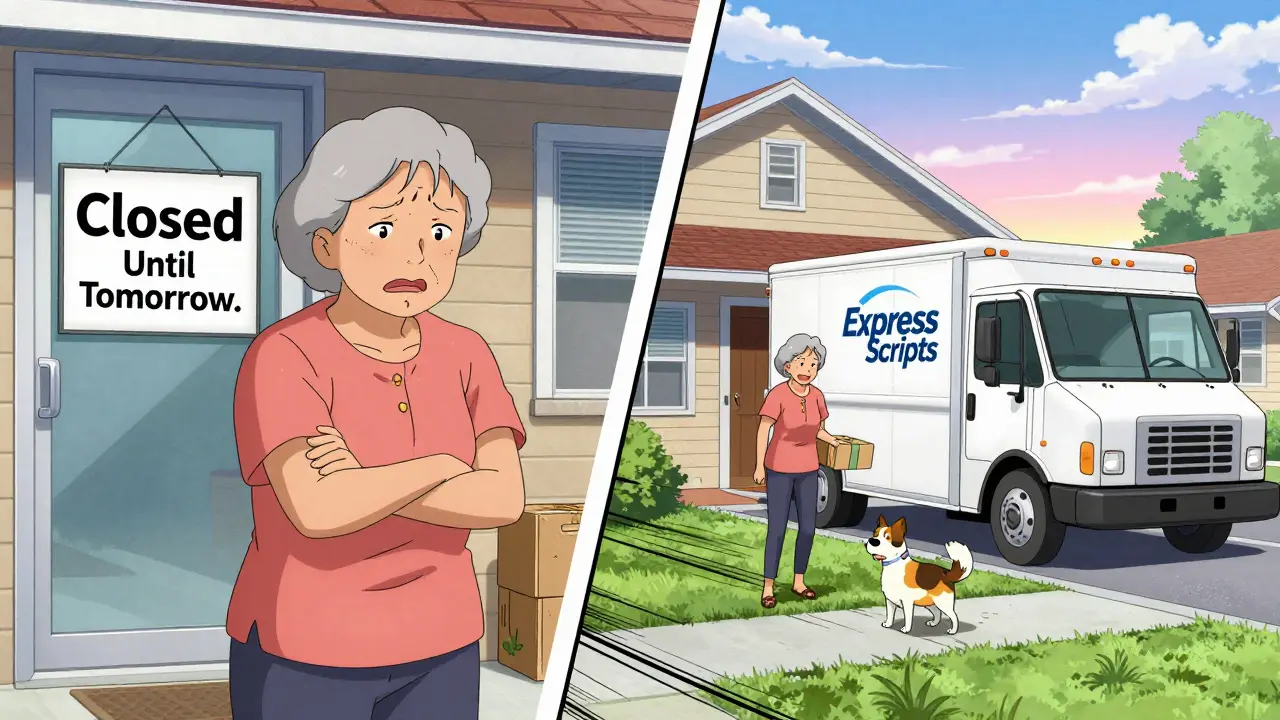
Real People, Real Savings (and Real Problems)
A 2024 Reddit thread from r/healthinsurance had dozens of stories. One person wrote: “I’ve saved $120 a year on my three meds through Express Scripts.” Another said: “I love not having to drive 20 miles to the pharmacy, but I had to pay for a refill when my package didn’t arrive.” Blue Cross NC’s customer data shows 82% of users are happy with the convenience. But 18% complain about delivery delays. The problem isn’t always the postal service. Sometimes, the pharmacy needs your doctor to re-authorize the refill. If your plan requires prior authorization for certain drugs, the delay can stretch to two weeks. The biggest complaint? Coordination. Switching from your local CVS to mail-order means transferring your prescriptions. About 32% of new users say this part is confusing. You need to give your doctor’s office the right form, or your pharmacy needs to send the records. It’s paperwork. And if you’re juggling multiple doctors or insurers, it’s a headache.How to Get Started - Without the Stress
If you’re thinking about switching, here’s how to do it right:- Check your insurance plan. Log in to your member portal or call customer service. Ask: “Do I have mail-order pharmacy benefits? What’s my copay for a 90-day supply?”
- Find out which pharmacy your plan uses. Most plans partner with one of the big three: Express Scripts, CVS Caremark, or OptumRx.
- Call your doctor. Ask them to send your maintenance prescriptions to the mail-order pharmacy. Many can do it electronically.
- Set up automatic refills. Once your first order is processed, sign up for recurring deliveries. This prevents gaps in your meds.
- Track your package. Express Scripts now offers real-time GPS tracking. Others send email or text alerts. Don’t ignore them.
What’s Changing in 2025 and Beyond
The mail-order industry is evolving fast. In early 2024, Express Scripts rolled out live tracking for every shipment. CVS Caremark announced in March 2025 that it will offer same-week delivery to 85% of U.S. addresses by the end of the year. That’s a big shift - it means mail-order might soon be viable for more than just chronic meds. Cold-chain delivery for insulin and other temperature-sensitive drugs is improving too. But there’s a looming threat: proposed federal legislation like the 2023 Lower Drug Costs Now Act could limit how much insurers can charge you for mail-order vs. retail. If passed, your 90-day savings could shrink by up to 40%. Still, experts agree on one thing: mail-order improves adherence. And better adherence means fewer hospital stays, fewer complications, and lower long-term costs. The American Society of Health-System Pharmacists estimates that if 70% of maintenance prescriptions were filled through mail-order instead of the current 12%, the U.S. could save $1.9 billion a year.Final Verdict: Is It Worth It?
Yes - if you’re on long-term meds. If you take pills every day for heart disease, diabetes, or thyroid issues, mail-order is a no-brainer. The savings are predictable, the safety record is strong, and the convenience is real. But if you’re new to a medication, need quick refills, or live in a place where delivery is unreliable, stick with your local pharmacy for now. Use mail-order as a backup, not your only option. The best approach? Try it for one med. Pick your cheapest, most stable prescription - maybe your blood pressure pill. Switch it to mail-order. See how the delivery goes. Track your out-of-pocket cost for three months. If you save money and don’t have any issues, switch the rest. You don’t need to go all-in. Just start small. The savings add up - and so does your health.Can I use mail-order pharmacy for all my medications?
No. Mail-order works best for maintenance medications you take daily, like those for blood pressure, diabetes, or cholesterol. It’s not ideal for antibiotics, painkillers, or new prescriptions that need quick access. Some biologics and controlled substances also require in-person pickup. Check your plan’s formulary to see which drugs are eligible.
How long does it take to get my meds from a mail-order pharmacy?
Most mail-order pharmacies deliver within 5-7 business days after your prescription is approved. First-time orders may take longer if your doctor needs to send records or your plan requires prior authorization. Once you’re set up, automatic refills usually ship within 3-5 days. Express Scripts now offers real-time tracking, so you’ll know exactly when your package is on the way.
Is mail-order pharmacy safe?
Yes - and in some ways, safer than retail. Mail-order pharmacies use automated dispensing systems with error rates 60% lower than traditional pharmacies. They also screen all your medications for dangerous interactions, even if you use multiple pharmacies. Plus, you get 24/7 pharmacist access by phone. The main risk is delivery issues - lost or damaged packages - which happen in about 0.5% of shipments.
Do I need special equipment or internet skills to use mail-order?
No. You don’t need advanced tech skills. Most people complete their first order in under 15 minutes using a phone or website. You’ll need your insurance ID, your doctor’s contact info, and your mailing address. If you’re not comfortable online, you can call the pharmacy benefit manager’s toll-free number - they’ll walk you through it. Many also offer paper forms by mail.
What if my mail-order meds arrive damaged or wrong?
Contact the pharmacy immediately. Most PBMs like CVS Caremark or OptumRx have dedicated customer service lines for delivery issues. They’ll usually send a replacement at no cost and may even cover your emergency refill if you needed meds right away. Keep the packaging and any labels - you may need them for proof. Don’t take the wrong pills - call first.
Can I switch back to my local pharmacy if I don’t like mail-order?
Absolutely. There’s no penalty for switching back. You can use mail-order for some meds and retail for others. Many people use mail-order for stable, long-term prescriptions and keep their local pharmacy for antibiotics, travel refills, or new medications. Your plan won’t force you to choose one forever.
Are mail-order pharmacies covered by Medicare Part D?
Yes. All Medicare Part D plans must offer mail-order pharmacy options for maintenance medications. You’ll pay your plan’s copay, just like at retail. Some plans even offer lower copays for mail-order, so it’s worth comparing. Make sure your plan includes your preferred mail-order provider before signing up.
Melissa Taylor
December 15, 2025 AT 03:37Switched my blood pressure med to mail-order last year and haven't looked back. Saved nearly $200 annually, and the refills are automatic. No more driving across town in the rain just to pick up a bottle of pills.
It’s not perfect-once my package got stuck in transit-but they sent a replacement the same day with free shipping. Worth it for the peace of mind.
John Brown
December 16, 2025 AT 15:32My grandma uses mail-order and loves it. She’s got arthritis and can barely walk to the mailbox, let alone the pharmacy. Now she gets her meds right to her door, and the pharmacy even calls to check in. That human touch still exists-it’s just quieter.
Jocelyn Lachapelle
December 18, 2025 AT 05:32Sai Nguyen
December 20, 2025 AT 01:18Why are Americans so lazy? You can’t even walk to a pharmacy? In India, we walk miles for medicine and still pay less than you do. This is not progress, it’s entitlement.
Jake Sinatra
December 21, 2025 AT 15:26There's a critical oversight here: many mail-order pharmacies require prior authorization for certain drugs, and delays can last up to two weeks. If you’re on a tight schedule or have a new prescription, this can be dangerous. Always confirm coverage and authorization timelines before switching.
RONALD Randolph
December 22, 2025 AT 21:58Mail-order? You're kidding, right? The government is pushing this to save money-while you pay more in hidden fees and wait for your life-saving meds to arrive. And don’t even get me started on the corporate PBMs that skim 30% off the top. This isn't savings-it's exploitation.
Mike Nordby
December 24, 2025 AT 05:22One thing the article doesn’t emphasize enough: mail-order pharmacies often catch drug interactions that local pharmacists miss, because they have access to your full history across all providers. I was on three meds that shouldn’t have been combined-my mail-order pharmacist flagged it before I even noticed symptoms.
John Samuel
December 25, 2025 AT 20:36Let me paint you a picture: Imagine your insulin arriving at 8:47 PM on a Thursday, perfectly chilled, with a handwritten note from the pharmacist: "Hope you’re feeling well today." That’s the kind of care that gets lost in the shuffle when we dismiss mail-order as cold or impersonal. It’s not about convenience-it’s about dignity.
Lisa Davies
December 27, 2025 AT 13:37Just started using mail-order for my diabetes meds 😊 The tracking feature is a game-changer-I get texts when it’s out for delivery. And yes, I cried a little when my first package showed up on my porch. No more awkward pharmacy line chats about my A1C.
Also-yes, I used an emoji. Sue me.