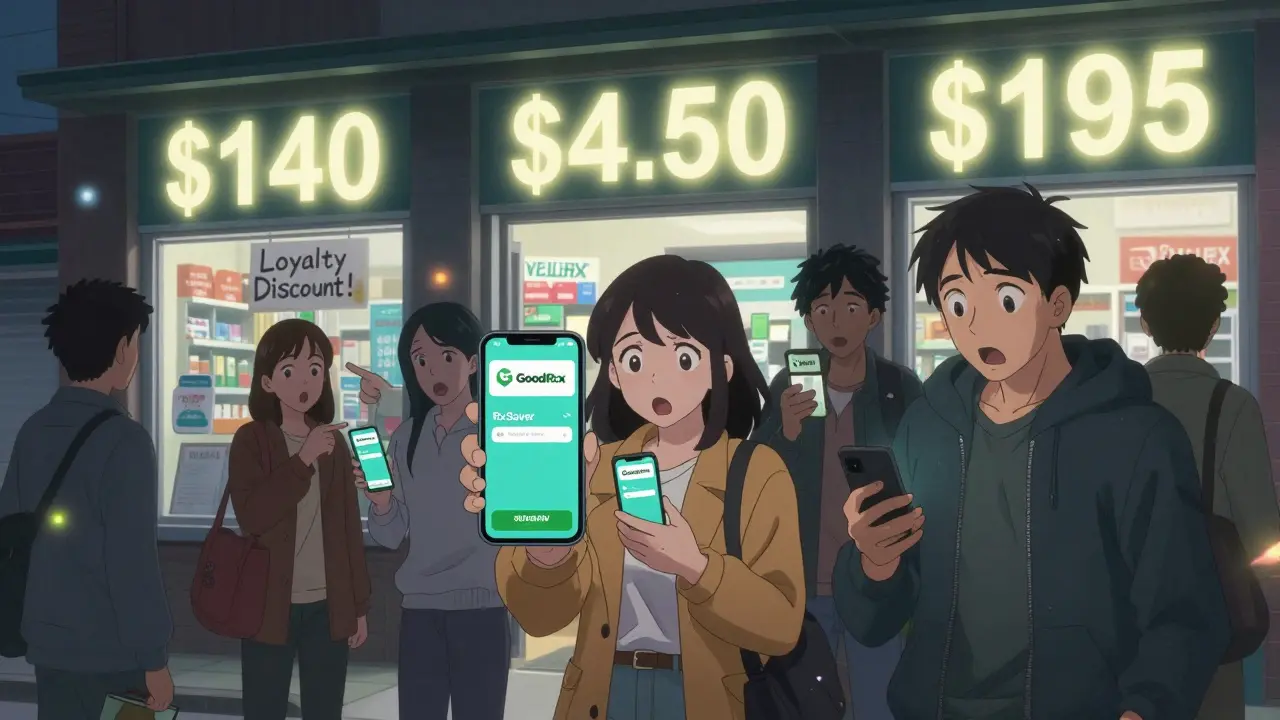
Ever paid $50 for a generic pill only to find out a pharmacy three blocks away sold it for $5? You’re not alone. In 2026, the same prescription can cost anywhere from $3 to $200 depending on where you walk in - even if you have no insurance. This isn’t a glitch. It’s how the system works. And if you don’t know how to shop for it, you’re overpaying - probably by hundreds of dollars a year.
Why Cash Prices Vary So Much
Pharmacies don’t set prices randomly. They’re reacting to deals between drug manufacturers and Pharmacy Benefit Managers (PBMs). These middlemen negotiate bulk discounts, but those savings rarely reach you at the counter. Instead, each pharmacy gets its own negotiated rate, and what you see on the screen is often the undiscounted cash price - the highest possible price they’re allowed to charge. A 2021 NIH study found that for generic atorvastatin (the cholesterol drug sold as Lipitor), prices ranged from $4.50 to $140 within a single ZIP code. That’s a 3,000% difference. Same pill. Same pharmacy chain. Same day. Just different locations. The reason? Manufacturers price aggressively based on who’s buying. Supermarkets, warehouse clubs, and independent pharmacies compete hard on generics. National chains? They often charge more because they assume you won’t check. And if you’re using insurance, the pharmacy might still charge you the full cash price - because your plan’s negotiated rate is worse than what you could get without it.How to Find the Lowest Cash Price
You don’t need a degree in pharmacology. You just need to use three tools and ask the right questions.- Ask for the cash price first - before you mention insurance. Many people assume insurance always saves money. It doesn’t. Sometimes the cash price with a discount coupon is lower than your co-pay. Always ask: “What’s the cash price?” Then say: “Do you accept GoodRx or RxSaver?”
- Compare prices on at least three apps - GoodRx, RxSaver, and WellRX. Don’t rely on just one. Each app pulls data from different pharmacy networks. A 2023 analysis by Art of Healthy Living showed that cross-referencing these apps reduces price errors by 40%. GoodRx often has the lowest price on generics, but RxSaver sometimes beats it on brand names.
- Check local independents - Small pharmacies often have unadvertised deals. A 2023 UnityPoint Health survey found that 38% of independent pharmacies offer extra discounts to regular customers. Walk in, ask if they have a loyalty program, and say you’re price shopping. You’d be surprised how often they’ll match or beat the coupon.
What Works Best for Generics vs. Brand Names
Not all drugs are created equal. The savings strategy changes depending on whether you’re buying a generic or a brand-name drug. For generics - like metformin, levothyroxine, or lisinopril - the savings are massive. GoodRx users report average savings of 88% on generics. One Reddit user paid $1.89 for a 30-day supply of metformin at a local pharmacy using a GoodRx coupon. At CVS, the same prescription cost $15.99. That’s $14 saved on a drug that costs pennies to make. For brand-name drugs - like Humira, Ozempic, or Synthroid - discount apps help less. The NIH study showed GoodRx discounts on brand-name drugs averaged only 42%. Sometimes, the cash price and the GoodRx price are nearly identical. But here’s the trick: ask your doctor if a generic alternative exists. Often, there’s a chemically identical version that works just as well. One HealthUnlocked user saved $75 by switching from brand-name Humira to its biosimilar - and used GoodRx to get it for $120 instead of $195.
Mail-Order and Non-Profit Options
If you’re on a fixed income or your household earns under $45,000 a year (300% of the federal poverty level in 2023), you might qualify for RXOutreach.com. It’s a non-profit that sells generic medications at 50-80% off retail. You don’t need insurance. You just need to prove your income. They ship directly to your door - and their prices are often lower than even the best GoodRx deals. Some pharmacies also have their own discount programs. Kroger, for example, offers a $4/$9 generic list that includes over 100 common medications. Walmart’s $4 list is just as good. These aren’t coupons - they’re fixed prices. No app needed. Just walk in and ask for the $4 list.Medicare Users: Don’t Skip This Step
If you’re on Medicare Part D, you’re still vulnerable to price spikes. Even with coverage, your plan’s formulary changes every year. The best way to save? Compare your plan’s preferred pharmacies during Open Enrollment (October 15-December 7). CMS data shows Medicare beneficiaries can save 15-25% just by switching to a preferred pharmacy. Also, don’t assume your plan’s pharmacy network is the cheapest. A 2023 study by USC’s Dr. Erin Trish found that 62% of Medicare users paid more than necessary because they didn’t check cash prices outside their network. Use GoodRx even if you have Medicare. Sometimes, the cash price with a coupon is cheaper than your co-pay.Real Stories, Real Savings
- A Chicago man found insulin prices ranging from $98 to $345 for the same vial across four pharmacies within two miles. He chose the $98 option - saving $247 per month. - A retiree in Florida paid $112 less on her Synthroid prescription using GoodRx at Walmart than what her Medicare plan charged her co-pay. - A single mom in Ohio switched from CVS to her local independent pharmacy and cut her monthly medication bill from $180 to $35 - all by asking for the cash price and using a discount app. Trustpilot reviews for GoodRx show an 8.1/10 rating from over 5,000 users. The most common comment? “I didn’t know this was possible.”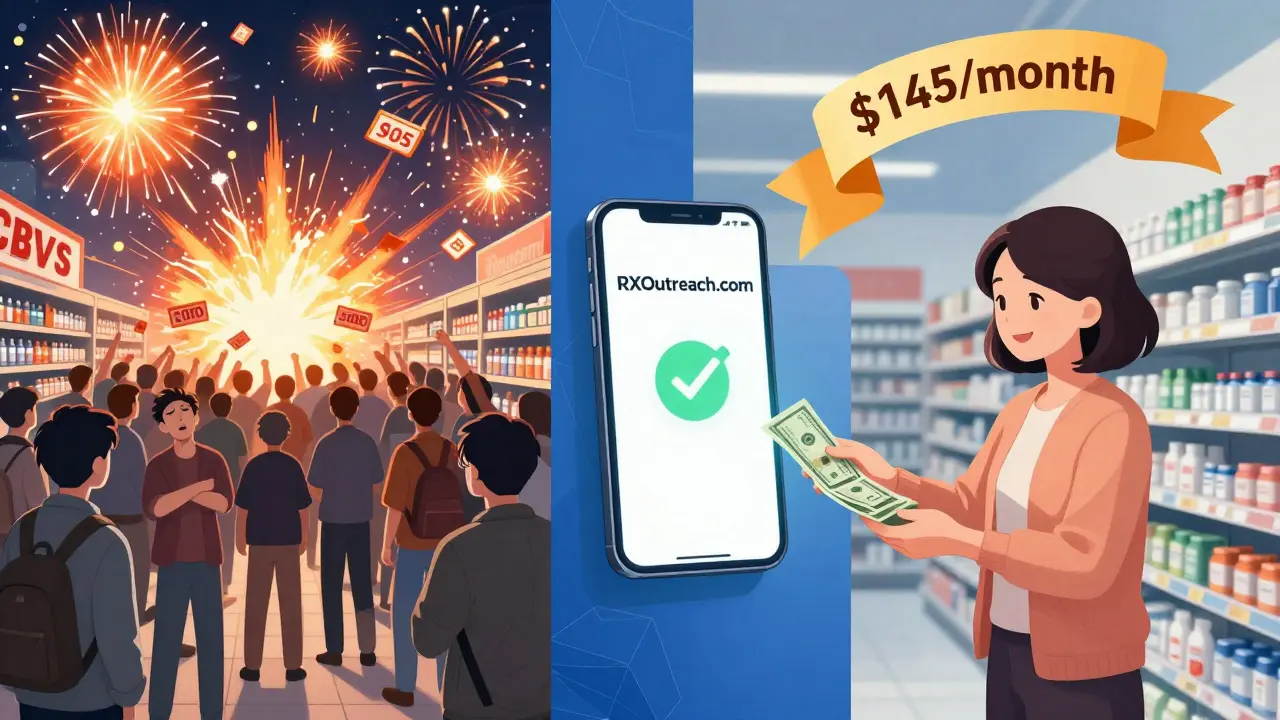
What Doesn’t Work
- Assuming insurance always saves money. It doesn’t. Always compare. - Buying from big chains without checking. National chains like Walgreens and CVS often have the highest cash prices. - Waiting until you run out. Price shopping takes 10 minutes. Running out of meds takes hours of stress, ER visits, or worse. - Believing brand-name drugs can’t be substituted. Talk to your pharmacist. Ask: “Is there a generic?” If the answer is yes, get it.Final Checklist: Your 5-Minute Savings Routine
Every time you get a new prescription, do this:- Ask the pharmacy for the cash price before insurance.
- Open GoodRx, RxSaver, and WellRX on your phone.
- Compare the three prices.
- Check if your local independent pharmacy has a loyalty discount.
- If you’re on Medicare, check if the cash price beats your co-pay.
- If you earn under $45k/year, check RXOutreach.com.
Frequently Asked Questions
Is it legal to use GoodRx instead of insurance?
Yes. You can choose to pay cash instead of using your insurance. Pharmacies are required to give you the cash price upon request. Many people use GoodRx because it’s cheaper than their insurance co-pay - especially with high-deductible plans.
Why is the cash price higher than my insurance price?
It’s not always higher. Sometimes the cash price with a discount coupon is lower. Insurance companies negotiate complex rebates with Pharmacy Benefit Managers (PBMs), but those savings don’t always get passed to you. Your co-pay might be based on a higher list price, while the cash price reflects a direct discount from the pharmacy.
Can I use GoodRx with Medicare Part D?
Yes. But you can’t use both at the same time. You choose: either use your Medicare plan and count the cost toward your deductible, or pay cash with a GoodRx coupon and not count it. If the cash price is lower than your co-pay, paying cash saves you money - and you still get the medication.
Do all pharmacies accept GoodRx?
Most do - over 70,000 U.S. pharmacies accept GoodRx. But not all. Always call ahead or check the app to confirm. Some small independent pharmacies don’t participate, but they may still offer their own discount.
Are there any risks to using discount apps?
The main risk is price inaccuracies. About 12.7% of users report seeing a price on the app that’s different at the counter. Always confirm the final price before paying. Also, discount apps don’t work well for brand-name drugs with no generic alternative. But for generics, the savings are real and consistent.
brooke wright
January 16, 2026 AT 14:39I paid $87 for my blood pressure med at Walgreens last month. Walked into the CVS next door, asked for cash price, and they gave it to me for $12. I almost cried. Why does this not get more attention?
Also, my grandma uses GoodRx and now she buys her pills in bulk. She saves $200 a month. It’s insane we’re not taught this in school.
Allen Davidson
January 18, 2026 AT 02:31This is the most important post I’ve read all year. Seriously. I used to think insurance was magic. Turns out it’s just a maze designed to make you give up.
My dad had diabetes and kept paying $150 for insulin until I showed him GoodRx. He’s been paying $28 for months now. No one told him. No one even asked.
Stop assuming. Start checking. It’s not rocket science, it’s survival.
Rob Deneke
January 19, 2026 AT 04:58just found out my local independent pharmacy gives 20 off if you ask for it no coupon needed
they dont even advertise it
so many people dont know this
and yeah insurance is often worse
i used to use it cause i thought it was the only way
turns out i was getting scammed
thanks for this
gonna share with my whole family
evelyn wellding
January 19, 2026 AT 11:28OMG I JUST DID THIS TODAY 😭
I was about to pay $45 for metformin at CVS… then I checked GoodRx and saw $3.99 at the corner pharmacy down the street.
I ran there in my pajamas and got it. I feel like a financial wizard now.
Thank you for this post!! 💖 You just saved me $1000 a year!!
Chelsea Harton
January 21, 2026 AT 09:42cash price > insurance. duh. why is this news? we live in a broken system. but hey at least you can use apps now. kinda.
still wild that pills cost less than a latte.
Corey Chrisinger
January 23, 2026 AT 05:04It’s funny how capitalism works in healthcare. You’re supposed to trust the system, but the system is designed to profit from your ignorance.
Pharmacies don’t want you to compare prices. They want you to walk in stressed, in pain, and just pay.
That’s why this post matters. It’s not about coupons. It’s about reclaiming agency.
And yeah, sometimes the cheapest option is the one you’ve never heard of.
Keep asking questions. Even if you feel silly.
It’s worth it.
Bianca Leonhardt
January 23, 2026 AT 06:05Wow. Someone actually took the time to explain this without sounding like a scammy influencer. Impressive.
Still, it’s pathetic that you need a 10-step checklist just to afford your life-saving meds.
People die because they can’t afford this. And you’re here saving $14 on metformin like it’s a hobby.
Good for you. But this isn’t empowerment. It’s a damn emergency.
Travis Craw
January 24, 2026 AT 14:21just wanted to say thanks for sharing this. i never knew about rxoutreach.com
my mom is on medicare and was paying $90 for her thyroid med
she checked rxoutreach and got it for $18
she cried when she told me
i wish i found this sooner
thank you for making it so simple
Christina Bilotti
January 24, 2026 AT 21:06Oh sweetie, you found the magic coupon fairy. How adorable.
Let me guess - you also recycle your aluminum cans and think ‘shopping around’ is activism?
Meanwhile, real people are rationing insulin because they can’t afford the $300 co-pay your ‘savings’ don’t touch.
Good for you for playing the broken system like a game. Meanwhile, the system is still killing people.
But hey, at least you saved $14 on metformin. Bravo.
Cheryl Griffith
January 26, 2026 AT 10:16I’m a nurse and I see this every single day.
Patients come in with tears because they skipped doses because the cash price was too high.
They don’t know about GoodRx. They don’t know about $4 lists. They think their doctor’s office will tell them.
They don’t.
So thank you for putting this out there. I’m printing this out and handing it to every patient who walks in with a new script.
You didn’t just write a post. You saved lives.
Nick Cole
January 28, 2026 AT 00:22My sister just got diagnosed with hypothyroidism. She’s 24, no insurance, working two jobs.
I sent her this post yesterday.
Today she texted me: ‘I got my Synthroid for $1.99 at Walmart. I didn’t even need a coupon.’
I didn’t know what to say.
So I just said: ‘I love you.’
Thank you for this. Really.