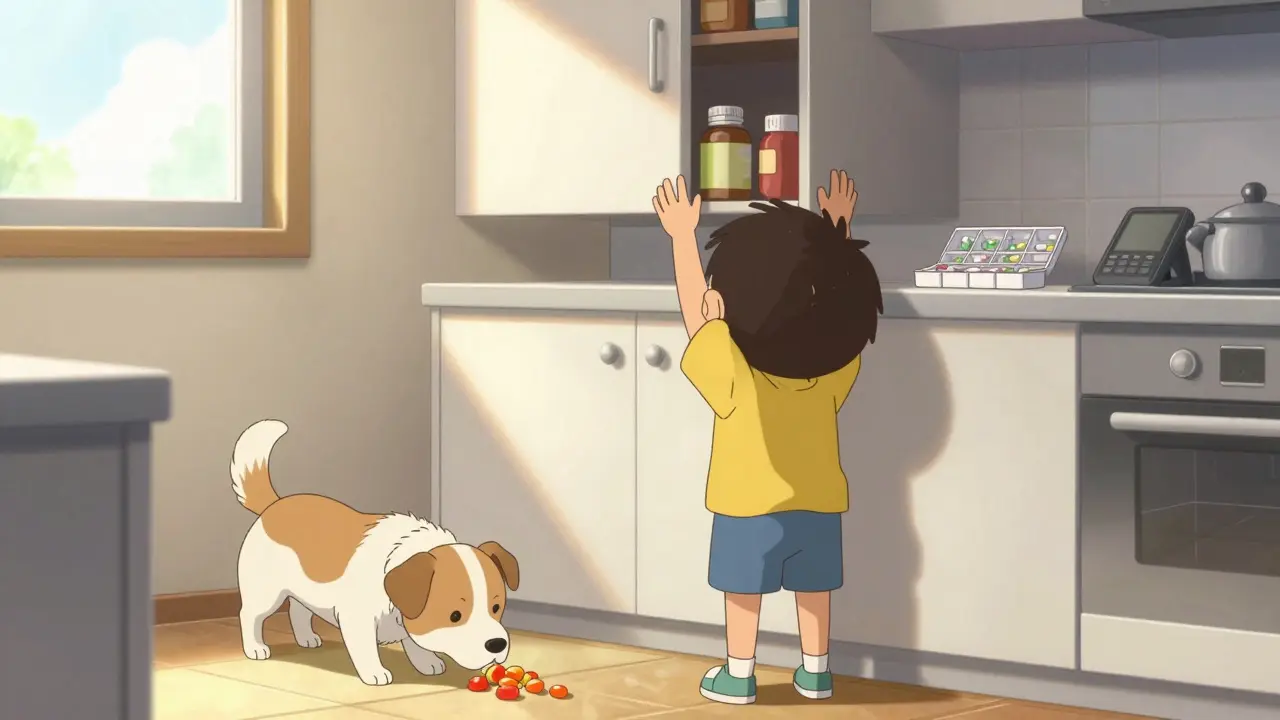
Medications are everywhere in our homes - and so are kids and pets
It’s easy to forget how dangerous a simple pill can be. A child sees a colorful gummy vitamin on the counter and thinks it’s candy. A dog sniffs out a dropped painkiller between couch cushions and swallows it in a second. These aren’t rare accidents - they happen every day. In fact, about 60,000 children under age 5 end up in emergency rooms each year because they got into medicines. Pets aren’t safe either. Dogs alone account for nearly 8 out of 10 pet poisoning cases linked to human medications.
Why your bathroom cabinet is the worst place to store medicine
Most people keep their meds in the bathroom. It’s convenient. You’re already there. But that’s exactly why it’s dangerous. Bathrooms are humid. Heat and moisture break down pills, making them less effective or even unsafe. More importantly, kids can reach the shelf. Pets can jump. And if you leave a bottle out while taking your morning dose? That’s when accidents happen.
According to Seattle Children’s Hospital, 78% of pediatric medication poisonings happen because someone left pills on a counter, nightstand, or open cabinet - even for just a few minutes. The CDC says 40% of parents still store meds in the bathroom despite this risk. Don’t be one of them.
Where to store medicine: The Up and Away rule
The CDC’s Up and Away campaign gives a simple rule: keep all medications out of sight and out of reach. That means higher than 5 feet. Not just on a top shelf - behind a closed door. A bedroom closet with a lock works. A high kitchen cabinet with a child lock works. A locked box on a shelf in the laundry room works.
Here’s what to avoid:
- Countertops - even for a minute
- Handbags or purses - kids dig through them
- Backpacks or coats hanging by the door
- Drawers without locks
- Under sinks
Children can climb. They can pull chairs over. They can open child-resistant caps - especially if they’ve seen you do it. And pets? They’ve got noses that can smell a pill through plastic. A locked container isn’t optional. It’s the baseline.
Separate human meds from pet meds - completely
It’s tempting to keep all your pills in one spot. Don’t. Human and pet medications are not interchangeable - and mixing them is dangerous.
Heart medication meant for a person can kill a dog. A dog’s arthritis pill can cause kidney failure in a cat. Even common painkillers like ibuprofen or acetaminophen are toxic to pets at doses far lower than what humans take. And here’s something many people don’t know: about 25% of pet medication poisonings happen because a person accidentally takes their dog’s or cat’s pill.
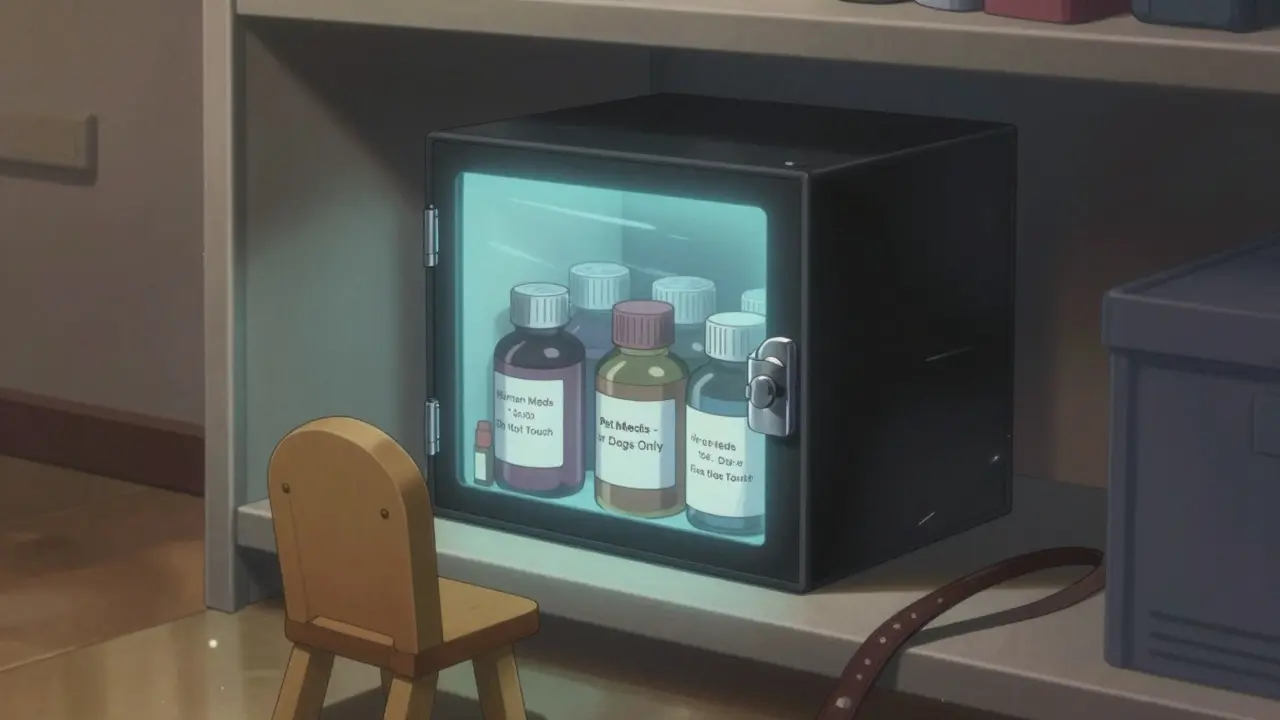
Use separate locked containers. Label them clearly: “Human Meds - Do Not Touch” and “Pet Meds - For Dogs Only.” Store them in different rooms if you can. If you have both kids and pets, treat pet meds like a hazardous material. Keep them away from the kitchen, where pets roam freely, and never leave them on the floor during feeding time.
Gummy vitamins and flavored meds are the hidden danger
They look like candy. They taste like candy. And kids - and pets - treat them like candy.
The CDC reports that gummy supplements make up just 15% of all vitamin sales but cause 30% of childhood ingestions. Same goes for flavored pet meds. Many dog medications are liver- or chicken-flavored. Cats get tuna-flavored pills. Your Labrador doesn’t know it’s medicine. He knows it’s a treat.
Store these items like you would a box of chocolates - locked up, out of sight, and off the floor. Don’t assume “child-resistant” packaging is enough. It’s not. It’s designed to slow down a curious child for a few minutes - not stop them forever. Locks, not labels, are what keep kids and pets safe.
Use a lockbox - it’s not overkill, it’s common sense
There are dozens of affordable, easy-to-use lock boxes made just for this. The VADIC Safe Storage Bag, for example, is 11 inches by 6 inches, has a combination lock, and fits in a closet. It’s the same size as a small shoebox. You can buy one for under $20.
Some people use biometric safes - fingerprint locks that open in seconds. One parent on Reddit said after their 3-year-old got into a “childproof” cabinet, they bought a biometric safe. “It adds 10 seconds to my routine,” they wrote. “But I sleep better.”
For households with multiple people taking meds, weekly pill organizers with lockable compartments work well. Just make sure each person’s meds are in a separate section. Don’t mix them. Don’t leave the organizer on the counter.
What to do after you give a pill
Don’t just toss the bottle back on the counter. Don’t leave it on the nightstand. Don’t set it down while you’re answering a text.
Children’s Mercy Hospital recommends the “two-minute rule”: secure the medication within two minutes of giving it. That means closing the cap, locking it away, and walking away. Even if you’re only waiting for the next dose in an hour - lock it. That’s when most accidents happen.
And never give medication over the couch or on the floor. Always do it on a flat, clear surface - like a kitchen table. That way, if a pill drops, you see it. Pets can’t sneak it up from under the cushions.
How to dispose of old or expired meds - safely
Don’t flush them. Don’t throw them in the trash loose. Don’t pour them down the sink.
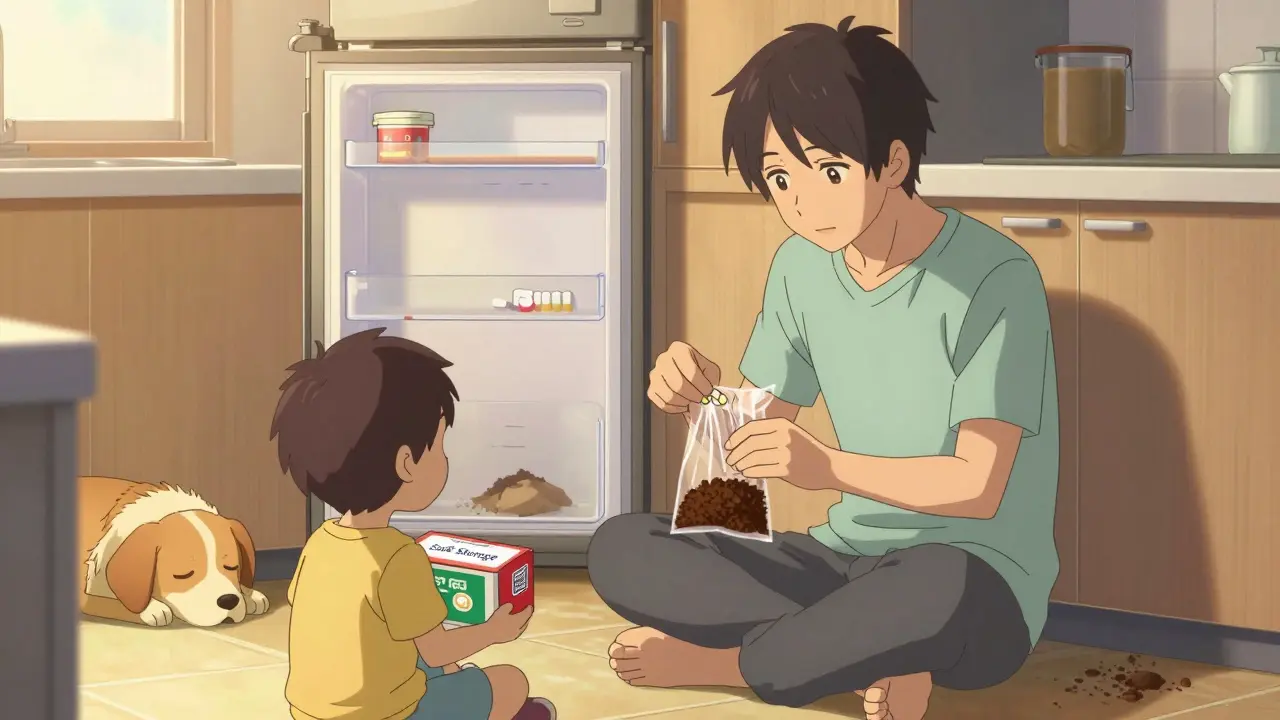
The EPA says the safest way to dispose of unwanted pills is to mix them with something unappetizing - like used coffee grounds, cat litter, or dirt. Use a 1:1 ratio. Put the mixture in a sealed plastic bag. Then toss it in the trash.
Why? Because someone - or something - might dig through your garbage. A dog could find a whole bottle of pills. A kid might think the bottle is empty and try to take what’s left. Mixing it with smelly, gritty stuff makes it unappealing and unrecognizable.
Some pharmacies offer take-back programs. Check with your local pharmacy. Some cities have drop boxes at police stations or community centers. If you’re unsure, call your city’s waste management department. They’ll tell you where to go.
What to do if your child or pet swallows a pill
If you think your child or pet has swallowed a medication - don’t wait. Don’t try to make them throw up. Don’t Google it.
Call Poison Control immediately. In the U.S., the number is 1-800-222-1222. It’s free. It’s available 24/7. Have the pill bottle ready. Tell them what was taken, how much, and when. They’ll tell you exactly what to do.
For pets, call your vet or the ASPCA Animal Poison Control Center at (888) 426-4435. There’s a fee, but it’s worth it. Time matters. Many poisons cause damage within minutes.
Small changes, big results
You don’t need a fancy safe. You don’t need to overhaul your whole house. Just make three changes:
- Move all meds out of the bathroom and off the counter.
- Lock them in a box or cabinet they can’t open.
- Keep human and pet meds completely separate.
That’s it. These steps cut the risk of accidental poisoning by more than 75%, according to modeling from the National Safety Council. The goal isn’t perfection. It’s prevention. One locked box, one changed habit, could save a life.
It’s not about being paranoid - it’s about being prepared
Medicines save lives. But they can also end them - quickly and quietly. Most parents and pet owners aren’t careless. They just don’t realize how easy it is for a child or pet to get into something they shouldn’t.
Fixing this isn’t about buying expensive gear. It’s about building a habit. Lock it. Store it high. Keep it separate. Secure it after every use. That’s the routine. That’s the safety net.
And if you ever forget? Just ask yourself: Would I leave candy where my child or dog could reach it? If the answer is no - then don’t leave medicine there either.
Can child-resistant caps really keep kids from getting into medicine?
No. Child-resistant caps are designed to slow down a child for a few minutes, not stop them completely. Many kids figure them out after seeing their parents open them. The CDC and HealthyChildren.org both say these caps are not a substitute for locked storage. Always use a lockbox or locked cabinet - even if the bottle has a child-resistant cap.
Is it safe to store medicine in the fridge?
Only if the label says to. Some medicines, like insulin or certain antibiotics, need refrigeration. But even then, they must be kept in a locked container inside the fridge - away from food and out of reach of children and pets. Never store them on the top shelf where they’re visible. Use a small, locked box or a separate drawer.
What if I only have one locked cabinet - where should I put human and pet meds?
Use separate containers inside the same cabinet. Put human meds in one locked box and pet meds in another. Label them clearly. Keep them on different shelves - don’t stack them. This prevents mix-ups and reduces the chance that a pet could access human meds if the cabinet is ever opened.
Can I throw old pills in the trash without mixing them with anything?
No. The EPA and CDC recommend mixing pills with coffee grounds, cat litter, or dirt before throwing them away. This makes them unappealing and unrecognizable. A dog or curious child might still dig through the trash - but if the pills are mixed in with smelly, gritty stuff, they’re far less likely to be eaten.
Are there any medications that are especially dangerous to pets?
Yes. Common ones include ibuprofen (Advil), acetaminophen (Tylenol), antidepressants, ADHD meds like Adderall, and heart medications like beta-blockers. Even a single pill can be fatal to a small dog or cat. NSAIDs - used for pain and inflammation - are among the most dangerous. Always keep these locked up and never leave them within reach.
Geri Rogers
February 4, 2026 AT 09:58OMG YES. I just bought one of those $15 lockboxes after my dog ate my husband’s blood pressure pill last month. He was fine, but I nearly had a heart attack. Now everything - even gummy vitamins - goes in there. No excuses. Lock it. Period. 🚫💊
Demetria Morris
February 5, 2026 AT 07:06It’s not just about storage - it’s about mindset. People treat medicine like it’s harmless because it’s prescribed. But a pill isn’t a snack. It’s a chemical weapon in the wrong hands. If you wouldn’t leave cocaine on the counter, why leave OxyContin? The normalization of negligence is terrifying.
Susheel Sharma
February 7, 2026 AT 02:45Let’s be brutally honest: the CDC’s ‘Up and Away’ rule is a joke. If your child can climb, they will reach. If your pet has a nose, they will find it. Storage is irrelevant without behavioral conditioning. You must teach children that medicine is not candy - not through lectures, but through consequence. And yet, parents still leave bottles on nightstands while scrolling TikTok. The problem isn’t storage. It’s parental apathy.
Alex LaVey
February 7, 2026 AT 23:13I love how this post doesn’t shame people - it just gives simple, practical steps. I used to keep meds in the bathroom like everyone else. Then my niece came over, grabbed my sister’s ADHD pills, and popped three. She’s fine, but the panic? Unreal. Now? Locked box in the bedroom closet. Took 2 minutes. Peace of mind? Priceless. Thanks for the reminder - we all need it.
Caleb Sutton
February 8, 2026 AT 01:56They’re lying about the 78% statistic. The CDC doesn’t track this properly. And why is no one talking about Big Pharma pushing gummy vitamins? They’re designed to be addictive. It’s a conspiracy. They want kids hooked on pills. Lockboxes won’t stop it. The system is rigged.
Meenal Khurana
February 9, 2026 AT 13:01My mom keeps her meds in a locked Tupperware on the top shelf. Works fine. No drama.
rahulkumar maurya
February 10, 2026 AT 15:20How quaint. You Americans treat medicine like it’s a fragile artifact. In India, we’ve been storing pills in drawers for generations - and our children don’t die. The real issue? Over-medicalization. You’ve turned a simple precaution into a full-blown panic industry. A locked box? For vitamins? How about teaching children discipline instead of installing biometric safes? Your culture of fear is the real poison.
Prajwal Manjunath Shanthappa
February 11, 2026 AT 06:23And yet - you still haven’t addressed the elephant in the room: what about the elderly? Who locks up their own meds when they’re forgetful? Who ensures the caregiver doesn’t accidentally take Grandma’s heart pill? You preach locks, but ignore the systemic collapse of elder care. This isn’t about storage - it’s about abandonment. And you’re selling plastic boxes like they’re salvation.
Samuel Bradway
February 11, 2026 AT 15:54I just wanted to say thank you for this. My daughter is 2, and I used to leave my pills on the counter while I made coffee. I didn’t think twice. Then I saw a video of a toddler swallowing a whole bottle of melatonin. I cried. Now I have a lockbox. It’s not perfect, but it’s a start. I’m trying. And that’s enough.
Shelby Price
February 13, 2026 AT 13:49So… what about cats? They’re sneaky. My cat once knocked my sister’s thyroid pill off the counter and ate it. She was fine, but I never leave meds out anymore. Even if it’s just for 30 seconds. I’m weirdly obsessive now. 😅
Jamillah Rodriguez
February 14, 2026 AT 07:46Lockboxes? Please. My neighbor’s kid got into a bottle of Xanax because the mom left it in the fridge. Locked fridge. Still got it. The real solution? Don’t take meds at all. Or at least don’t keep them in your house. Let the pharmacy hold them. That’s the only way to win.
Joy Johnston
February 15, 2026 AT 19:19As a pharmacist with 18 years of experience, I cannot stress this enough: child-resistant caps are not child-proof. I’ve seen toddlers open them in under 90 seconds. I’ve seen dogs chew through plastic bottles like they’re treats. I’ve seen grandparents accidentally take their cat’s flea pill because the labels looked similar. The only reliable method is a locked, labeled container - stored out of sight, out of reach, and separate from food. This isn’t opinion. It’s clinical reality. Please, for the love of everything good - lock it.