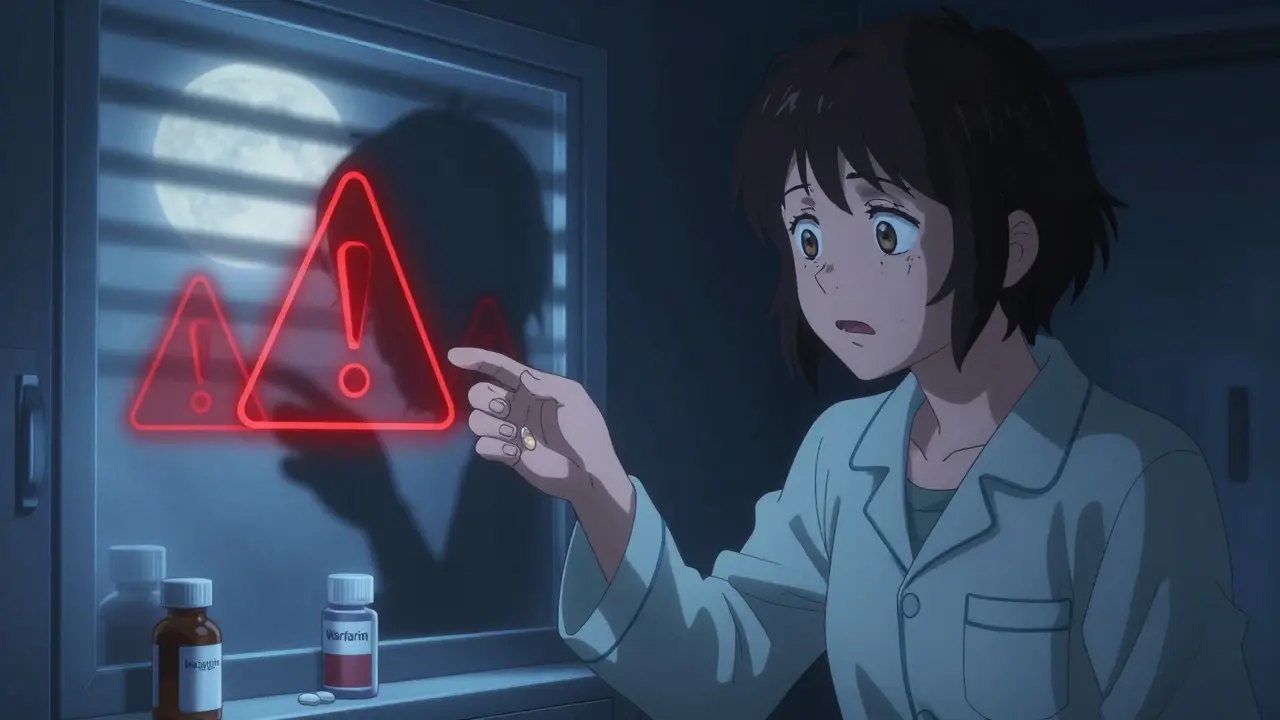
Missing a dose of your medication happens to almost everyone at some point. Maybe you were rushing out the door, forgot because of a change in routine, or fell asleep before taking your pill. The natural instinct? Take two the next time to make up for it. But that’s exactly what you should never do.
Taking a double dose to catch up might feel like the smart fix, but it can be dangerous-even life-threatening. For some medications, doubling up can send your blood levels into a toxic range. For others, it won’t help at all and just increases side effects. The truth is, how you handle a missed dose depends entirely on the medicine you’re taking, not on what feels right in the moment.
Why Doubling Up Is a Risk
Medications are designed to stay in your body at a steady level. Too little, and the drug won’t work. Too much, and you risk overdose. This is especially true for drugs with a narrow therapeutic index-meaning the difference between the right dose and a harmful one is very small.
Drugs like warfarin (a blood thinner), digoxin (for heart rhythm), and some epilepsy medications fall into this high-risk category. A 2018 study found that 17.3% of adverse drug events in older adults came from people trying to fix a missed dose by doubling up. One patient taking warfarin who doubled their dose saw their INR-a measure of blood clotting-spike past 5.0. That’s a major bleeding risk. Another took too much methotrexate, a drug used for autoimmune conditions, and ended up in the hospital with severe bone marrow suppression.
Even if your medicine doesn’t seem dangerous, doubling up can still cause nausea, dizziness, low blood pressure, or irregular heartbeat. The NHS estimates that 14.2% of preventable hospital admissions from medication errors in England are caused by people taking double doses. That’s nearly 1 in 7 cases that could have been avoided.
What to Do Instead: The General Rule
The safest default answer is simple: if you realize you missed a dose, don’t take two. Skip the missed dose and take your next one at the regular time.
This rule applies to most medications, especially those taken once a day. For example, if you usually take your blood pressure pill at 8 a.m. and you remember at 6 p.m. that you forgot it, don’t take it then. Just wait until 8 a.m. the next day. Taking it now could cause your blood pressure to drop too low overnight.
There’s one exception: if you remember within a few hours of the missed time, and it’s still the same day, you can usually take it. For once-daily meds, most guidelines say you can take it if you remember before midnight. For twice-daily meds, you have a 6-hour window. So if you take your pill at 8 a.m. and 8 p.m., and you forget the morning dose but remember at 11 a.m., go ahead and take it. But if you don’t remember until 3 p.m., skip it. The next dose at 8 p.m. is still on schedule.
Medication-Specific Rules You Need to Know
Not all pills are the same. Your action plan changes based on the drug’s half-life (how long it stays active in your body) and its purpose.
- Warfarin: If you miss your evening dose and remember before midnight, take it. If it’s past midnight, skip it. Never double up. The NHS Yellow Book says this clearly because even one extra milligram can cause dangerous bleeding.
- Oral contraceptives: If you miss an active pill by less than 12 hours, take it as soon as you remember. If it’s more than 12 hours late, take it now but use backup contraception (like condoms) for the next 7 days. Missing two or more pills in a row requires calling your doctor.
- GLP-1 weight-loss drugs (semaglutide, tirzepatide): You can take a missed dose up to 4 days late, but never double up. If you miss two doses in a row (14 days without the drug), talk to your doctor before restarting. Some people get severe nausea when they resume after a long break.
- Antibiotics like amoxicillin: Rarely, doctors may say it’s okay to double the first missed dose, but only if it’s within a few hours. This applies to less than 3% of antibiotics. Always check with your pharmacist.
- Levothyroxine (thyroid hormone): Many patient leaflets give wrong advice here. The correct rule: if you forget in the morning, take it later that day. If you don’t remember until the next day, skip it. Don’t take two on the same day. Your thyroid levels are sensitive-even small changes matter.
- Insulin: This is one of the most dangerous medications to mess with. Never double up. If you miss a dose, check your blood sugar. If it’s high, follow your doctor’s correction plan. Don’t guess. Call your provider if you’re unsure.
How to Know What’s Right for Your Medicine
Too many patient leaflets give vague or conflicting advice. A 2021 review found that 25% of high-risk medications had no missed dose instructions at all. Even worse, 41.7% of leaflets had contradictory guidance.
Don’t rely on the paper insert. Instead:
- Ask your pharmacist when you pick up the prescription. Say: “What should I do if I forget to take this?”
- Use the NHS Medicines A-Z online tool or the FDA’s website for official guidance.
- Check your pharmacy’s app-many now send alerts with specific instructions for missed doses.
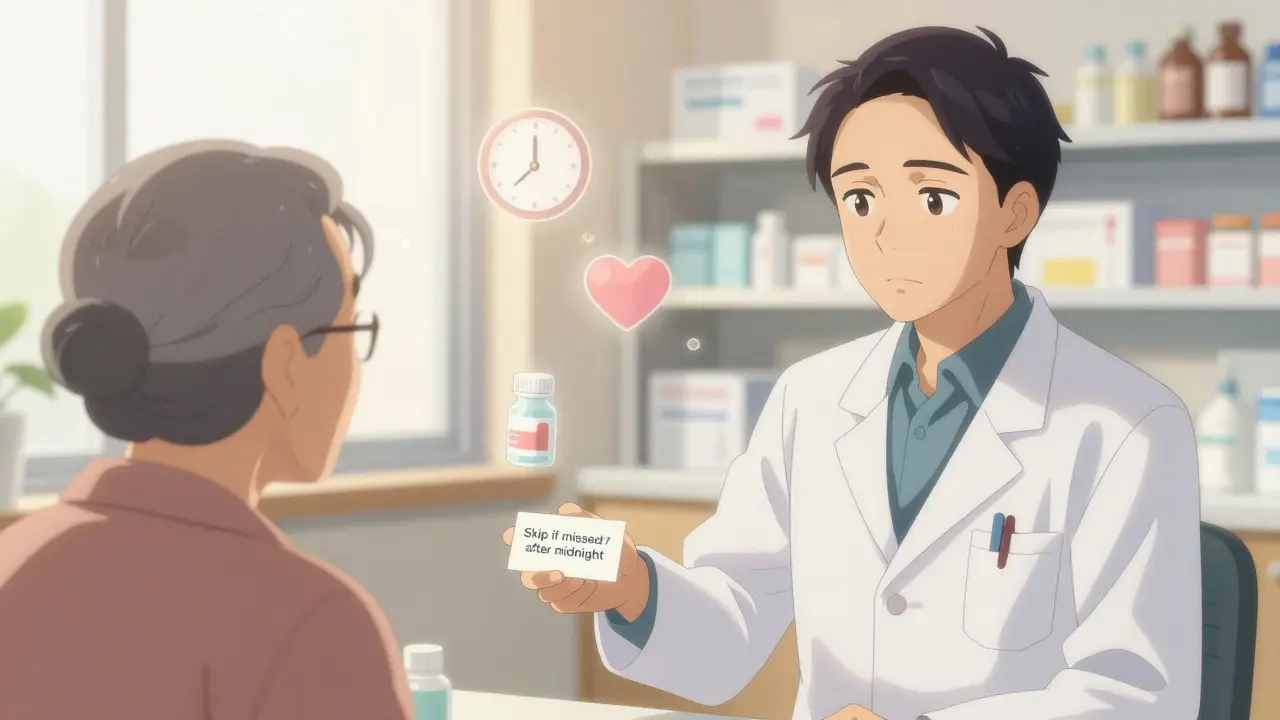
- Keep a small card in your wallet with the missed dose rule for each of your top 3 meds.
For example, write:
- Warfarin: Skip if missed after midnight
- Metformin: Take if remembered same day, skip if next day
- Levothyroxine: Take same day, skip if next day
What If You Accidentally Took a Double Dose?
If you realize you took two pills by mistake, don’t panic-but act fast.
- Call your pharmacist or doctor immediately. They can tell you if it’s dangerous based on your specific drug and dose.
- For high-risk drugs like warfarin, insulin, or digoxin, go to urgent care or the ER. Don’t wait.
- For less risky meds like ibuprofen or metformin, monitor for side effects: dizziness, nausea, rapid heartbeat, or unusual bleeding. Call if they start.
- Report the error to your country’s drug safety system (like the MHRA’s Yellow Card in the UK). This helps improve guidelines for everyone.
How to Avoid Missing Doses in the First Place
Prevention is always better than fixing mistakes. Here’s what works:
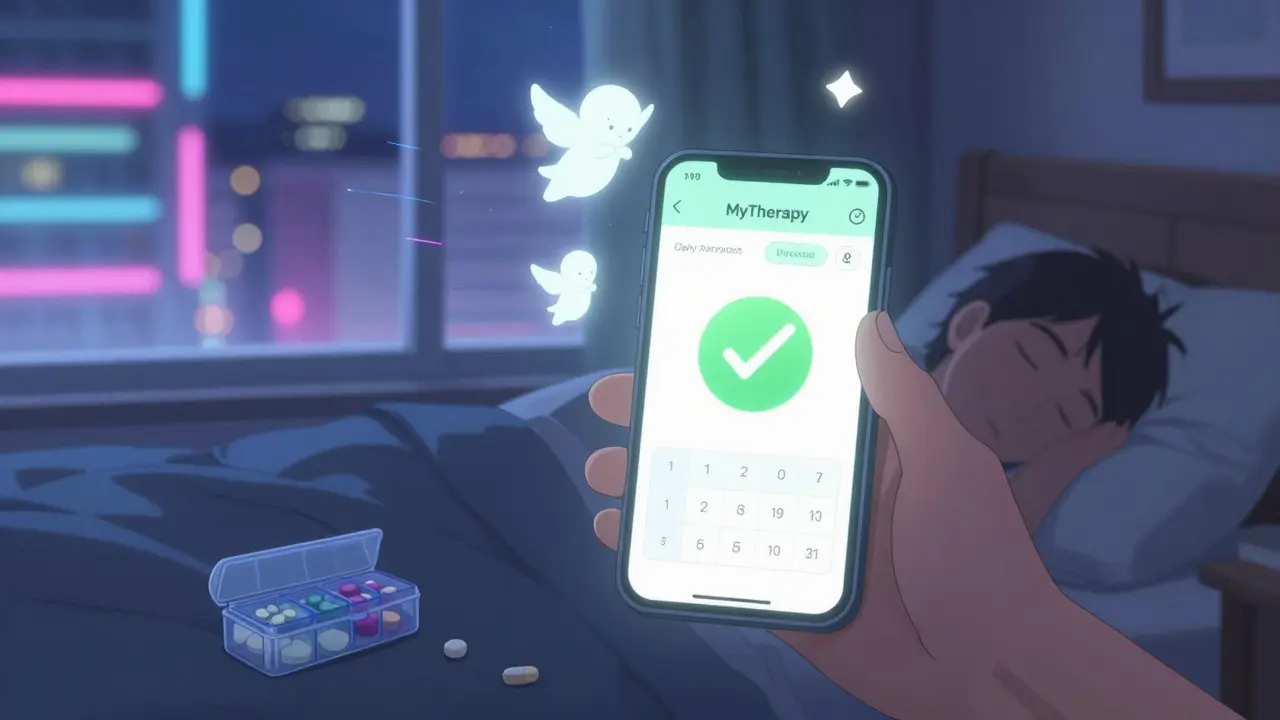
- Use a pill organizer with days of the week and morning/evening slots.
- Set two alarms on your phone-one for the time you take it, and another 30 minutes later as a backup.
- Link your dose to a daily habit: “After I brush my teeth, I take my pill.”
- Use apps like MyTherapy or Medisafe. Users report a 42% drop in missed doses.
- Ask your pharmacist for blister packs if you take multiple meds. They’re pre-sorted and harder to mess up.
- Keep a backup supply in your bag, car, or work desk if you’re often away from home.
Traveling? Set your phone to the local time zone. Daylight saving changes cause 12.4% of medication errors. Don’t assume your body will adjust automatically.
When to Get Professional Help
If you’re missing doses often, it’s not just forgetfulness-it might be a sign of something deeper. Maybe the regimen is too complicated, the side effects are too much, or you’re overwhelmed.
Book a Medicines Use Review (MUR) with your pharmacist. These free 10-15 minute chats are designed to simplify your regimen. In one UK study, MURs reduced missed doses by 27.8%.
Also, talk to your doctor if:
- You’re taking 5 or more medications
- You’ve had a hospital visit because of a missed or doubled dose
- You feel anxious every time you think about your pills
There are simpler regimens out there. Maybe your blood pressure med can be switched to a once-daily version. Maybe your diabetes meds can be combined. You don’t have to live with a confusing schedule.
Final Thought: Safety Over Simplicity
It’s tempting to want one rule for all pills: “Just take it if you remember.” But that’s not safe. Medications are powerful tools, and their timing matters. The goal isn’t to be perfect-it’s to be smart. Skip the double dose. Check the right source. Ask for help. Your body will thank you.
What should I do if I miss a dose of my blood pressure medication?
If you miss your blood pressure pill and remember within the same day, take it as soon as possible. If it’s already the next day, skip the missed dose and take your next one at the regular time. Never double up. Most once-daily blood pressure meds are designed to stay effective for 24 hours, so one missed dose won’t cause immediate harm-but doubling up can drop your pressure too low and cause dizziness or fainting.
Can I take two pills the next day if I miss one?
No. Taking two pills the next day to make up for a missed dose can lead to dangerous side effects or overdose. Your body processes medication over time. Taking two doses at once creates a spike in drug levels that your system wasn’t designed to handle. Always follow the rule: skip the missed dose and return to your normal schedule.
Why do some medications say to take a missed dose if it’s within 6 hours?
This applies to medications with a short half-life-meaning they leave your body quickly. For example, rivaroxaban (a blood thinner) has a half-life of about 9 hours. If you miss a dose and remember within 6 hours, taking it then keeps your drug levels stable. Beyond that, the next scheduled dose will bring you back to the right level. Taking it too late could cause a gap in protection.
What if I forget my insulin dose?
Never double your insulin dose. If you miss a dose, check your blood sugar. If it’s high, follow your doctor’s correction plan using your prescribed insulin-to-carb ratio or correction factor. Call your healthcare provider if you’re unsure. Missing insulin can lead to high blood sugar and ketoacidosis, which is a medical emergency.
Are there any medications where doubling up is okay?
Very few. In rare cases, doctors may say it’s okay to double the first missed dose of certain antibiotics like amoxicillin, but only if you remember within a few hours. This applies to less than 3% of all prescriptions. Never assume it’s safe. Always confirm with your pharmacist or prescriber before doing anything different.
How can I remember to take my meds every day?
Use a pill organizer, set phone alarms, link doses to daily habits (like brushing your teeth), or use a medication app like MyTherapy. Many pharmacies offer blister packs that sort your pills by day and time. For older adults or those on multiple meds, a Medicines Use Review with your pharmacist can simplify your regimen and reduce confusion.
If you’re managing multiple medications, consider asking your pharmacist for a written missed-dose cheat sheet. Keep it in your wallet or on your fridge. You don’t have to remember everything-just know where to look.
Eileen Reilly
January 13, 2026 AT 08:45omg i literally doubled my warfarin once bc i thought i missed it and woke up with a bruise the size of a grapefruit. never again. my pharmacist yelled at me for 20 mins and i cried in the parking lot. worth it.
Monica Puglia
January 14, 2026 AT 09:08this is so important 🙏 i used to forget my levothyroxine all the time until i started keeping a little card in my wallet like the post said. now i just glance at it when i’m rushing out the door. my endo even noticed my levels stabilized 😭
steve ker
January 15, 2026 AT 19:42Rebekah Cobbson
January 17, 2026 AT 19:06if you’re reading this and you’re stressed about missing doses-you’re not failing. your body isn’t a machine. try the pill organizer + one alarm. that’s it. no need to overcomplicate it. small steps matter more than perfection.
Lauren Warner
January 19, 2026 AT 18:11the fact that 41.7% of patient leaflets contradict each other is criminal. i’ve had pharmacists give me opposite advice on the same drug. if your meds aren’t clearly labeled with unambiguous missed-dose instructions, demand better. this isn’t just negligence-it’s malpractice by omission.
Craig Wright
January 21, 2026 AT 03:14in the UK we have the NHS Yellow Book for a reason. Americans need to stop winging it with their meds. doubling up on insulin? that’s not bravery, that’s idiocy. we don’t let people drive without a license-why are we letting them self-prescribe dose adjustments?
Rinky Tandon
January 22, 2026 AT 02:40the pharmacoeconomic burden of polypharmacy mismanagement is staggering-especially in aging populations with non-adherence cascading into ER visits. the 17.3% ADE stat from the 2018 JAMA study is a direct function of fragmented patient education and lack of standardized pharmacovigilance protocols. we need mandatory pharmacist-led medication reconciliation at point of dispensing-not just for high-risk agents but as a universal standard.
Ben Kono
January 23, 2026 AT 04:33