
When you pick up a generic pill, you expect it to work just like the brand-name version. But what about the label? The FDA generic drug labeling rules are strict-and they’re not always what you’d assume. Many people think generic manufacturers can update their labels independently when new safety info comes out. They can’t. And that gap has real consequences.
Identical Labeling Is the Rule
The FDA requires that generic drug labels be identical to their Reference Listed Drug (RLD)-the original brand-name product used as the benchmark. This isn’t just a suggestion. It’s written into federal law under Section 505(j)(2)(A)(v) of the FD&C Act and enforced through 21 CFR 314.94(a)(8). Every section of the label must match: indications, dosage, warnings, contraindications, adverse reactions, clinical pharmacology. Even the wording. If the brand updates its boxed warning about liver damage, the generic must follow-exactly.
There are only three exceptions. Generic labels can differ in the manufacturer’s name, address, and National Drug Code (NDC) number. That’s it. No rewording. No simplifying. No adding a footnote about newer studies. If the RLD says “use with caution in patients with renal impairment,” the generic must say the same thing-even if newer data suggests it’s safe.
The PLR Format: Standardized and Non-Negotiable
Since 2006, the Physician Labeling Rule (PLR) has dictated how all prescription drug labels are structured. It’s not just about content-it’s about layout. Every label must follow a 24-section format with clear headings like “Highlights of Prescribing Information,” “Recent Major Changes,” and “Use in Specific Populations.”
Generic manufacturers must adopt the PLR format as soon as their RLD does. If the brand switches from an old-style label to PLR, the generic must follow within the same timeline. This standardization helps doctors and pharmacists find critical info quickly. But it also means if the RLD’s label is outdated, the generic can’t fix it on its own.
How Updates Work (and Why They’re Delayed)
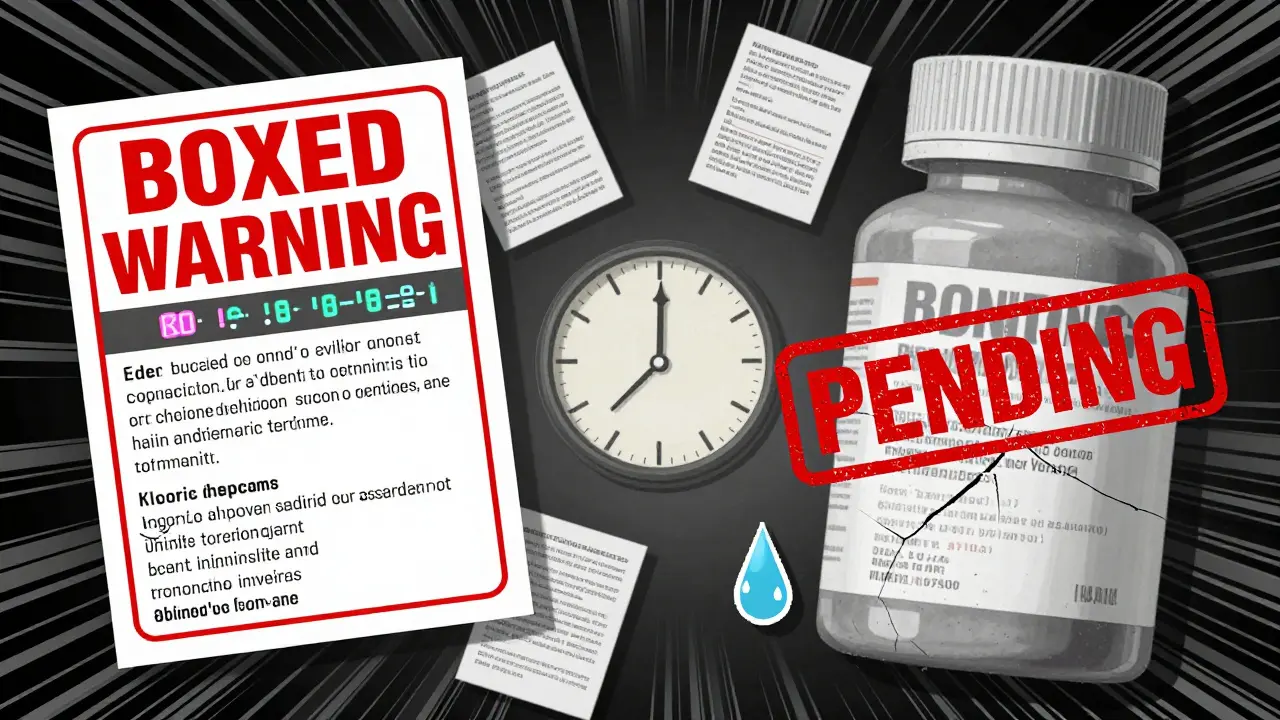
Here’s where things get dangerous. Brand-name drugmakers can submit a “Changes Being Effected” (CBE) supplement to update labeling with new safety info-and start using it immediately, even while the FDA reviews it. Generic manufacturers can’t. They have to wait. They must wait for the FDA to approve the RLD’s update, then copy it exactly. Then submit their own labeling supplement.
That delay can take 6 to 12 months. A 2024 study in JAMA Internal Medicine found this affects 9,400 generic drugs-89% of all prescriptions filled in the U.S. In 2022, when valsartan was found to contain cancer-causing impurities, brand manufacturers updated their labels within weeks. Generic makers couldn’t update theirs until months later, even though the same pills were in their bottles.
The FDA acknowledges this problem. In 2023, it proposed a rule to let generics update labels independently in urgent safety cases. But as of January 2026, that rule is still pending. Until then, the system remains unchanged.
Monitoring Changes Is a Full-Time Job
Generic manufacturers are legally responsible for tracking every change to their RLD’s label. They can’t just check once a year. They must monitor daily. The FDA’s Drugs@FDA database is the official source, updated every Tuesday with new labeling documents. There are over 2,850 reference drugs listed there as of early 2026.
Leading companies assign 3 to 5 full-time regulatory staff for every 50 approved products. Smaller firms struggle. One survey found 68% of regulatory affairs professionals in generic drug companies have trouble keeping up with labeling changes across multiple therapeutic areas. Some rely on FDA email alerts. Others use third-party tracking tools. But mistakes happen.
In 2024, the FDA found a 17% inconsistency rate between Drugs@FDA and the Orange Book (another official listing). That means a manufacturer could be following the wrong version of a label-and not even know it.
What Happens When You Get It Wrong?
Labeling errors are the third most common reason the FDA issues complete response letters to ANDA applications. In FY 2024, 37% of those letters cited labeling issues. That means a generic drug application gets rejected-not because it’s ineffective, but because the label doesn’t match the RLD exactly.
Even after approval, compliance is monitored. Between January 2023 and December 2024, the FDA issued 47 warning letters specifically for labeling discrepancies. One company got hit because its label said “take with food” while the RLD said “take on an empty stomach.” Another had the wrong dosage range listed by 10 mg. Both were flagged as serious violations.
Fines aren’t the only risk. If a patient suffers harm because the label didn’t warn about a known interaction, the manufacturer can be sued. And in a market where profit margins are razor-thin, legal costs can sink a small company.
Electronic Labels and QR Codes Are Now Required
In 2025, the FDA mandated that all medication guides for generic drugs include a direct link to the current FDA-approved label. That means QR codes or URLs printed on the packaging. The link must be HTTPS-secured and point directly to the PDF version on Drugs@FDA.
This change was meant to reduce paper waste and ensure patients always get the latest info. But it’s another layer of complexity. If the URL breaks, or the PDF is outdated, the manufacturer is still liable. One company had to recall 50,000 bottles in late 2024 because the QR code led to an archived version of the label.
Who’s Affected the Most?
Generic drugs make up 92.6% of all prescriptions in the U.S. but only 23.4% of spending. That’s $647 billion saved annually. But the burden of compliance falls hardest on small manufacturers. They spend an average of $147,500 per product annually on labeling compliance. Big players like Teva, Viatris, and Sandoz have teams of 50 to 120 people just for labeling. Smaller firms often outsource it-and still miss updates.
And then there are the withdrawn RLDs. Over 1,200 brand-name drugs have been pulled from the market, but their generic versions are still sold. The MODERN Labeling Act (2020) gave the FDA tools to update these labels, but implementation is slow. As of early 2026, 3,500 generic products are still using labels based on discontinued brand products. Some haven’t been updated in over a decade.
What’s Next?
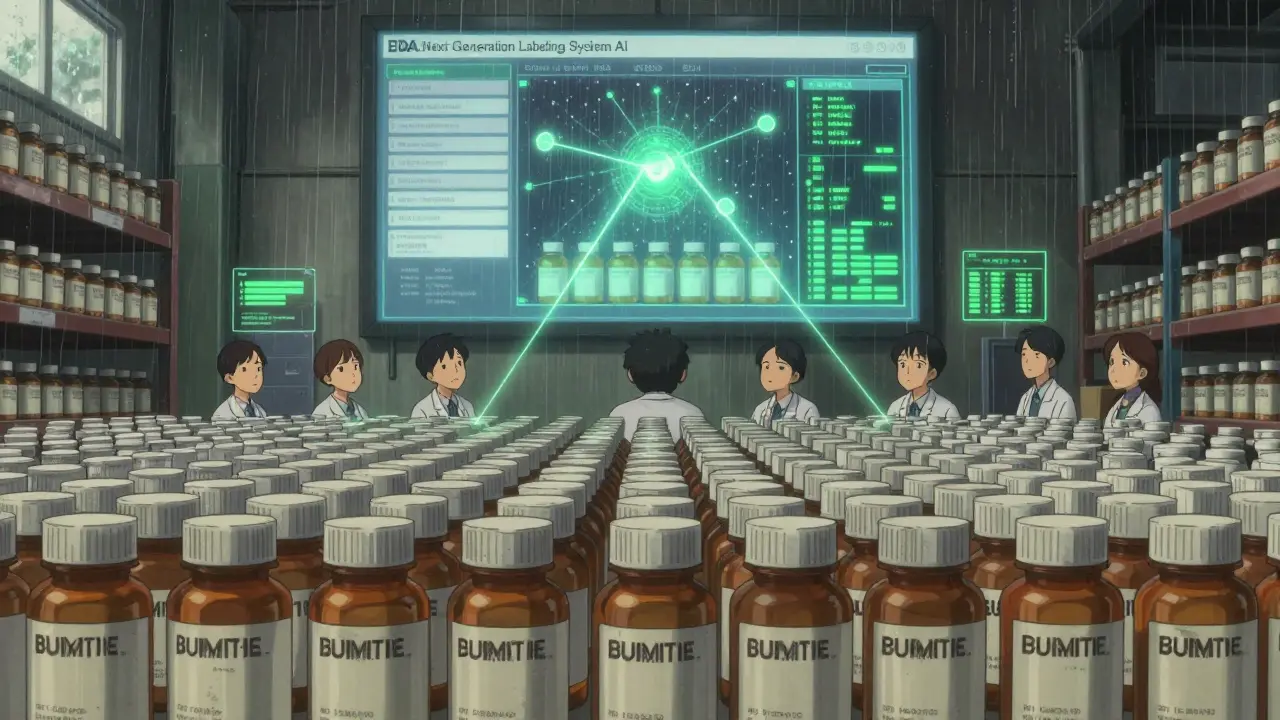
The FDA is testing a new AI-powered system called the Next Generation Generic Drug Labeling System. It’s set to launch in Q3 2025. The goal? Automatically detect changes in RLD labels and notify generic manufacturers in real time. Beta testing began in April 2025 with 15 major companies. If it works, it could cut labeling delays from months to days.
But until then, the system remains broken. Generics are held to a higher standard of conformity-but given less power to respond to safety risks. The FDA’s own experts have called this an “unacceptable safety gap.” And for the millions of people taking generics every day, that gap isn’t theoretical. It’s in the label they read before swallowing their pill.
Layla Anna
January 1, 2026 AT 18:17Heather Josey
January 2, 2026 AT 13:51Donna Peplinskie
January 2, 2026 AT 22:41Olukayode Oguntulu
January 4, 2026 AT 07:21jaspreet sandhu
January 4, 2026 AT 16:01Alex Warden
January 6, 2026 AT 08:54Lee M
January 7, 2026 AT 08:57Kristen Russell
January 9, 2026 AT 00:17Bryan Anderson
January 9, 2026 AT 15:21Ann Romine
January 10, 2026 AT 16:26Todd Nickel
January 12, 2026 AT 05:09Austin Mac-Anabraba
January 13, 2026 AT 14:23Phoebe McKenzie
January 15, 2026 AT 04:48gerard najera
January 16, 2026 AT 18:52Stephen Gikuma
January 17, 2026 AT 06:05