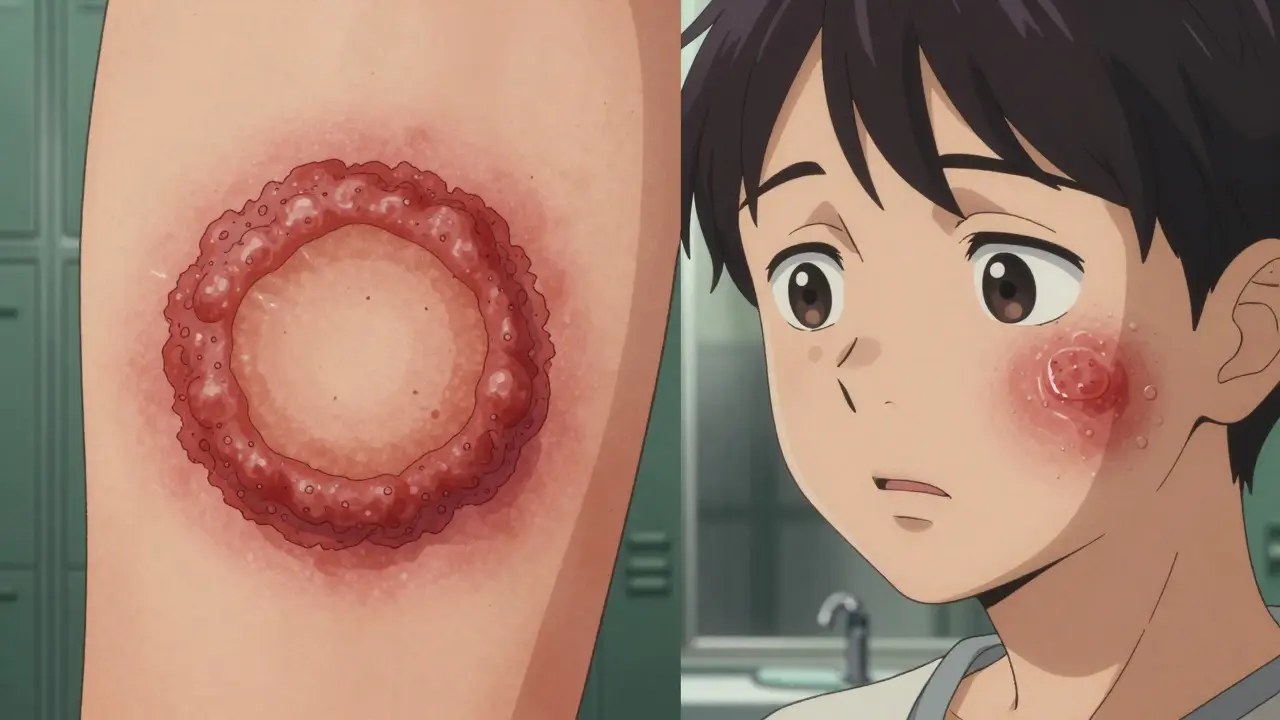
More than 1 in 5 people worldwide have a fungal skin infection right now. You might not know it, but if you’ve had an itchy red patch that won’t go away, or a stubborn rash between your toes, you could be one of them. These aren’t rare or exotic problems-they’re common, often misunderstood, and sometimes misdiagnosed as eczema or psoriasis. The two biggest culprits? Candida and ringworm. And while they sound similar, they’re completely different infections that need different treatments.
What’s Really Causing Your Skin Rash?
Not all skin rashes are the same. Two of the most frequent fungal skin infections look alike at first glance: a red, itchy circle on the body or a moist, sore patch in a skin fold. But their causes are worlds apart.Ringworm isn’t caused by a worm at all. The name comes from the classic round, red, scaly ring it forms on the skin. This is a dermatophyte infection-fungi that feed on keratin, the protein in your skin, hair, and nails. The most common type, Trichophyton rubrum, accounts for 80-90% of cases. It shows up as tinea corporis (body), tinea pedis (athlete’s foot), tinea cruris (jock itch), or tinea unguium (nail fungus). These fungi spread easily through contact with infected surfaces-locker rooms, shared towels, pets, or even soil.
Candida infections, on the other hand, are yeast overgrowths. The most common species is Candida albicans. Unlike ringworm fungi, Candida doesn’t need keratin to survive. It thrives in warm, damp places: under the breasts, in the groin, in diaper creases, and in the mouth or vagina. You’ll see a bright red, sometimes shiny rash with tiny red bumps (satellite pustules) around the edges. It’s common in babies, people with diabetes, those on antibiotics, or anyone with a weakened immune system.
Here’s the key difference: ringworm usually has a clear center and raised, scaly border. Candida looks more like a raw, moist, beefy-red patch with no clear edge. If you’re not sure, don’t guess. A simple KOH test-where a doctor scrapes a bit of skin and looks at it under a microscope-can confirm fungal growth in 70-80% of cases.
Who’s Most at Risk?
Some people are far more likely to get fungal skin infections than others. Kids under 12 are especially prone to ringworm on the scalp or body, often from pets like cats or dogs. About 20-30% of pediatric cases come from animal contact.Adults? Athlete’s foot is everywhere. Around 15% of the global population has it, and that number jumps to 25-30% in people over 60. Why? Feet stay sweaty in shoes, and older skin is thinner and drier-easier for fungi to invade. Military personnel, athletes, and people in hot, humid climates see rates as high as 50%.
Candida infections hit different groups. Diaper rash caused by yeast affects 7-25% of babies in their first year, peaking around 9-12 months. Women with recurrent vaginal yeast infections often report flare-ups after antibiotics or during pregnancy. People with diabetes are 2.5 times more likely to get skin Candida because high blood sugar feeds the yeast. And if you’re immunocompromised-due to HIV, chemotherapy, or long-term steroids-you’re 3 to 5 times more likely to develop severe or recurring infections.
What Treatments Actually Work?
You can’t treat ringworm and Candida the same way. Using the wrong antifungal won’t just fail-it can make things worse by delaying real treatment.For ringworm on the skin (tinea corporis), over-the-counter creams like terbinafine (Lamisil) or clotrimazole (Lotrimin) work well. Apply them twice a day for at least 2 weeks, even if the rash looks gone. Stopping early is why so many people get it back. Studies show cure rates hit 70-90% with proper use. For stubborn cases, especially on the scalp or nails, oral terbinafine is needed. A 2-6 week course clears up 80-90% of infections, but your doctor will check your liver enzymes first-about 1-2% of people get mild liver enzyme changes.
For Candida, topical antifungals like clotrimazole, miconazole, or nystatin are first-line. Apply them twice daily for 1-2 weeks. If it’s a skin fold infection (intertrigo), keeping the area dry is just as important as the cream. Use absorbent powders, wear loose cotton clothes, and avoid tight synthetic fabrics. For recurrent or deep infections, especially in the mouth or vagina, oral fluconazole works fast. But here’s the catch: fluconazole use has dropped 8% since 2020 because some strains are becoming resistant.
And then there’s the new player: ibrexafungerp (Brexafemme). Approved by the FDA in April 2023, it’s the first new oral antifungal for recurrent vaginal yeast in over 20 years. In trials, it cut recurrence by half over 48 weeks compared to placebo.
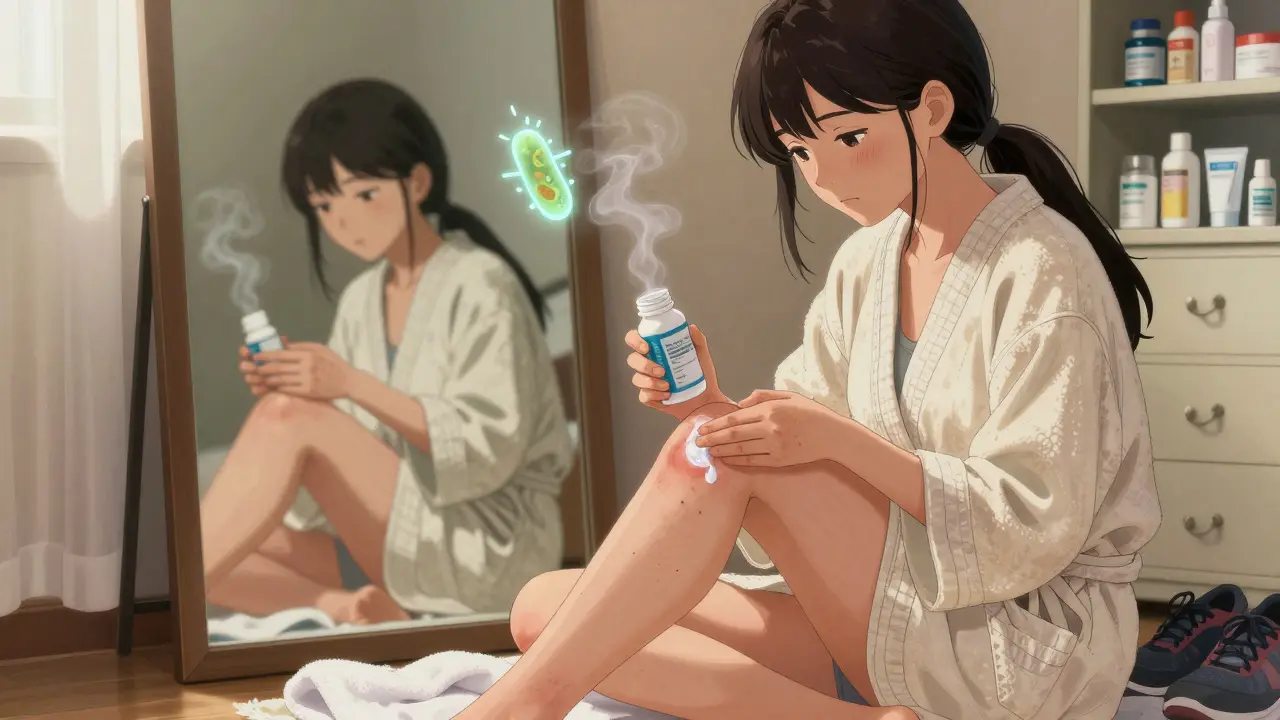
Why Do These Infections Keep Coming Back?
Recurring fungal infections aren’t just bad luck-they’re often a sign something’s off. A 2023 Healthgrades survey found 35% of people with ringworm or Candida had repeat infections within 6 months.Common reasons:
- Stopping treatment too soon. Many people feel better after 3-4 days and quit. Fungi are still alive under the skin.
- Not treating the source. If you have athlete’s foot and wear the same socks, you’re reinfecting yourself.
- Underlying health issues. Uncontrolled diabetes, immune problems, or chronic steroid use make you a prime target.
- Antibiotics. They wipe out good bacteria that keep Candida in check.
One surprising fix? Probiotics. A June 2023 Instagram poll of 850 people with recurrent yeast infections found that 65% saw fewer flare-ups when they added Lactobacillus supplements to their antifungal treatment. It’s not a cure, but it helps restore balance.
What Not to Do
There’s a lot of misinformation out there. Don’t:- Use steroid creams (like hydrocortisone) without antifungals. They calm the itch but make the fungus spread faster.
- Share towels, shoes, or clothing. Fungi live on fabric for months.
- Ignore nail fungus. It doesn’t go away on its own. Left untreated, it thickens, hurts, and can spread.
- Assume it’s eczema. A 2023 Dermatology Times poll found 42% of patients were misdiagnosed at first.
Also, avoid old-school remedies like tea tree oil or vinegar soaks unless you’re using them as a supplement-not a replacement. There’s no strong evidence they cure fungal infections on their own.

When to See a Doctor
You don’t need to run to the doctor for a small, clear-cut ringworm patch. But you should if:- The rash spreads despite 2 weeks of OTC treatment
- You have more than one infection at once (e.g., athlete’s foot and jock itch)
- You have diabetes, HIV, or are on immunosuppressants
- The infection is on your scalp or nails
- You’re seeing pus, swelling, or fever-signs of a bacterial superinfection
Primary care doctors miss fungal infections nearly half the time. Dermatologists get it right 85-90% of the time. If you’ve been treated for eczema or psoriasis and it’s not improving, ask for a fungal test.
The Future of Treatment
Fungal infections are getting harder to treat. Resistance is rising. About 5-7% of Trichophyton rubrum strains in North America are now less sensitive to terbinafine. And Candida auris-a multidrug-resistant yeast-is now found in 27 U.S. states. It clings to skin and surfaces, spreads in hospitals, and kills up to 60% of infected patients.But there’s hope. New drugs like olorofim are in late-stage trials. The NIH has invested $32 million into studying the skin’s fungal microbiome-how good and bad fungi interact. The goal? Not just to kill fungi, but to restore balance.
Meanwhile, the American Academy of Dermatology now advises against oral antifungals for simple ringworm on the body. Topical treatment is just as effective and safer. They also recommend ciclopirox over selenium sulfide for tinea versicolor-it’s more reliable and less messy.
The message is clear: fungal skin infections are common, treatable, and often preventable. But they demand the right approach. Know your infection. Use the right treatment. Finish the course. And if it keeps coming back-look deeper. Your skin might be trying to tell you something else is off.
srishti Jain
December 31, 2025 AT 08:29Been dealing with this for months. Thought it was eczema. Turned out to be Candida. Clotrimazole fixed it in 10 days. Don't ignore it.
Colin L
January 1, 2026 AT 05:49Oh god, I remember when I had jock itch in college-thought I was the only one. Bought some random cream from the gas station, rubbed it on, and it got worse. Then I found out it was ringworm from my dog. My cat gave it to him. I swear, animals are just tiny fungal factories. I had to wash every towel, every pair of shorts, even my gym bag. Took three weeks of Lamisil. And don’t even get me started on how my roommate kept borrowing my socks. I didn’t speak to him for six months. Fungi don’t care about your boundaries. They just creep in. And now? I check every red patch like it’s a crime scene. I’ve become a fungal detective. My partner thinks I’m insane. Maybe I am. But at least I’m not itchy anymore.
Henry Ward
January 2, 2026 AT 19:35Of course you’re getting recurrent infections. You’re probably one of those people who thinks ‘natural remedies’ are medicine. Tea tree oil? Vinegar? Please. You’re not healing-you’re just delaying the inevitable. And if you’re not finishing your antifungal course, you’re basically training the fungus to survive. You’re not special. You’re just careless. And now you’re spreading it to everyone around you. Stop being a walking biohazard.
Sandeep Mishra
January 2, 2026 AT 19:44Hey, just wanted to say-this is such a needed post. I’ve seen so many people panic over rashes, then self-treat with steroids and make it worse. I’m a nurse in Mumbai, and Candida diaper rashes in babies? So common. We always tell parents: dry, dry, dry. Cotton, cotton, cotton. And no powders with talc. Probiotics help too-especially L. reuteri. Small steps, big difference. You’re not alone. 🌱
Joseph Corry
January 3, 2026 AT 12:52It’s fascinating how Western medicine pathologizes every microbial interaction. The skin microbiome isn’t a battlefield-it’s a negotiation. We’ve been conditioned to fear fungi as invaders, but perhaps they’re just trying to communicate imbalance. The real issue isn’t Candida-it’s the industrialized diet, the over-sanitization, the disconnection from natural ecosystems. We’re not treating the infection. We’re treating the symptom of a broken relationship with our own biology. 🤔
Hayley Ash
January 5, 2026 AT 08:54So what you’re saying is… if I don’t finish my antifungal cream I’m basically a dumbass? Thanks for the 10-page essay on how to not be a failure. I’m sure the 20-year-old with athlete’s foot really needed to hear that from a stranger on the internet. Also, I used vinegar. It worked. You’re welcome
kelly tracy
January 6, 2026 AT 09:23They don’t want you to know this but the pharmaceutical industry makes billions off fungal infections. They keep you coming back with the same drugs. Fluconazole? Patent expired. But they still charge $150 for 3 pills. Meanwhile, garlic and coconut oil have been used for centuries. They don’t have a patent on garlic. That’s why you’ll never hear about it. Wake up.
Cheyenne Sims
January 6, 2026 AT 22:45While the article presents clinically relevant information, several grammatical inconsistencies undermine its credibility. For instance, the inconsistent use of serial commas, improper capitalization of ‘KOH test,’ and the absence of hyphenation in ‘two-week course’ are unacceptable in a medical context. Additionally, the reference to an Instagram poll as a primary data source is methodologically unsound. This is not science-it’s anecdotal sensationalism dressed as public health advice.
Shae Chapman
January 8, 2026 AT 02:41THIS. THIS IS SO IMPORTANT!!! I had a yeast infection that wouldn’t go away for 8 months. I thought I was broken. Then I started taking probiotics + wearing only cotton underwear + drying my skin folds after showers. And guess what? It vanished. I cried. Like, actual tears. I feel like a new person. If you’re reading this and you’re struggling-you’re not alone. You can heal 💕🫂
Nadia Spira
January 8, 2026 AT 04:03The entire framework here is reductionist. You’re treating symptoms, not systemic dysbiosis. The fungal overgrowth is a downstream effect of metabolic endotoxemia, insulin resistance, and gut barrier dysfunction. If you’re not addressing the gut-lung-skin axis, you’re just playing whack-a-mole with dermatophytes. And the NIH’s $32 million investment? Tokenism. Real change requires epigenetic reprogramming and microbiome rewilding-not topical clotrimazole. This is colonial medicine pretending to be progressive.
henry mateo
January 8, 2026 AT 20:56man i had this thing on my inner thigh for like 3 months i thought it was just sweat rash but then i saw the little red dots around the edges and i was like ohhhhh. i got clotrimazole from the store and it worked but i kept forgetting to put it on. i’m so bad at routines. also i think my socks are cursed now. i threw out all my gym clothes. i’m scared to wear anything again. lol
Kunal Karakoti
January 9, 2026 AT 11:57It’s interesting how we assign moral weight to microbial presence. Fungi don’t judge. We do. We call them ‘infections’ as if they’ve committed a crime. But what if they’re just responding to our internal environment? The body isn’t a battleground. It’s a garden. And sometimes, the weeds grow because the soil is neglected. Maybe the real treatment isn’t killing the fungus-but restoring balance. Not with drugs. With rest. With sleep. With less stress. With food that doesn’t come in a plastic wrapper.
Kelly Gerrard
January 11, 2026 AT 03:47Thank you for this comprehensive and scientifically grounded overview. The emphasis on completing treatment regimens and avoiding steroid misuse is critical. Public education on fungal health must be prioritized in primary care curricula. We must move beyond anecdotal remedies and embrace evidence-based protocols to reduce recurrence rates and antimicrobial resistance. This is public health at its most essential.
Glendon Cone
January 12, 2026 AT 07:12Biggest tip I’ve learned: don’t wear the same underwear two days in a row. Sounds dumb, right? But it’s the #1 thing that kept my Candida from coming back. Also, sleep more. Stress = sugar in your blood = yeast party. I used to think it was just ‘bad luck.’ Turns out, I was just ignoring my body. Now I take probiotics, wear loose pants, and don’t panic when I see a red spot. It’s not a disaster. It’s a sign. 🌿