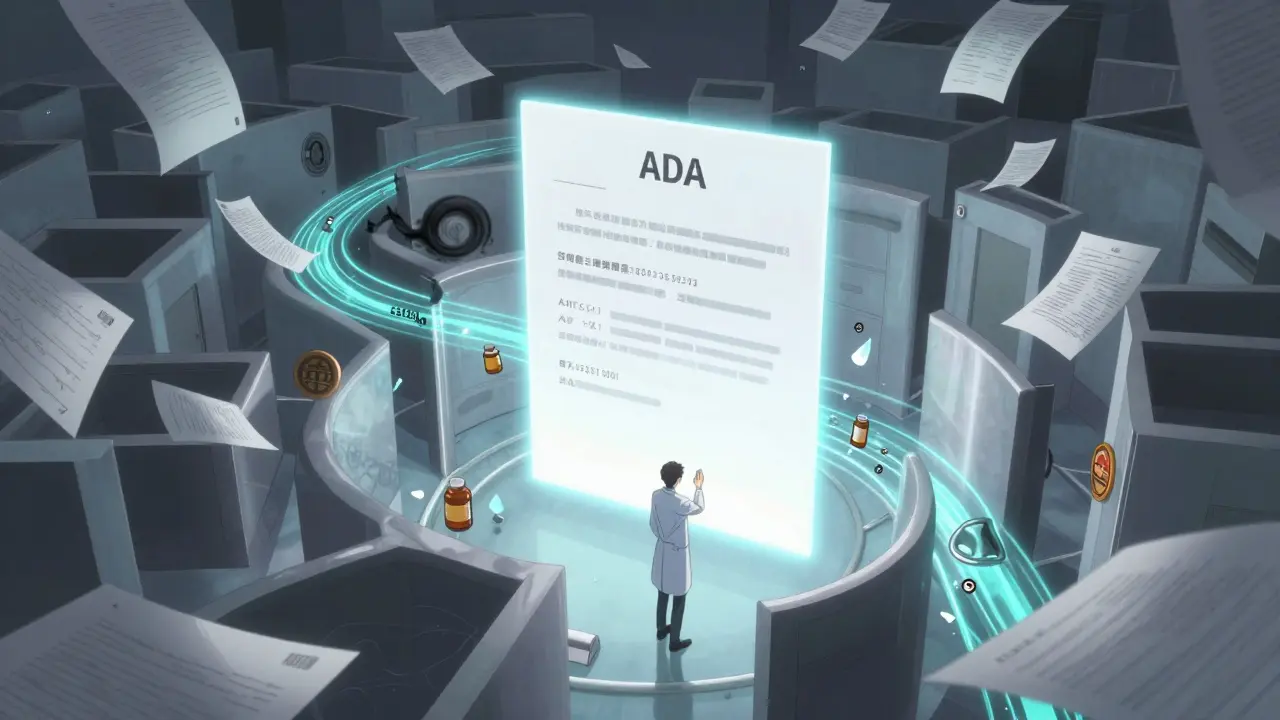
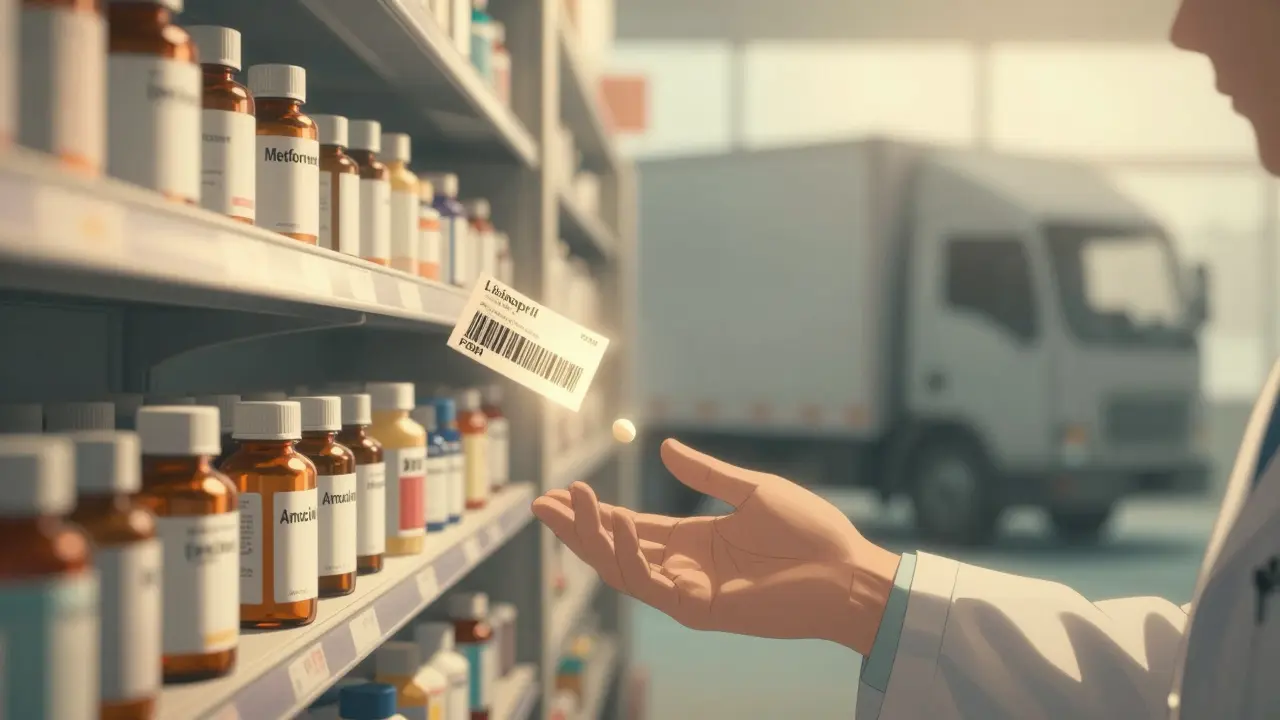
Every time you pick up a prescription for a generic drug - whether it’s metformin for diabetes, lisinopril for high blood pressure, or amoxicillin for an infection - you’re holding the end result of a long, tightly regulated journey. It didn’t just appear on the shelf. It started with a paperwork-heavy application called an ANDA, passed through years of testing, manufacturing, and negotiations, and finally made it to your local pharmacy. Understanding this path isn’t just for pharmacists or regulators. It’s key to knowing why your generic meds cost so much less than the brand-name version - and why sometimes, they take longer to show up.
What Exactly Is an ANDA?
ANDA stands for Abbreviated New Drug Application. It’s not a shortcut - it’s a smarter path. When a brand-name drug’s patent expires, other companies can apply to make the same medicine without repeating all the expensive clinical trials. Instead of proving the drug works from scratch, they only need to show their version is bioequivalent - meaning it delivers the same amount of active ingredient into your bloodstream at the same rate as the original.
The FDA requires four things for an ANDA to be approved:
- Same active ingredient, strength, dosage form, and route of administration as the brand-name drug
- Identical labeling (except for the brand name and manufacturer info)
- Proof the drug is made under the same strict quality controls
- Bioequivalence data from human studies - usually 24 to 36 healthy volunteers
That’s it. No animal studies. No multi-year clinical trials. That’s why developing a generic costs about $2-5 million, while a new brand-name drug can run over $2 billion. The Hatch-Waxman Act of 1984 created this system to balance innovation with affordability. Today, 90% of prescriptions in the U.S. are filled with generics - and they save patients and the system over $300 billion a year.
The ANDA Submission Process: Paperwork That Takes Years
Submitting an ANDA isn’t like filing taxes. It’s a 100+ page technical document packed with chemistry, manufacturing, and controls (CMC) data. Every step of production - from the raw chemical powder to the final pill - must be documented. Where was the ingredient sourced? How was it purified? What equipment was used? What’s the shelf life? All of it.
Applications are submitted electronically through the FDA’s Electronic Submissions Gateway. The review clock starts ticking once the FDA accepts the file. Under current rules (GDUFA III, effective 2023), the average review time is 10-12 months for standard applications. But here’s the catch: about 40% of first-time ANDAs get rejected with a “Complete Response Letter.” That means the FDA found a problem - maybe the bioequivalence study had too few participants, or the manufacturing facility didn’t meet cleanliness standards.
Most companies need 1.7 review cycles to get approval. That’s why some generic manufacturers hire former FDA inspectors to help prepare their submissions. Pre-ANDA meetings with the agency are strongly encouraged, especially for complex drugs like inhalers or topical creams. Companies that hold these meetings reduce major defects by 30%.
First-to-File: The High-Stakes Race for Exclusivity
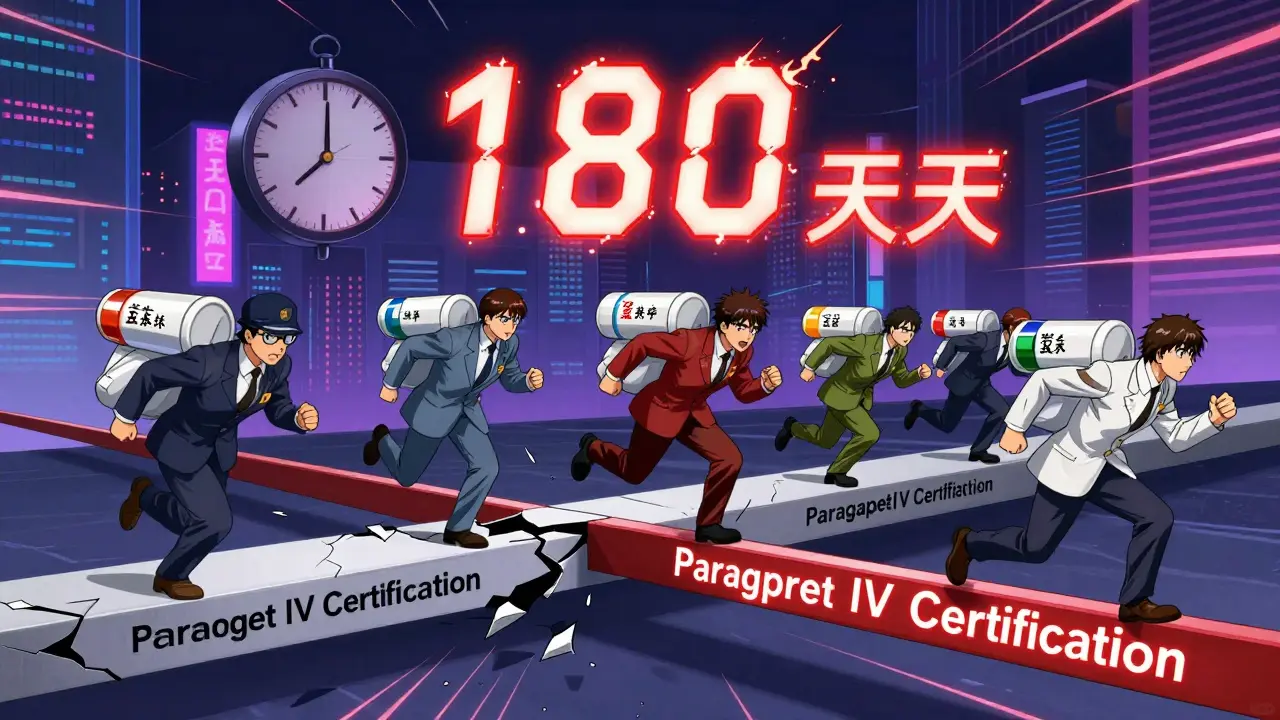
There’s a huge financial incentive to be the first company to file an ANDA for a brand-name drug after its patent expires. The first applicant gets 180 days of market exclusivity - meaning no other generic can enter the market during that time. That’s a goldmine. One generic version of a popular drug can capture over 80% of the market in those six months.
But there’s risk. To claim exclusivity, the applicant must file a “Paragraph IV certification,” which says the original patent is invalid or won’t be infringed. That’s a legal challenge. The brand-name company can sue, triggering a 30-month automatic stay on approval. That’s why you’ll sometimes see multiple generic companies file ANDAs on the same day - like the six companies that all filed for generic Eliquis (apixaban) in 2022. The winner? The one who got their application accepted first and survived the legal battle.
Approval Doesn’t Mean Availability
Just because the FDA says “yes” doesn’t mean your pharmacy can order it tomorrow. In fact, most manufacturers say approval is only the first half of the battle.
After approval, the company has to ramp up production. A lab that made 1,000 pills for testing needs to switch to making millions. That takes 60 to 120 days. Then comes the real hurdle: getting on pharmacy benefit manager (PBM) formularies.
PBMs like Express Scripts, OptumRx, and CVS Caremark control which drugs insurers cover and at what cost. They don’t care about FDA approval. They care about price. To get placed on the preferred tier (Tier 1), generic manufacturers often have to offer discounts of 20-30% deeper than they planned. If they don’t, the drug lands on Tier 2 or 3 - meaning patients pay more out of pocket, and pharmacies are less likely to stock it.
A Teva case study from 2020 shows this clearly. They got FDA approval for their generic EpiPen in August 2019. But it didn’t hit retail shelves until March 2020 - seven months later - because they were negotiating with PBMs.
Getting It to the Pharmacy
Once the PBM agrees, the drug enters the distribution pipeline. Most generics move through one of three big wholesalers: AmerisourceBergen, McKesson, or Cardinal Health. These companies supply over 90% of U.S. pharmacies. Integrating a new product into their inventory systems takes 15 to 30 days. The drug gets barcoded, assigned a National Drug Code (NDC), and added to order catalogs.
Finally, the pharmacy gets the product. But even then, there’s one last step: updating their computer system. Pharmacists need to know the drug’s name, strength, and how to bill it. That usually takes 7 to 14 days. The average time from FDA approval to first retail dispensing? 112 days. For simple pills like generic ibuprofen, it might be 60 days. For complex inhalers or injectables? Over 140 days.
Why This Matters to You
When you choose a generic, you’re not just saving money - you’re supporting a system designed to make healthcare affordable. But that system is fragile. If a manufacturer can’t get a PBM to accept their bid, the drug might never reach your local pharmacy, even if it’s FDA-approved. That’s why some generics are available in one state but not another - it’s not about regulation, it’s about contracts.
Also, not all generics are created equal. While the active ingredient is identical, the fillers, coatings, and manufacturing methods can differ. For most people, that doesn’t matter. But for drugs with narrow therapeutic windows - like warfarin, levothyroxine, or seizure meds - even small differences can affect how your body responds. That’s why your doctor might ask you to stick with one brand of generic.
And pricing? It’s not just about competition. The average price of generics has dropped 4.7% per year since 2015. That’s good for consumers, but it’s squeezing manufacturers. Some companies have stopped making low-margin generics altogether - leading to shortages. That’s why the FDA now prioritizes approvals for drugs in short supply.
What’s Next for Generic Drugs?
The FDA is pushing for faster approvals of complex generics - think patches, nasal sprays, and injectables - which are harder to copy than pills. New rules in 2024 require standardized electronic submissions, which should cut review times in the long run. AI is also starting to help: machine learning models can now predict bioequivalence with surprising accuracy, potentially cutting development time by 25-30% in the next five years.
By 2028, generics will make up 93% of all prescriptions. The goal isn’t just to cut costs - it’s to make essential medicines accessible to everyone. The ANDA system made that possible. But the journey from application to your medicine cabinet? It’s still a marathon, not a sprint.
How long does it take for a generic drug to reach the pharmacy after FDA approval?
On average, it takes about 112 days from FDA approval to the first retail dispensing. This includes scaling up production, negotiating with pharmacy benefit managers (PBMs), integrating into wholesale distribution systems, and updating pharmacy software. Simple pills like generic ibuprofen may reach shelves in 60 days, while complex drugs like inhalers or injectables can take over 140 days.
Why are some generic drugs not available at my pharmacy even though they’re FDA-approved?
FDA approval doesn’t guarantee pharmacy availability. The drug must also be included on a pharmacy benefit manager’s (PBM) formulary. PBMs decide which drugs are covered and at what cost. If a generic manufacturer doesn’t offer a competitive rebate, the PBM may not include it - meaning pharmacies won’t order it. This is why the same generic drug might be available in one state but not another.
Are all generic drugs exactly the same as the brand-name version?
Yes - in terms of active ingredient, strength, dosage form, and bioequivalence. The FDA requires generics to perform the same way in the body. However, inactive ingredients like fillers, dyes, or coatings can differ. For most people, this doesn’t matter. But for drugs with narrow therapeutic windows - like warfarin, levothyroxine, or anti-seizure medications - even small variations can affect how your body responds. That’s why doctors sometimes recommend sticking with one generic brand.
What’s the difference between an ANDA and an NDA?
An NDA (New Drug Application) is for brand-name drugs and requires years of clinical trials, animal studies, and safety data - costing over $2 billion. An ANDA (Abbreviated New Drug Application) is for generics and only requires proof of bioequivalence and manufacturing quality. It skips most clinical trials because it relies on the brand-name drug’s existing safety data. That’s why generics cost 80-85% less.
Why do some generic drugs cost more than others?
Price differences come down to competition and market access. If multiple companies make the same generic, prices drop sharply. But if only one or two manufacturers are approved - or if they’re not on your PBM’s preferred list - prices can stay higher. Complex generics (like inhalers or patches) are also more expensive to make, so they cost more. And if a drug is in short supply, prices can spike temporarily.
Jenny Salmingo
January 1, 2026 AT 09:43Just picked up my generic metformin yesterday and thought about this post. It’s wild how much goes on behind the scenes. I never realized the FDA doesn’t even test the drug itself-just that it works the same way. Feels like magic, but it’s just science and paperwork.
linda permata sari
January 1, 2026 AT 10:45OMG I JUST REALIZED WHY MY LISINOPRIL WASN’T IN STOCK FOR THREE WEEKS!! 😱 It’s not the pharmacy’s fault-it’s the PBMs playing hardball with pricing! I thought they were just being lazy, but nooo, it’s corporate contracts. This is the most dramatic soap opera I’ve ever read and it’s about pills.
Brady K.
January 1, 2026 AT 22:09Let’s be real-this whole ANDA system is a corporate loophole dressed up as consumer protection. The FDA’s ‘bioequivalence’ standard is laughably loose. You can have different fillers, different dissolution rates, and still pass. And don’t get me started on the 180-day exclusivity racket-pharma’s way of letting one company profit off the death of a patent while everyone else waits. It’s not innovation-it’s rent-seeking with a lab coat.
And yes, I’ve seen patients switch generics and have seizures because the inactive ingredients changed. But hey, at least it’s cheaper, right? #CapitalismWins
Emma Hooper
January 2, 2026 AT 16:19So the real villain isn’t Big Pharma-it’s the middlemen. PBMs? They’re the puppet masters. They don’t care if you live or die, they care if the rebate check clears. And the worst part? You’re paying for it anyway, just in higher premiums. It’s like buying a car and then the dealer charges you extra to put the key in the ignition.
Also, warfarin generics? Yeah, I’ve been burned. One batch made me feel like I was turning into a vampire. Switched back to the same brand. My INR stayed stable. Don’t gamble with your blood thinners.
Martin Viau
January 2, 2026 AT 19:10Canada’s system is way more efficient. We don’t have PBMs running the show. The government negotiates bulk prices and everyone gets the same drug. No 112-day delays. No tiered formularies. Just… medicine. Americans think they’re free, but you’re just being exploited by a thousand middlemen who call themselves ‘healthcare administrators.’
Marilyn Ferrera
January 3, 2026 AT 07:01112 days. That’s the average. But it’s not the FDA’s fault. It’s the manufacturers who delay production. And PBMs? They’re not evil-they’re responding to market incentives. The real issue? No transparency in rebate structures. Fix that, and prices drop faster.
Robb Rice
January 3, 2026 AT 22:07Interesting read. I appreciate the breakdown. Though I must say, the term 'bioequivalence' is often misunderstood. It doesn't mean identical-it means statistically equivalent within a 80-125% confidence interval. That's the FDA's standard. It's rigorous, actually. And yes, the 180-day exclusivity period is a double-edged sword. It incentivizes filing, but also creates monopolies.
Darren Pearson
January 5, 2026 AT 10:45It's rather pedestrian to discuss generic drugs without mentioning the geopolitical underpinnings of API sourcing. Over 80% of active pharmaceutical ingredients originate from China and India. The FDA’s inspections are sporadic at best. This entire system is predicated on the assumption that foreign manufacturing facilities adhere to cGMP standards-yet we have no real enforcement mechanism beyond paperwork. A house of cards, really.
Retha Dungga
January 6, 2026 AT 06:02so like... generics are just copycats but cheaper?? 😅 and we all just pretend its fine? 🤷♀️ i mean if my blood pressure med tastes different... is that a problem?? 🤔
Aaron Bales
January 7, 2026 AT 08:52For anyone worried about switching generics: talk to your pharmacist. They know which brands are reliable. And if you're on warfarin or levothyroxine? Stick with one. Don't let cost be the only factor. Your health isn't a commodity.
Urvi Patel
January 9, 2026 AT 03:41Everyone complains about generics but nobody talks about how the brand-name companies deliberately delay generics by filing frivolous patents. Ever heard of 'evergreening'? That’s how they keep prices high. The FDA is just a puppet. The real game is in the courts
anggit marga
January 9, 2026 AT 12:05Why are we even talking about this? In Nigeria we just buy from the open market. If it looks like a pill and works like a pill then it’s fine. Who cares about FDA or PBMs? You want medicine? Go get it. Stop overcomplicating everything with forms and forms and forms