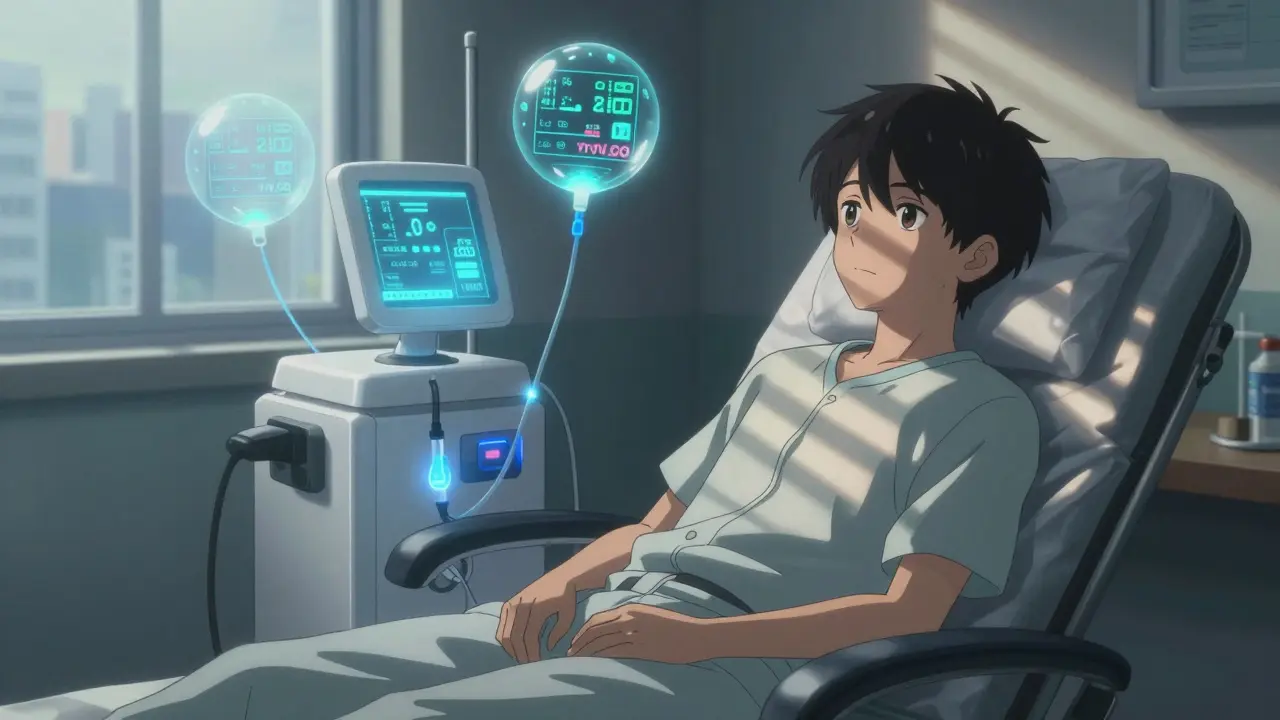
When your kidneys stop working, your body doesn’t just slow down-it starts to drown. Fluid builds up. Toxins pile up. Blood pressure goes haywire. This isn’t just fatigue or aging. This is end-stage renal disease (ESRD), the point where kidneys have lost 90% of their function. Without treatment, it’s fatal. But here’s the thing: how you manage it makes all the difference-not just in how long you live, but in how well you live.
What Exactly Is End-Stage Renal Disease?
ESRD isn’t a sudden event. It’s the last stage of chronic kidney disease, usually reached after years of slow damage. Doctors measure kidney function with something called the glomerular filtration rate, or GFR. When it drops below 15 mL/min/1.73 m², you’re in ESRD. At this point, your kidneys can’t clean your blood anymore. You need help-either dialysis or a transplant.The leading causes? Diabetes and high blood pressure. Together, they account for more than 70% of cases. Other causes include glomerular diseases, polycystic kidney disease, lupus, and long-term use of certain painkillers. It’s not rare. In the U.S., about 786,000 people live with ESRD. Most are on dialysis. A smaller but growing number have a working transplant.
Dialysis: The Lifeline, But Not the Dream
Dialysis is the most common treatment. It’s mechanical filtration-your blood is pulled out, cleaned by a machine, and returned. There are two main types: hemodialysis and peritoneal dialysis.Hemodialysis usually happens in a clinic three times a week, for about four hours each time. That’s 12 to 16 hours a week just sitting in a chair, hooked up to a machine. Some do it at home, but that requires training and space. Blood flows at 300-500 mL per minute. The dialysate (cleaning fluid) flows even faster. The goal? A Kt/V score of at least 1.4 per session. That’s a technical measure, but it means you’re getting enough treatment.
Peritoneal dialysis uses your own belly lining as a filter. A fluid is pumped into your abdomen, sits for a few hours to soak up waste, then drained. This can be done manually four times a day (CAPD) or overnight with a machine (APD). It’s more flexible-you don’t need to travel to a clinic. But it comes with risks: infection around the catheter site, and you need a clean space to do exchanges.
Both types require strict control of what you eat and drink. Phosphate levels? Must stay between 3.5 and 5.5 mg/dL. Calcium? Below 9.5 mg/dL. Parathyroid hormone? Keep it under 2-9 times the upper limit. That means avoiding cheese, nuts, soda, and processed foods. Vitamin D supplements and phosphate binders become part of daily life. It’s not just about survival-it’s about managing a complex chemical balance every single day.
Kidney Transplant: The Best Option, If You Can Get It
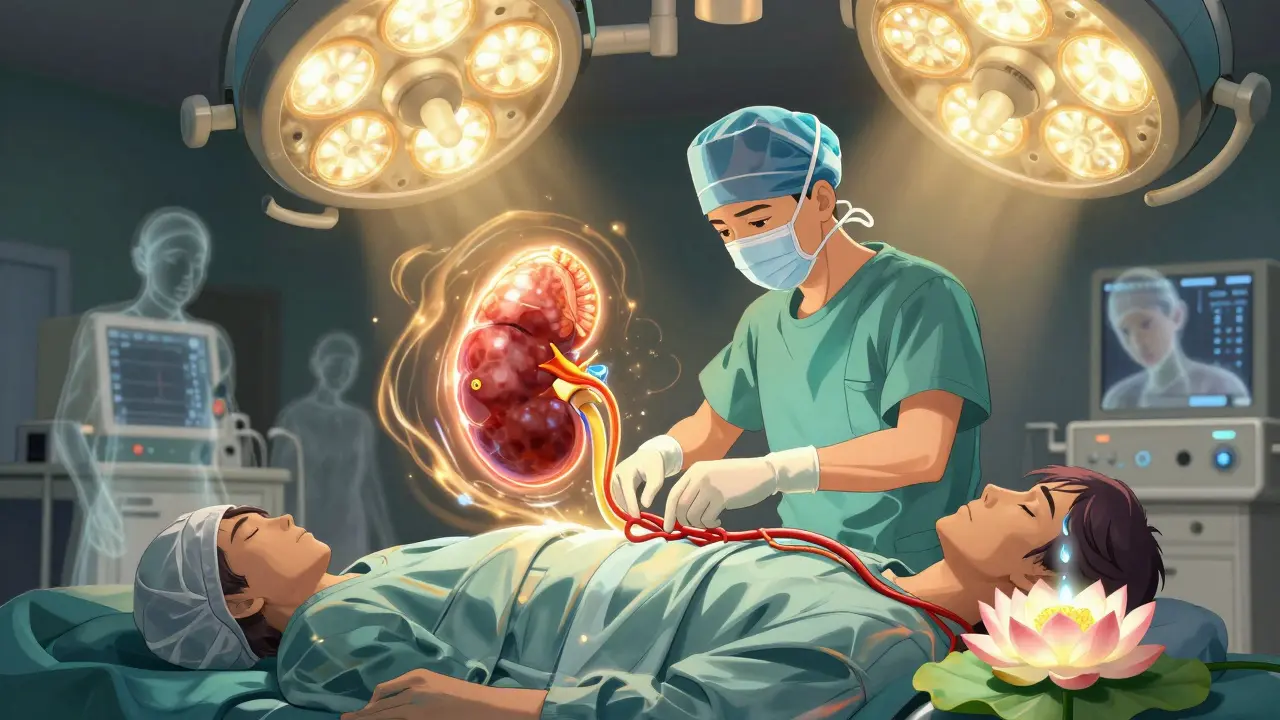
If you could pick one treatment, most doctors would say: transplant. It’s not just a procedure. It’s a reset button.Studies show transplant recipients live longer. Five-year survival? 83% for transplant patients. For those on dialysis? Just 35%. Death risk drops by 68% after a transplant. And it’s not just about living longer-it’s about living better.
Transplant patients report far higher quality of life. One 2021 study found transplant recipients scored 28.7 points higher on a quality-of-life survey than hemodialysis patients. They can eat more freely. Drink more fluids. Sleep better. Travel without planning around dialysis. Hospital visits drop by half.
But here’s the catch: only 29% of ESRD patients in the U.S. have a transplant. Why? Because the waiting list is long-over 90,000 people right now. And only about 27,000 transplants happen each year. That means more people die waiting than get transplanted.
Living donor transplants are the gold standard. One-year graft survival? 95.5%. Five-year? 86%. Deceased donor transplants are still excellent-93.7% and 78.5% respectively. But living donors make a huge difference. The kidney works better. You can avoid dialysis entirely if you get a preemptive transplant-before you even start.
Only 5% of patients get placed on the transplant list before starting dialysis. That’s a system failure. Doctors are supposed to refer patients when GFR drops below 30 mL/min. But too often, that referral doesn’t happen until it’s too late.
Who Can Get a Transplant?
Not everyone qualifies. Age alone doesn’t disqualify you-but combined with other problems, it can. If you have severe heart disease (ejection fraction under 25%), active cancer (within the last 2-5 years), dementia, or uncontrolled mental illness, transplant is usually off the table. Same if you’re still using alcohol or drugs.There’s also a hidden barrier: race. African American patients are far less likely to be referred for transplant, even when they’re medically eligible. A 2013 study called RaDIANT found that after targeted education for doctors and patients, transplant referrals among Black patients jumped 40%. That’s not a coincidence. It’s systemic bias.
Medicare covers ESRD treatment, but it doesn’t fix the gaps. The system pays more for dialysis than for transplants-$35.4 billion a year, mostly on dialysis. That creates an invisible pressure: keep patients on dialysis longer because it’s cheaper for the system. But it’s not cheaper for the patient. It’s harder. Longer. More painful.
The Hidden Costs: Medications, Monitoring, and Mindset
After a transplant, you’re not done. You’re on lifelong immunosuppressants. These drugs stop your body from rejecting the new kidney. But they also lower your defenses. You’re more likely to get infections. Skin cancer risk goes up. Blood pressure and cholesterol need constant monitoring.Monthly cost? $1,500 to $2,500. That’s not covered fully by Medicare after 36 months. Many patients pay out of pocket-or go without. That’s why some transplants fail-not because of rejection, but because the patient couldn’t afford the meds.
And then there’s the emotional toll. Dialysis patients often feel trapped. Transplant patients live with fear-of rejection, of side effects, of losing the gift. Both require discipline. Both require support. Neither is easy.

What’s Changing? What’s Working?
There’s progress. Living donor transplants have increased by 18% since 2018. Deceased donor transplants are up 14%. The 21st Century Cures Act helped expand the donor pool by allowing organs from donors with higher risks-like those with past infections or drug use. That’s saved lives.New payment models like the Kidney Care Choices Model (launched in 2022) are trying to fix the financial incentives. Instead of paying for dialysis sessions, they now reward early transplant referrals. That’s a big shift.
And home dialysis? It’s growing. In 2015, only 8.3% of new dialysis patients did it at home. By 2022, that jumped to 14.2%. More people are choosing flexibility over clinic visits.
But the real win? Preemptive transplants. If you know you’re heading toward kidney failure, get evaluated early. Get on the list. Find a living donor. Talk to your nephrologist before dialysis starts. You’re not just buying time-you’re buying a better life.
What Should You Do Next?
If you or someone you love has advanced kidney disease:- Ask for a transplant evaluation when your GFR drops below 30 mL/min-not 15.
- Ask about living donor options. Family members? Friends? Spouses? Many are willing to donate if they know how.
- Consider home dialysis. It’s not for everyone, but it gives you control over your schedule.
- Get a fistula placed 6-12 months before dialysis starts. It lasts longer and has fewer complications than catheters.
- Don’t wait for the system to act. Advocate for yourself. Bring a list of questions to every appointment.
ESRD doesn’t have to mean a life on hold. It’s a new chapter. And with the right choices, it can still be a full one.
Shourya Tanay
March 11, 2026 AT 17:14From a nephrology perspective, the Kt/V metric is non-negotiable for dialysis adequacy-anything below 1.4 per session correlates with increased all-cause mortality. The real issue isn’t just access to machines, but the structural neglect of home-based modalities. Peritoneal dialysis, when properly trained, offers superior hemodynamic stability and preserves residual renal function longer than in-center hemodialysis. Yet, referral bias persists, especially in underserved communities where vascular access is delayed or improperly placed.
Tom Bolt
March 12, 2026 AT 18:54Let’s be brutally honest: the American healthcare system doesn’t treat kidney failure-it monetizes it. Dialysis is a $35 billion industry. Transplants? A $200,000 one-time cost with lifelong immunosuppression. Which one keeps the revenue flowing? The system isn’t broken-it’s working exactly as designed. And patients? They’re just the cash register.
Kenneth Zieden-Weber
March 14, 2026 AT 17:02Wow. So we’re all just supposed to ‘advocate for ourselves’ while the system rigs the game? Cool. So if I’m a single mom working two jobs, with no family, no insurance beyond Medicare, and my GFR is at 28-do I just text my nephrologist a meme and hope for the best? This post reads like a corporate white paper written by someone who’s never had to choose between rent and phosphate binders.
David L. Thomas
March 15, 2026 AT 11:53Transplant survival stats are impressive, but let’s not ignore the elephant in the room: immunosuppression isn’t free. Tacrolimus, mycophenolate, prednisone-these aren’t vitamins. They’re expensive, toxic, and require constant monitoring. And Medicare drops coverage after 36 months? That’s not policy-it’s a death sentence disguised as fiscal responsibility.
Bridgette Pulliam
March 15, 2026 AT 12:49I’ve been on peritoneal dialysis for 4 years. It’s not glamorous. Some days, I cry because I’m tired of cleaning my catheter. But I can work. I can travel. I can sleep in my own bed. That’s worth more than any statistic. If you’re considering dialysis, don’t let fear of the machine stop you. The real enemy is giving up.
Mike Winter
March 16, 2026 AT 08:23It’s curious how we frame transplantation as a ‘gift’-as if the organ is a benevolent donation from the heavens. But what of the donor? The living donor who risks their own health? The deceased donor whose family made a decision in grief? We speak of transplants as miracles, but rarely do we honor the labor, the trauma, the systemic inequities that make one person’s miracle another’s burden. Perhaps we need more humility, less heroism.
Randall Walker
March 17, 2026 AT 06:36So let me get this straight... you’re telling me that if I’m Black, poor, and have diabetes, my doctor might not even refer me for transplant evaluation-even if I’m eligible? And then you say ‘advocate for yourself’? Like, what am I supposed to do? Write a LinkedIn post? Send a TikTok? Jesus. The system doesn’t just fail us-it laughs while it fails us.
Miranda Varn-Harper
March 18, 2026 AT 03:21While I appreciate the clinical rigor of this post, I must challenge the underlying assumption that transplantation is inherently superior. Quality of life is subjective. Some patients thrive on dialysis. Some find meaning in routine, in community, in the discipline of fluid restriction. To declare transplant as the ‘gold standard’ is to devalue the resilience of those who choose-or are forced-to live otherwise. Not every life must be optimized. Some must simply be endured.
Alexander Erb
March 19, 2026 AT 20:45Hey, just wanted to say-this was really well written. I’ve got a cousin on dialysis and I didn’t even know about home dialysis options until now. I’m sharing this with her family. Also, if anyone needs help finding a transplant center or understanding insurance, I’ve been through it-DM me. Happy to help. 💪🫶
Donnie DeMarco
March 19, 2026 AT 23:49Yo so like... dialysis is basically human filtration? Bro. Imagine if your car had to be towed to a shop every 3 days just to not explode. That’s your kidneys. And transplant? It’s like swapping the whole engine. But the mechanic? They’re backed up for 5 years. And the parts? Cost more than a Tesla. And if you can’t pay? You’re just… outta luck. 🤡
LiV Beau
March 21, 2026 AT 20:25My mom got a transplant 7 years ago. She’s still alive. Still hiking. Still making pancakes on Sundays. But she takes 10 pills a day. She’s had three skin cancers. She’s scared every time she gets a cold. And she still says it was worth it. If you’re reading this and you’re eligible-don’t wait. Don’t be scared. Start the conversation. Even if it’s awkward. Even if you’re scared. You deserve more than a chair, a machine, and a clock.
Adam Kleinberg
March 22, 2026 AT 01:08Let’s cut through the noise. This whole system is a psyop. The government knows dialysis keeps people alive just long enough to keep paying. Transplants? Too risky. Too expensive. Too unpredictable. They want you dependent. They want you docile. They want you to believe that ‘advocating for yourself’ is enough. It’s not. It’s never been enough. The real solution? Abolish the profit model. Or we’re all just meat in a vending machine.