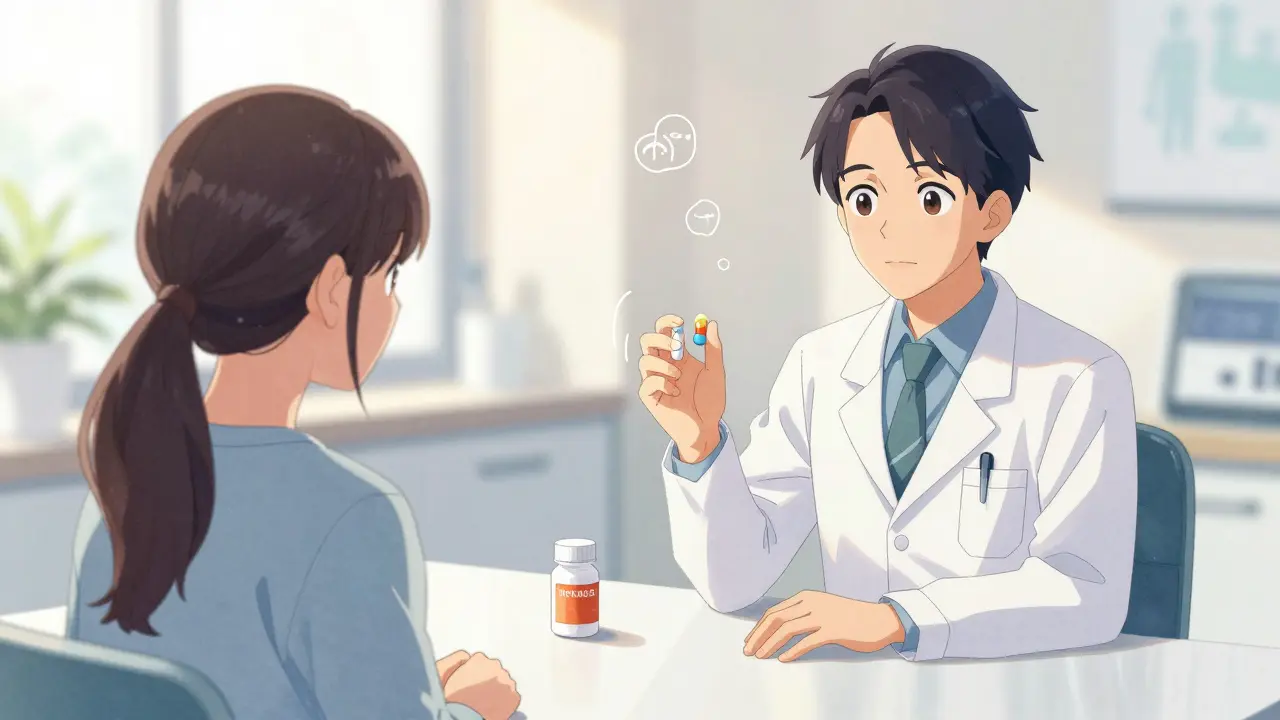
When a patient walks into your office asking why they’re now taking a different pill with a different color and shape, what do you say? You know the science says it’s the same drug. But patients aren’t just reading the label-they’re hearing stories. A neighbor had a bad reaction. A friend’s blood pressure spiked after switching. You’ve seen it: the hesitation, the fear, the quiet doubt that maybe, just maybe, the cheaper version isn’t quite as good.
The truth? The data doesn’t lie. And the data is clear: generic drugs work just as well as brand-name drugs for nearly every condition you treat.
How We Know Generics Are Equivalent
The FDA doesn’t approve generics based on hope or cost savings. It’s a rigorous, science-backed process. Every generic must prove it delivers the same active ingredient, in the same amount, at the same rate as the brand-name drug. That’s not a marketing claim-it’s a regulatory requirement.
Here’s how it works: manufacturers run bioequivalence studies on 24 to 36 healthy volunteers. They measure how much of the drug enters the bloodstream (AUC) and how fast it peaks (Cmax). The results must fall within 80% to 125% of the brand-name drug’s numbers. For most drugs, that’s enough. For narrow therapeutic index drugs-like warfarin, levothyroxine, or tacrolimus-the bar is even higher. Studies now use intra-individual variability testing, tracking patients over multiple switches to ensure stability. A 2020 study in Nature Scientific Reports found no clinically meaningful differences in transplant patients switching between brand and generic tacrolimus over 42 days.
And it’s not just lab numbers. Real-world outcomes match. A 2019 PLOS Medicine study tracked over 1.3 million patients across 14 drug classes. For alendronate, glipizide, quinapril, and amlodipine, generic users had identical rates of hospitalization, fracture, and heart attack. In fact, for amlodipine and amlodipine/benazepril, generic users had lower rates of cardiovascular events. The hazard ratios? Almost exactly 1.00. No difference. In some cases, better outcomes.
What About Psychiatric Drugs? The Confusion
Then there’s the outlier: psychiatric medications. Some studies show slightly higher hospitalization rates for patients on generic escitalopram or sertraline. That’s unsettling. But dig deeper, and the story changes.
The same PLOS Medicine study found that patients switching from brand to generic psychiatric drugs didn’t have worse outcomes. The small uptick in hospitalizations? It showed up even when comparing authorized generics-the exact same drug, made by the brand company-to the original brand-name version. That’s not a drug problem. That’s a perception problem.
Patients who’ve been stable on a brand-name antidepressant for years might notice a change in pill appearance. They might feel more anxious. They might stop taking it. Or their provider, worried about a “change,” might overreact. It’s not the drug failing. It’s the fear of change.
The FDA’s own 2017 switch-back analysis found no consistent pattern of patients returning to brand-name drugs after starting generics. And when they did return? It didn’t improve their symptoms. The real issue? Trust, not chemistry.
The Numbers Don’t Lie: Generics Save Lives and Money
From 2008 to 2017, generics saved the U.S. healthcare system $1.68 trillion. In 2021 alone, they saved $377 billion. That’s not just a statistic-it’s a lifeline for patients choosing between rent and refills.
And the numbers are staggering: 90% of all prescriptions filled in the U.S. are generics. They make up only 23% of total drug spending. For patients on Medicare, a 2020 study of 3.5 million beneficiaries found that after adjusting for health status, generic users had nearly identical five-year survival rates to brand-name users. The initial gap? It wasn’t because generics were less effective. It was because healthier, more engaged patients were more likely to be prescribed generics in the first place.
When you prescribe a generic, you’re not cutting corners. You’re giving a patient the same medicine, at a fraction of the cost, with the same outcomes.

What About the ‘B-Rated’ Generics?
Not all generics are created equal-technically. The FDA’s Orange Book classifies drugs as either ‘A’ or ‘B’ rated. Over 97% are ‘A-rated,’ meaning they’re therapeutically equivalent. The remaining 3%? They’re complex. Inhalers. Topical creams. Extended-release tablets. Drugs where tiny differences in formulation can matter.
For those, you need to pay attention. If a patient is on a B-rated generic, monitor them. Check labs. Ask about side effects. But don’t assume it’s the drug’s fault. Many B-rated products still work just fine. The key is awareness, not avoidance.
And here’s the thing: even for B-rated drugs, studies show most patients do just fine. The FDA’s 2022 guidance on complex generics includes new methods to test these products-like using advanced dissolution profiles and real-world data-to ensure equivalence. The science is catching up.
Why Patients Doubt Generics (And How to Respond)
Patients hear ads. They see the brand-name drug on TV. They think, “If it’s cheaper, it must be worse.” That’s not ignorance. It’s logic shaped by marketing.
Here’s what works: be direct. Say this:
- “This generic has the same active ingredient, same dose, same way of working.”
- “The FDA requires it to work just as well as the brand.”
- “Millions of people take this every day. Studies show no difference in how well it works.”
- “If you’ve been stable on the brand, we can keep it. But if cost is a problem, this is just as safe and effective.”
And if they’re still unsure? Offer a trial. Let them try the generic for a month. Check in. Reassure them. Most patients who try it never go back.
What You Can Do Today
You don’t need to be a pharmacologist to prescribe wisely. Here’s what to do:
- Check the FDA’s Orange Book for A-rated status before prescribing.
- For high-risk drugs (thyroid, anticoagulants, immunosuppressants), monitor closely for the first 30 days after switching.
- Don’t default to brand-name drugs just because they’re familiar. Ask: Is there a generic? Is it A-rated? Is it cheaper?
- Use patient education as part of the prescription. Hand them a one-pager from the FDA or the American College of Physicians.
- When a patient resists, don’t argue. Listen. Ask: “What are you worried about?” Then answer with data, not dogma.
And remember: the FDA’s Adverse Event Reporting System shows only 0.02% of all drug-related adverse events in the last five years were linked to generics. Brand-name drugs? 3.2%. The safety profile is identical.
The Bottom Line
Generics aren’t a compromise. They’re the standard. The science is solid. The outcomes are identical. The cost savings are massive. And the patients? They’re just as likely to get better on a generic as they are on a brand.
When you prescribe a generic, you’re not just saving money. You’re removing a barrier. You’re giving someone access to treatment they might otherwise skip. You’re choosing evidence over fear.
So next time you write a prescription, ask yourself: Is this the best drug for my patient? Or just the one they recognize?
Are generic drugs as safe as brand-name drugs?
Yes. The FDA requires generics to meet the same strict manufacturing standards as brand-name drugs. Studies tracking millions of patients show no difference in safety. Adverse event reports show generics are involved in only 0.02% of all drug-related issues, compared to 3.2% for brand-name drugs.
Why do some patients feel worse after switching to a generic?
Most often, it’s not the drug-it’s the change. Different size, color, or shape can trigger anxiety. Some patients also confuse a new side effect with the generic itself. Studies show that even authorized generics (made by the same company as the brand) trigger the same concerns. This is perception, not pharmacology. Reassurance and a short trial period usually resolve it.
Do generics work the same for mental health conditions?
For most patients, yes. Large studies show no significant difference in outcomes for generic escitalopram, sertraline, or fluoxetine compared to brand-name versions. A small increase in hospitalization rates seen in some studies was also found when comparing authorized generics to brand-name drugs-suggesting the issue is psychological, not biological.
What if a patient insists on the brand-name drug?
Listen first. Understand their concern. If cost isn’t an issue and they’re stable, honor their request. But if cost is a barrier, explain the evidence: the FDA says they’re equivalent, and studies show no difference in outcomes. Offer a trial. Document the conversation. Most patients who try the generic stay on it.
Are all generics approved the same way?
Most are. Over 97% of generics are classified as ‘A-rated’ by the FDA, meaning they’re therapeutically equivalent. The remaining 3% are ‘B-rated’-usually complex drugs like inhalers or topical creams-where bioequivalence is harder to prove. For those, monitor patients closely. But even B-rated generics are often effective; they just require more attention.
Darren Torpey
March 5, 2026 AT 08:32Man, I’ve had patients cry because they thought the generic was ‘fake’ medicine. One guy swore his blood pressure went haywire after switching - turned out he’d been skipping doses because the pills looked ‘wrong.’ We sat down, showed him the FDA paperwork, and he cried again - this time from relief. Generics aren’t ‘cheap’ - they’re *smart*. And yeah, sometimes the color’s off, but the science? Flawless.
PS: I keep a printed FDA one-pager in my wallet. Works better than any lecture.
Justin Rodriguez
March 5, 2026 AT 15:28For high-risk meds like levothyroxine, I still monitor TSH at 30 days post-switch. Not because I doubt the generic - but because patients deserve that extra layer of reassurance. The data says it’s fine. But humans aren’t data points. A little extra care goes a long way.
Megan Nayak
March 5, 2026 AT 18:55Oh please. Let’s not pretend this is all about science. The FDA’s bioequivalence standards are a joke. 80-125%? That’s a 45% swing. I’ve seen patients crash after switching generics - not because they ‘fear’ the pill, but because the inactive ingredients *do* matter. Corn starch? Dyes? Fillers? They’re not inert. And if you’re allergic? Too bad. The system’s rigged to save money, not lives.
Siri Elena
March 7, 2026 AT 18:16Oh honey, you really think the FDA is some saintly guardian of public health? Sweetie, they’re a regulatory body funded by pharma. Of course they say generics are ‘equivalent.’ It’s cheaper for everyone - except the patient who gets a different pill shape and thinks, ‘Oh god, am I dying?’
And don’t get me started on ‘authorized generics.’ Same pill, different label, same price hike. It’s not transparency. It’s branding in disguise.
Divya Mallick
March 7, 2026 AT 20:35Let me tell you something - in India, generics are the backbone of healthcare. We don’t have luxury of brand-name drugs. Millions rely on them. And you know what? We don’t have 3% higher hospitalization rates. We have 30% lower mortality. Why? Because we trust science, not marketing. Your fear is not universal. Your anxiety is not a global health crisis.
Stop projecting your Western paranoia onto global medicine. Generics save lives. Period. End of story.
Pankaj Gupta
March 8, 2026 AT 21:14Divya makes a compelling point, and I’d like to add that the WHO’s Essential Medicines List includes over 80% generic formulations - precisely because they are proven effective, safe, and scalable. The issue isn’t pharmacological equivalence - it’s cultural perception. In countries with universal healthcare, generics are the default, not the compromise. The data is consistent across borders. It’s not an American problem. It’s a marketing problem.
Alex Brad
March 10, 2026 AT 07:44Prescribe the generic. Monitor the first 30 days. Educate. Repeat. Done.
RacRac Rachel
March 12, 2026 AT 07:42THIS. This is why I love you, Alex. 🙌
Just last week, an elderly lady came in terrified she’d been ‘switched’ to a fake drug. I pulled up the FDA’s bioequivalence report on my tablet, showed her the graphs, and said, ‘This is your medicine. Same as before. Just cheaper.’ She hugged me. Then asked if I could print it out. I did. She’s still on it. No issues. 🌟
Education > fear. Always.
Jane Ryan Ryder
March 14, 2026 AT 04:01Generics are fine. Until you’re the one who had a stroke because your generic didn’t dissolve right. Then you’ll wish you’d paid extra.
Levi Viloria
March 15, 2026 AT 12:52Interesting how we treat medicine like it’s a car. ‘Brand-name = premium, generic = economy.’ But it’s not. It’s biology. The active ingredient doesn’t care if it’s in a blue pill or a white one. The body doesn’t read labels. It just reacts. Maybe we need to stop anthropomorphizing pills.
Dean Jones
March 17, 2026 AT 06:24Let’s zoom out. This whole debate isn’t about pharmacology - it’s about control. Who gets to decide what a patient ‘needs’? The doctor? The insurer? The FDA? The pharmaceutical marketing department? The patient’s own anxiety, shaped by decades of advertising that equates price with quality?
Generics challenge the entire myth of medical hierarchy. They say: ‘You don’t need the shiny box. You don’t need the celebrity endorsement. You don’t need to pay more to feel better.’ And that’s terrifying to systems built on scarcity, branding, and profit.
The data doesn’t lie. But the narrative? That’s another story entirely. We’re not arguing about chemistry. We’re arguing about power. And until we admit that, we’ll keep prescribing fear instead of facts.
So yes - prescribe the generic. But also: challenge the system that made you think it was a compromise in the first place.