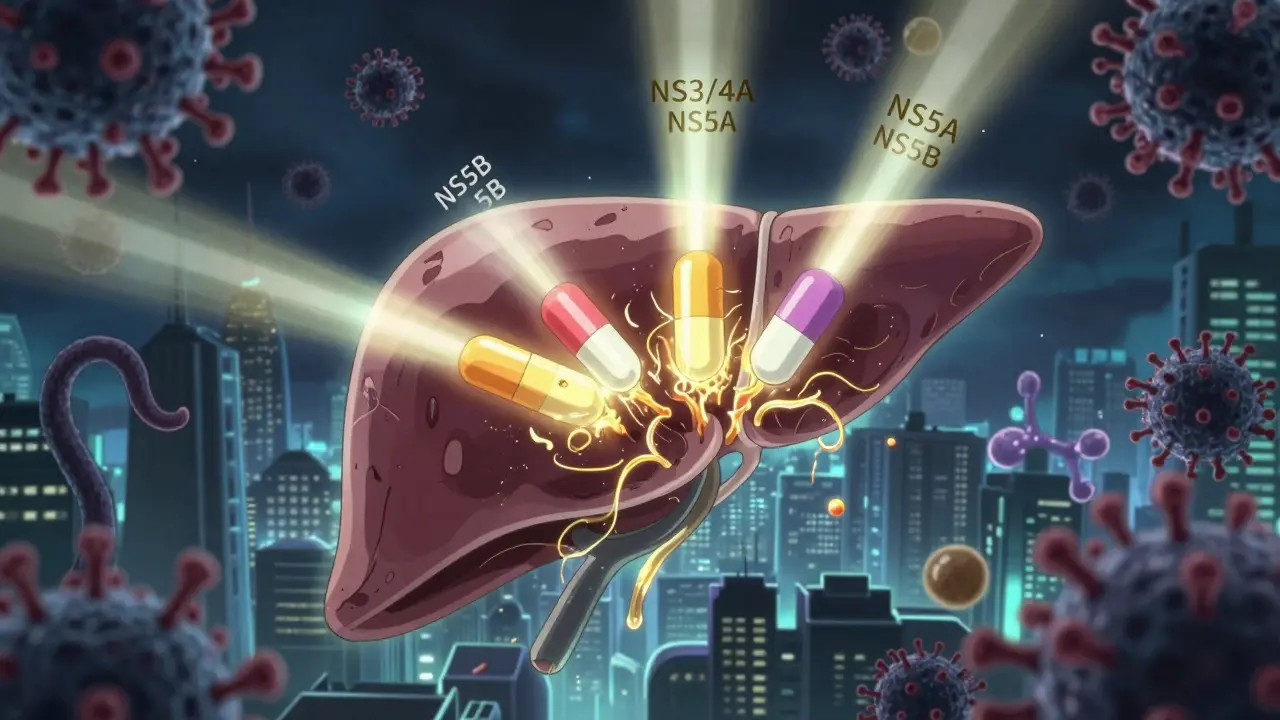
For decades, chronic hepatitis C was a silent killer. Many people carried the virus for years without symptoms, only to discover too late that their liver was scarred, failing, or cancerous. Then, around 2014, everything changed. Today, chronic hepatitis C isn’t just manageable-it’s curable. And the science behind it is simpler, faster, and more effective than anyone imagined.
What Chronic Hepatitis C Really Does to Your Liver
Hepatitis C is a virus that attacks your liver. When it becomes chronic, it means your body couldn’t clear the infection on its own. Left alone, the virus slowly damages liver cells over years or even decades. This damage builds up as scar tissue-a process called fibrosis. Over time, fibrosis can turn into cirrhosis, where the liver becomes stiff and can’t function properly. Cirrhosis raises the risk of liver failure, liver cancer, and death. The scary part? Most people don’t feel sick until the damage is advanced. Fatigue, mild nausea, or joint pain might be the only signs. By the time jaundice or swelling appears, it’s often too late. That’s why testing matters. If you’ve ever had a blood transfusion before 1992, used injectable drugs, or got a tattoo in an unregulated setting, you should get tested. It’s a simple blood test-and it could save your life.The Revolution: Direct-Acting Antivirals (DAAs)
Before DAAs, treatment was brutal. Patients had to get weekly injections of interferon and take ribavirin pills for up to a year. Side effects were brutal: severe fatigue, depression, anemia, and flu-like symptoms. Even then, cure rates hovered between 40% and 80%, depending on the virus strain. Many people quit treatment because it was too hard. Then came DAAs. These are oral pills taken daily for just 8 to 12 weeks. No shots. No hospital visits. No debilitating side effects. And they work in over 95% of cases-even in people with cirrhosis, HIV co-infection, or kidney disease. DAAs don’t just suppress the virus. They eliminate it. The three main types of DAAs target different parts of the hepatitis C virus:- NS3/4A protease inhibitors (like glecaprevir and voxilaprevir) stop the virus from making proteins it needs to copy itself.
- NS5A inhibitors (like velpatasvir and pibrentasvir) block the virus from assembling new copies.
- NS5B polymerase inhibitors (like sofosbuvir) prevent the virus from copying its genetic material.
How Fast Can You Be Cured?
Treatment duration depends on your liver’s condition:- 8 weeks for people with no liver scarring (non-cirrhotic).
- 12 weeks for most people with mild to moderate scarring.
- 12 to 24 weeks for those with advanced cirrhosis or who’ve failed previous treatments.
How DAAs Protect Your Liver-Even After the Virus Is Gone
Curing hepatitis C doesn’t just stop the damage. It reverses it. A 2023 Mayo Clinic study found that 95% of patients stopped progressing after treatment. In 70% of cases, scar tissue actually began to shrink within five years. Think of it like this: if your liver was a house with a slow leak, DAAs turn off the water. Then, over time, the walls dry out and the mold fades. Your liver regenerates. New, healthy cells replace the scar tissue. For many, liver function improves enough that they no longer need monitoring for liver cancer. One man on Reddit shared his story after being cured with Epclusa: “I was told I’d need a transplant. Twelve weeks later, my doctor said, ‘Your liver looks better than it did five years ago.’ I started dating again. I got married. I didn’t think that was possible.” Liver transplant patients also benefit. Before DAAs, only 25% of transplant recipients cleared the virus. Now, 94% do. That’s a game-changer for survival.
Cost, Access, and the Real Barriers
The drugs work. But not everyone can get them. In the U.S., a 12-week course of Mavyret or Epclusa still costs around $74,700. That’s down from $94,500 in 2013, but it’s still out of reach for many. Insurance often requires prior authorization, and some patients report delays of weeks or months while appealing denials. A 2023 CDC survey found 28% of patients faced initial insurance rejections. The good news? Manufacturer assistance programs cover 70% of uninsured patients. Generic versions are now available for as little as $50 per course in low-income countries. Organizations like WHO and Gilead are pushing to reach 1 million more patients in poorer regions by 2025. The bigger problem? Screening. Only 20% of people with hepatitis C worldwide even know they’re infected. Many don’t have access to testing. Others are afraid of stigma, especially people who inject drugs or are homeless. Until we fix that, we won’t eliminate hepatitis C.Who Can Be Treated Today?
The answer: almost everyone. - Adults with any stage of liver disease - Children as young as 3 years old - People with HIV or kidney disease - Those who’ve had a liver transplant - People with a history of drug use The CDC now says primary care doctors can manage 85% of cases. You don’t need a liver specialist. Just a blood test and a prescription.What About Side Effects?
Most people feel fine. The most common side effects? Mild fatigue and a headache. Less than 10% report anything worse. You can still work, drive, and take care of your kids. No one needs to quit their job for treatment. A 2023 Gilead survey of 5,000 patients found 97% would recommend treatment to a friend. Eighty-nine percent said it didn’t disrupt their daily life. The only real risk? Drug interactions. About 15% of patients take other meds-like epilepsy drugs or HIV treatments-that can interfere with DAAs. Your doctor will check for this. It’s a quick review, not a barrier.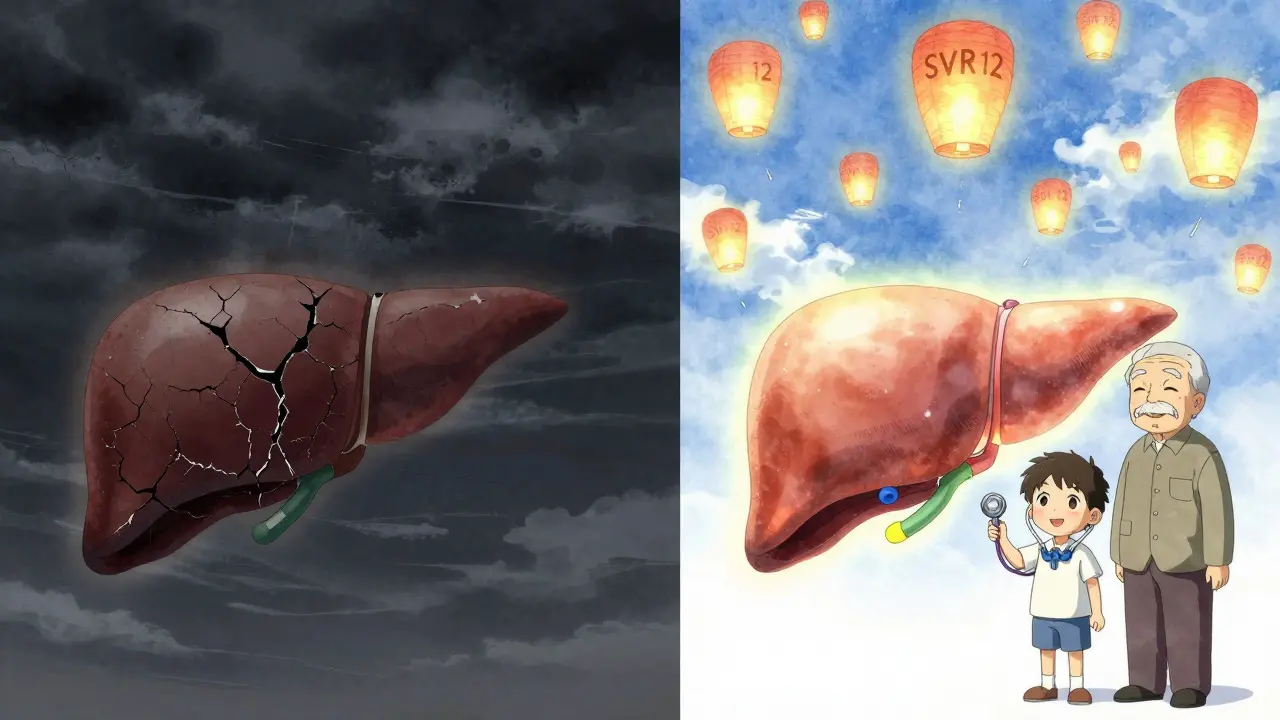
What If Treatment Fails?
It’s rare. Less than 5% of patients don’t clear the virus after one course. But if that happens, there’s still hope. Vosevi, a three-drug combo, is designed specifically for people who failed earlier treatments. New drugs are in the pipeline, and research is focused on fixing resistance issues.Where Do We Go From Here?
The goal isn’t just to cure individuals. It’s to end hepatitis C as a public health threat. The WHO aims to eliminate it by 2030. That means treating 90% of infected people and preventing new infections. We’ve got the tools. We’ve got the science. What’s missing is access. If you’ve ever been told, “You have hepatitis C,” don’t wait. Don’t assume it’s too late. Don’t assume you can’t afford it. Talk to your doctor. Get tested. Get treated. Your liver can heal. Your life can change.Can chronic hepatitis C be cured completely?
Yes. Modern direct-acting antiviral (DAA) treatments cure more than 95% of people with chronic hepatitis C. A sustained virologic response at 12 weeks after treatment (SVR12) means the virus is gone for good. Once cured, the virus does not return.
How long does hepatitis C treatment take?
Most people take pills for 8 to 12 weeks. Those with no liver scarring often finish in 8 weeks. People with cirrhosis or prior treatment failure may need 12 to 24 weeks. Treatment is much shorter than the 24-48 weeks required with older interferon-based regimens.
Do DAAs have serious side effects?
No. Most people experience no side effects or only mild ones like fatigue or headache. Less than 10% report anything significant. Unlike older treatments, DAAs don’t cause depression, anemia, or flu-like symptoms. Over 90% of patients report no impact on daily activities.
Can hepatitis C come back after being cured?
No, not from the original infection. Once you achieve SVR12, the virus is eliminated from your body. However, you can get reinfected if you’re exposed again-especially if you continue injecting drugs. Reinfection rates among people who inject drugs are 5-10% per year, so prevention and harm reduction remain important.
Is treatment covered by insurance?
Most insurance plans cover DAAs, but some require prior authorization or proof of liver damage. About 28% of patients in the U.S. face initial denials, but appeals often succeed. Manufacturer assistance programs cover 70% of uninsured patients. Generic versions cost as little as $50 in low-income countries.
Do I need to see a liver specialist to get treated?
No. Since 2017, the CDC has stated that primary care providers can manage 85% of hepatitis C cases. You don’t need a hepatologist. A simple blood test and a prescription from your regular doctor are enough. Training programs have shown that clinicians can learn to prescribe DAAs in as little as 4 hours.
Can children be treated for hepatitis C?
Yes. Since 2022, the World Health Organization recommends DAA treatment for children as young as 3 years old. Pediatric formulations are available and have shown cure rates over 95%, similar to adults. Early treatment prevents long-term liver damage in children who were infected at birth or during childhood.
Does curing hepatitis C improve liver function?
Yes. After cure, liver fibrosis stops progressing in 95% of patients. In 70% of cases, scar tissue begins to reverse within five years. Liver enzymes return to normal, and the risk of liver cancer drops dramatically. Many patients see improved energy, mental clarity, and overall quality of life.
What if I’ve had a liver transplant?
DAAs are highly effective after liver transplant. Before DAAs, only 25% of transplant patients cleared the virus. Today, over 94% do. This has dramatically improved transplant survival rates and reduced the risk of the virus returning in the new liver.
Is hepatitis C still a problem today?
Yes-because most people don’t know they have it. Only 20% of infected people globally have been diagnosed. Without testing and treatment, the virus continues to spread silently. The goal is to eliminate it by 2030, but that requires widespread screening, especially among high-risk groups like people who inject drugs and baby boomers.
Next Steps: What to Do If You Think You Have Hepatitis C
If you’re unsure whether you should be tested:- You were born between 1945 and 1965
- You’ve ever used injectable drugs
- You received a blood transfusion or organ transplant before 1992
- You’ve had long-term hemodialysis
- You were born to a mother with hepatitis C
- You have unexplained liver enzyme elevations
John Cena
February 18, 2026 AT 23:36Just read through this whole thing and honestly? I’m blown away. I had no idea hepatitis C could be cured so cleanly now. I thought it was still this scary, long-term battle with side effects that made people quit. The part about liver regeneration really hit me - like, your body can actually heal itself if you give it a chance. Kinda beautiful when you think about it.
Jonathan Rutter
February 19, 2026 AT 01:38Look, I get the hype, but let’s not pretend this is some miracle cure. Yeah, DAAs work great - statistically. But real life isn’t a clinical trial. People are still getting denied by insurance. Some folks can’t even afford the copay even if they have coverage. And don’t even get me started on how many people never get tested because they’re scared, ashamed, or just don’t trust the system. This isn’t a victory lap - it’s a Band-Aid on a hemorrhage. We need systemic change, not just better pills. Also, why is no one talking about the fact that these drugs were originally priced at over $100K? That’s pure greed disguised as innovation.
And let’s not forget: curing the virus doesn’t fix the social decay that caused the spread. Homelessness. Stigma. Lack of clean needles. Poverty. You can’t treat a disease when the conditions that make it thrive are still intact. So yeah, great science. But don’t call it justice.
Jana Eiffel
February 20, 2026 AT 13:52While the scientific advancements detailed herein are undeniably remarkable, I find myself compelled to reflect upon the broader epistemological implications of this therapeutic paradigm shift. The transition from interferon-based regimens - which, while arduous, were embedded within a framework of clinical oversight and patient monitoring - to the current model of oral, short-duration, high-efficacy pharmacotherapy, represents not merely a medical evolution, but a profound reconfiguration of the physician-patient relationship. No longer is hepatitis C managed through prolonged engagement, but rather, it is ‘solved’ through algorithmic prescription. This raises profound questions regarding the commodification of health outcomes and the erosion of longitudinal care. Moreover, the assertion that primary care providers may now manage 85% of cases, while pragmatically sound, may inadvertently diminish the role of hepatology as a specialty - a field whose nuanced understanding of hepatic pathophysiology remains indispensable in complex comorbidities. Thus, while the cure is real, the sociomedical cost warrants careful contemplation.
Freddy King
February 21, 2026 AT 17:12Okay so let’s break this down with some real numbers. DAAs have an SVR12 rate of 95%? Cool. But that 5% failure rate? That’s not negligible - especially if you’re in that group. And the fact that Vosevi exists as a rescue therapy tells you everything: resistance is real. Also, ‘no side effects’? Bro. Fatigue and headache are side effects. They’re just mild enough that people don’t quit. But if you’re a truck driver or a nurse working 12-hour shifts, ‘mild fatigue’ is still a safety risk. And what about drug interactions? 15% of patients have meds that clash? That’s 1 in 7 people. That’s not ‘quick review’ territory - that’s a pharmacy audit nightmare. And let’s not forget: this only works if you take every pill, every day, for 8–12 weeks. No missed doses. No alcohol. No skipping meals. That’s a lot to ask when you’re homeless, addicted, or mentally ill. So yeah - science is cool. But real people? Not so much.
Hariom Sharma
February 23, 2026 AT 13:04This is why I love modern medicine. I’m from India and we’ve got so many people with Hep C here, especially in rural areas. But now with generics under $50? That’s life-changing. My uncle got treated last year - he was scared, thought he’d die. Now he’s back to teaching kids math. I told him, ‘You didn’t just beat the virus - you got your life back.’ We need more of this. Not just in the US - everywhere. If we can make this affordable and get testing to villages, we can wipe this out in my lifetime. Don’t wait for the system to fix it - ask your local clinic if they test for it. One test. One pill. One chance. Do it.
Nina Catherine
February 25, 2026 AT 12:57OMG I JUST FOUND OUT I HAD HEP C LAST WEEK AND I WAS FREAKING OUT BUT THIS POST MADE ME CRY IN THE BEST WAY?? I’M 32 AND I’M GOING TO THE DOCTOR TOMORROW TO GET TESTED AGAIN AND ASK ABOUT DAAS. I DIDN’T EVEN KNOW I COULD BE CURED. I THOUGHT I WAS GONNA HAVE TO LIVE WITH IT FOREVER. THANK YOU SO MUCH FOR WRITING THIS. I FEEL HOPEFUL FOR THE FIRST TIME IN YEARS. 😭❤️
Benjamin Fox
February 26, 2026 AT 12:44Y’all need to stop acting like this is some global humanitarian win. These drugs were developed by American pharma. They made billions. Now they’re selling generics for $50? Only because they got pressured. Meanwhile, we’re still fighting over insurance in this country. If you’re poor, you still get stuck in paperwork hell. This isn’t progress - it’s profit with a smile. And don’t even get me started on how we treat people who inject drugs. They’re still criminals to most of us. You cure their liver but you still lock them up. That’s not healthcare. That’s hypocrisy.
Tommy Chapman
February 27, 2026 AT 23:34So let me get this straight - we’re celebrating a pill that cures a disease caused by drug use and bad hygiene? Why are we not talking about prevention? Why aren’t we funding needle exchanges? Why are we still stigmatizing addicts? This isn’t a medical breakthrough - it’s a band-aid on a broken society. You don’t fix a problem by treating symptoms while ignoring the root. And now we’re telling people ‘just get tested’ like it’s that easy. Nah. People don’t get tested because they’re scared of being judged. And guess who’s judging them? People like you who think science fixes everything. Wake up.
Taylor Mead
March 1, 2026 AT 20:53Just wanted to say - this is the kind of post that makes me believe in progress. I work in a community clinic and we’ve started offering free Hep C screening. Last month, we tested 17 people. 3 were positive. All three started treatment this week. Two of them are back at work. One’s even applying to go back to school. I’ve seen people go from ‘I’m dying’ to ‘I’m planning my wedding’ in 3 months. It’s not magic. It’s science. And it’s available. If you’re reading this and you’re unsure - go get tested. It’s 5 minutes. It could change everything.