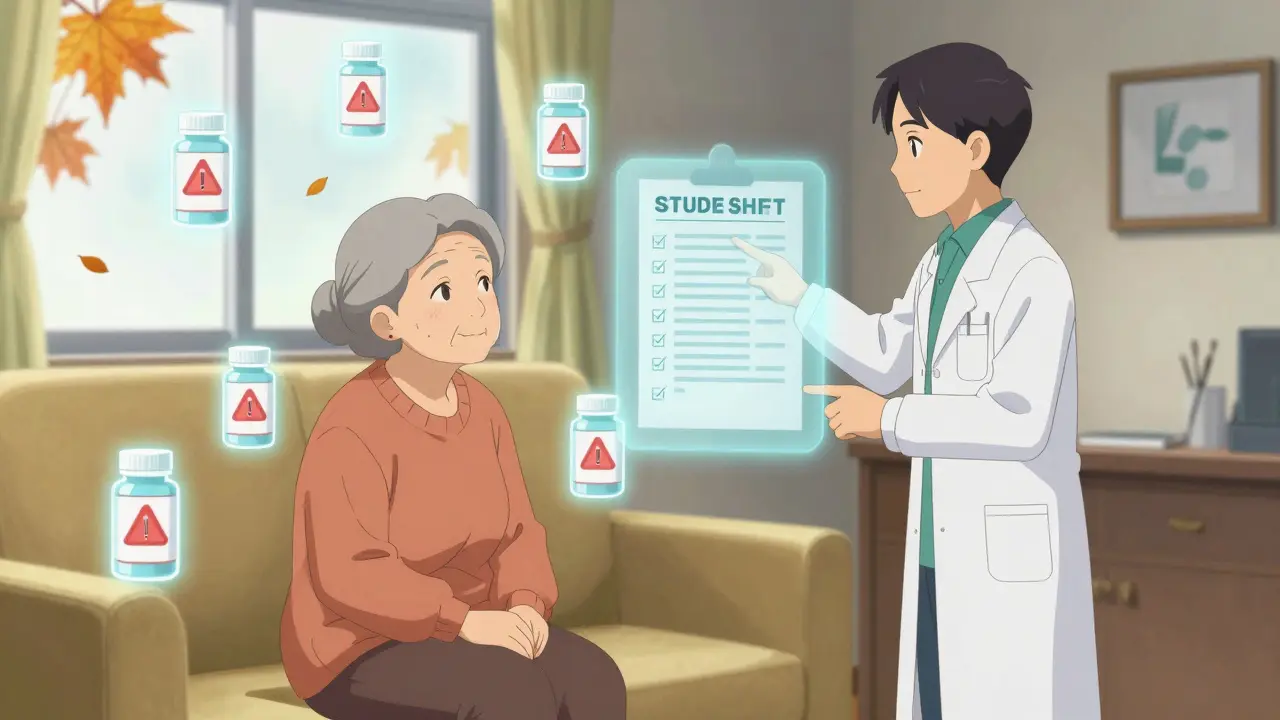
Every year, thousands of older adults end up in the hospital not because of a fall or infection, but because of a medication they were prescribed. It’s not always the dose. Sometimes, it’s the drug itself. That’s where the Beers Criteria come in - a practical, evidence-based tool that helps doctors and pharmacists spot medications that do more harm than good in people aged 65 and older.
What Exactly Are the Beers Criteria?
The Beers Criteria are a list of medications that should generally be avoided in older adults because they carry higher risks than benefits. Developed in 1991 by Dr. Mark Beers and updated regularly since 2011 by the American Geriatrics Society (AGS), the latest version came out in 2023. It’s not a rigid rulebook. It’s a guide - one backed by data from over 1,500 studies reviewed between 2019 and 2022.
The 2023 update includes 131 specific medication criteria. Of those, 89 apply to nearly all older adults, no matter their health conditions. Another 22 warn against using certain drugs if someone has specific diseases like dementia, kidney problems, or low blood pressure. Then there are 20 more that focus on how kidney function affects drug safety. Finally, the list flags dangerous drug interactions that can cause falls, confusion, or even heart rhythm problems.
What makes the Beers Criteria different from other tools is its focus: it only looks at inappropriate prescriptions, not missed ones. That’s why it’s used widely by Medicare, nursing homes, and hospital systems. It’s part of the HEDIS quality measures, meaning pharmacies and insurers track how often these risky drugs are prescribed.
Why Do These Drugs Matter So Much?
As we age, our bodies change. The liver slows down. The kidneys filter less. Fat increases, muscle decreases. That means drugs stay in the system longer, build up to toxic levels, or act differently than they did in younger years. A medication that’s safe for a 40-year-old can be dangerous for an 80-year-old.
For example:
- Benzodiazepines like diazepam (Valium) or lorazepam (Ativan) are often prescribed for anxiety or sleep - but they double the risk of falls and hip fractures in older adults. They also cause confusion and memory problems that mimic dementia.
- Anticholinergics - found in some allergy meds, bladder pills, and even certain antidepressants - block a brain chemical needed for memory and attention. Long-term use is linked to higher dementia risk.
- NSAIDs like ibuprofen or naproxen may seem harmless for arthritis pain, but they raise the risk of stomach bleeding, kidney damage, and heart failure in older adults, especially those on blood pressure meds.
- Antipsychotics like risperidone or quetiapine are sometimes used to manage agitation in dementia patients. But studies show they increase stroke risk and death. The 2023 update made this warning even stronger.
Research from the Journal of the American Geriatrics Society shows that older adults taking even one Beers-listed drug are 30% more likely to be hospitalized. Those taking two or more? The risk jumps to over 50%. These aren’t rare cases. About 20% of older adults in the U.S. are prescribed at least one medication on the Beers list.
How Are the Criteria Used - and Misused?
Used right, the Beers Criteria save lives. Pharmacists use them to flag risky prescriptions before they’re filled. Geriatricians use them during medication reviews to simplify complex regimens. In nursing homes, they help reduce unnecessary drugs that cause drowsiness, falls, or confusion.
But here’s the catch: they’re not meant to be a checklist. One nurse practitioner in Bristol told me about a patient, 82, with severe arthritis and mild dementia. She was on an NSAID, a benzodiazepine, and an anticholinergic for overactive bladder. The Beers list said all three were risky. But the patient couldn’t walk without pain, couldn’t sleep, and kept having accidents. Stopping all three at once would’ve been dangerous.
Instead, they worked together - the pharmacist suggested a safer bladder med, the doctor switched to a low-dose acetaminophen with physical therapy, and the sedative was replaced with a non-drug sleep routine. It took months. But the patient stopped falling. Her memory improved. She started eating again.
This is why experts say the Beers Criteria are a warning light, not a stop sign. They’re meant to spark conversation, not replace judgment. The AGS is clear: “These criteria should never be used to deny coverage or punish clinicians.”

What’s New in the 2023 Update?
The 2023 update made several key changes:
- Bold warnings against antipsychotics in dementia patients - even short-term use is now strongly discouraged.
- Expanded guidance on benzodiazepines and sleep aids like zolpidem (Ambien). These are now flagged for all older adults, not just those with fall risk.
- New criteria for drugs that increase fall risk, including certain diabetes meds that cause low blood sugar and some heart medications that lower blood pressure too much.
- Stronger emphasis on kidney function. A drug that’s okay for someone with healthy kidneys might be dangerous for someone with even mild kidney disease.
They also added more detail on drug-drug interactions. For example, combining a statin with a fibrate can cause dangerous muscle damage. Or mixing certain antibiotics with blood thinners can lead to uncontrolled bleeding.
The update didn’t just add drugs - it removed some. A few older medications were taken off the list because newer evidence showed they were safer than previously thought. That’s the point: the Beers Criteria evolve with the science.
How Do Clinicians Actually Use This in Practice?
Most doctors don’t memorize 131 drugs. They rely on tools:
- The AGS Beers Criteria mobile app lets pharmacists and clinicians search by drug name, condition, or kidney function - all in seconds.
- Many electronic health records now have clinical decision support alerts that pop up when a prescriber tries to order a Beers-listed drug.
- Pharmacists in community pharmacies use the list during medication therapy management visits - a service covered by Medicare Part D.
- Hospitals and nursing homes use it to audit prescriptions quarterly and train staff.
One study found that when pharmacists reviewed medications in older adults using the Beers list, they identified potentially inappropriate drugs in 45.7% of patients. That’s nearly half. And when those drugs were safely stopped or replaced, hospital visits dropped by 35% over six months.

What About Other Tools Like STOPP-START?
Another popular tool is STOPP-START. While Beers focuses on bad drugs to avoid, STOPP-START also looks at good drugs that are missing. For example, an older adult with heart failure might not be on a beta-blocker - that’s a STOPP error. Or someone with osteoporosis isn’t getting a bone-strengthening drug - that’s a START issue.
Beers and STOPP-START aren’t rivals. They’re partners. Many clinics use both. Beers helps you cut the bad. STOPP-START helps you add the good. Together, they make deprescribing - the careful removal of unnecessary drugs - safer and more effective.
What Should Patients and Families Do?
You don’t need to memorize the list. But you can ask smart questions:
- “Is this medication still necessary? Has it been reviewed lately?”
- “Are there safer alternatives?”
- “Could this be causing my dizziness, confusion, or falls?”
- “Can we try stopping one of these to see if things improve?”
Bring all your medications - pills, patches, creams - to your next appointment. Don’t rely on memory. Many older adults take 5, 8, even 12 different drugs. That’s polypharmacy. And it’s where the risks pile up.
There’s also a free, easy-to-read version of the Beers Criteria at healthinaging.org. It’s designed for patients and caregivers. No jargon. Just clear advice.
Final Thoughts: It’s Not About Rules - It’s About Safety
The Beers Criteria aren’t perfect. They can’t account for every person’s unique situation. But they’re one of the most reliable tools we have to prevent harm. They’ve helped cut hospital stays, reduce falls, and improve quality of life for countless older adults.
Medication safety isn’t about eliminating drugs. It’s about choosing the right ones - and ditching the ones that don’t belong. For older adults, that often means less is more. And the Beers Criteria? They’re the roadmap to getting there.