Medication Interaction Checker
Check Your Medications
Enter your medications below to identify potential interactions and side effects. This tool helps you prepare for your annual medication review with a pharmacist.
Your Medications
Potential Interaction Warnings
Next Steps
What to do: Bring this information to your pharmacist for a full review. They can confirm interactions and recommend safer alternatives.
- Schedule an annual medication review with your pharmacist
- Bring all your medications to the review
- Ask about reducing polypharmacy
- Request a written summary of changes
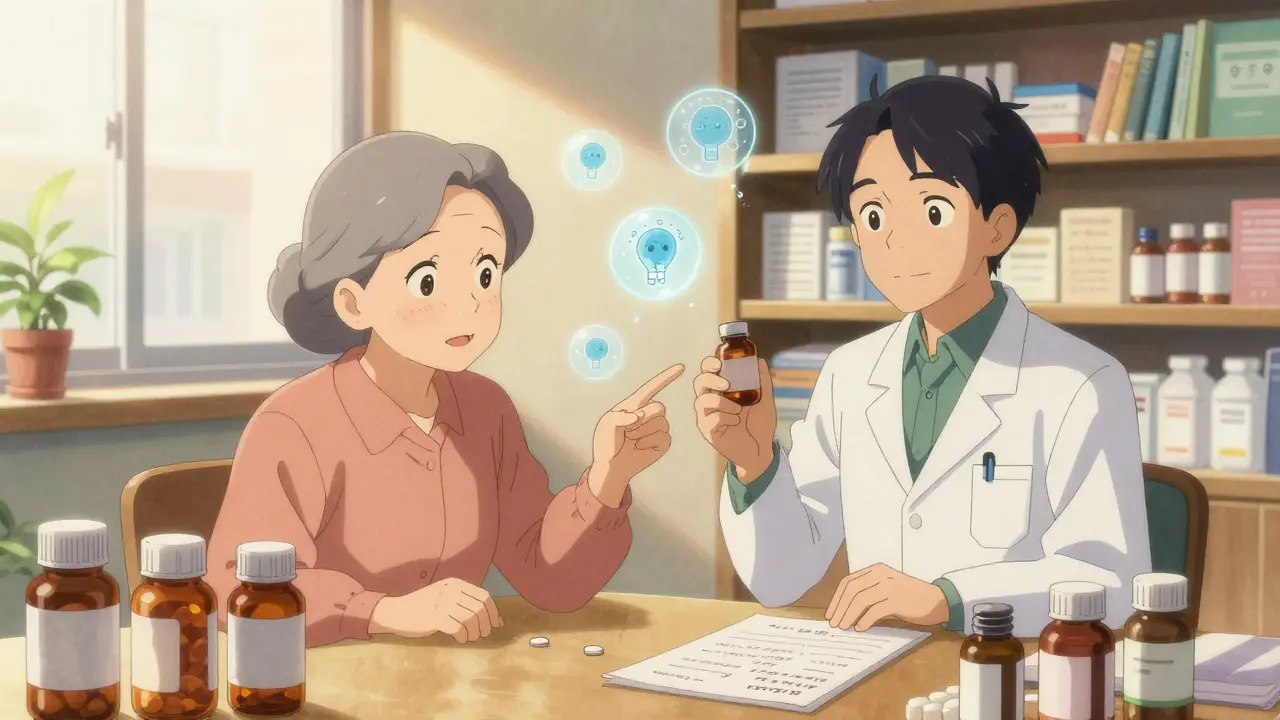
Every year, thousands of people take medications they don’t need, take them at the wrong time, or don’t realize they’re doubling up on the same drug. Many of these mistakes lead to side effects that feel like aging - fatigue, dizziness, confusion, stomach upset - but they’re often caused by your medicine, not your body. An annual medication review with a pharmacist is one of the simplest, most effective ways to stop this before it leads to a hospital visit.
It’s not a fancy procedure. No needles. No scans. Just you, your meds, and a pharmacist who’s trained to spot what doesn’t belong. In the UK, this is already a standard part of care for older adults and those on multiple prescriptions. But even if you’re not over 65, if you take four or more medications regularly, you need this check-up.
What Happens in an Annual Medication Review?
The process is straightforward, but powerful. It follows three clear steps:
- You bring everything you take - prescriptions, over-the-counter pills, vitamins, herbal supplements, even patches and inhalers. Don’t leave anything out. Many people forget their painkillers, sleep aids, or gummies labeled "natural."
- The pharmacist looks at each one. Not just what it is, but why you’re taking it. Is it still needed? Is the dose right? Is it interacting with something else? They’ll ask you about side effects you’ve noticed - even if you thought they were normal.
- Together, you decide what to change. Maybe you stop one pill. Maybe you switch to a different time of day. Maybe you get a new label or a pill organizer. The goal isn’t to cut meds for the sake of it - it’s to make sure every one is doing something useful for you.
A typical review takes about 30 minutes. That’s less time than a coffee run. But the impact lasts months - or years.
Why Pharmacists? Not Just Your Doctor
Your GP has a 10-minute window to check in on your blood pressure. They might not know that you’re taking St. John’s Wort for low mood, or that you’ve been using ibuprofen every night for knee pain. Pharmacists? They see your full list. Every bottle. Every refill. Every change.
They’re trained to spot interactions you’d never think of. For example:
- Taking a blood thinner like warfarin with garlic supplements? Risk of bleeding.
- Using a common antihistamine for allergies while on a heart medication? Could cause dizziness or falls.
- Taking two different painkillers that both contain paracetamol? That’s liver damage waiting to happen.
Pharmacists also know what’s been proven to work - and what’s just marketing. They’ve seen how often patients are prescribed a new drug to fix a side effect from another drug. It’s a cycle. And it stops with a review.
Who Needs This Most?
You don’t have to be elderly to benefit. But certain groups see the biggest gains:
- People taking 5 or more long-term medications - this is called polypharmacy, and it affects 40% of adults over 65 in the UK.
- Those who’ve had a recent hospital stay or emergency visit.
- Anyone who says, "I feel off lately," but can’t explain why.
- People who take meds for chronic conditions like diabetes, high blood pressure, arthritis, or depression.
- Those who use supplements or herbal remedies alongside prescriptions.
Here’s the truth: half of all long-term medications aren’t taken as prescribed. And nearly 20% of hospital admissions in older adults are caused by medication errors. An annual review cuts those risks by up to 30%.
Real Stories, Real Results
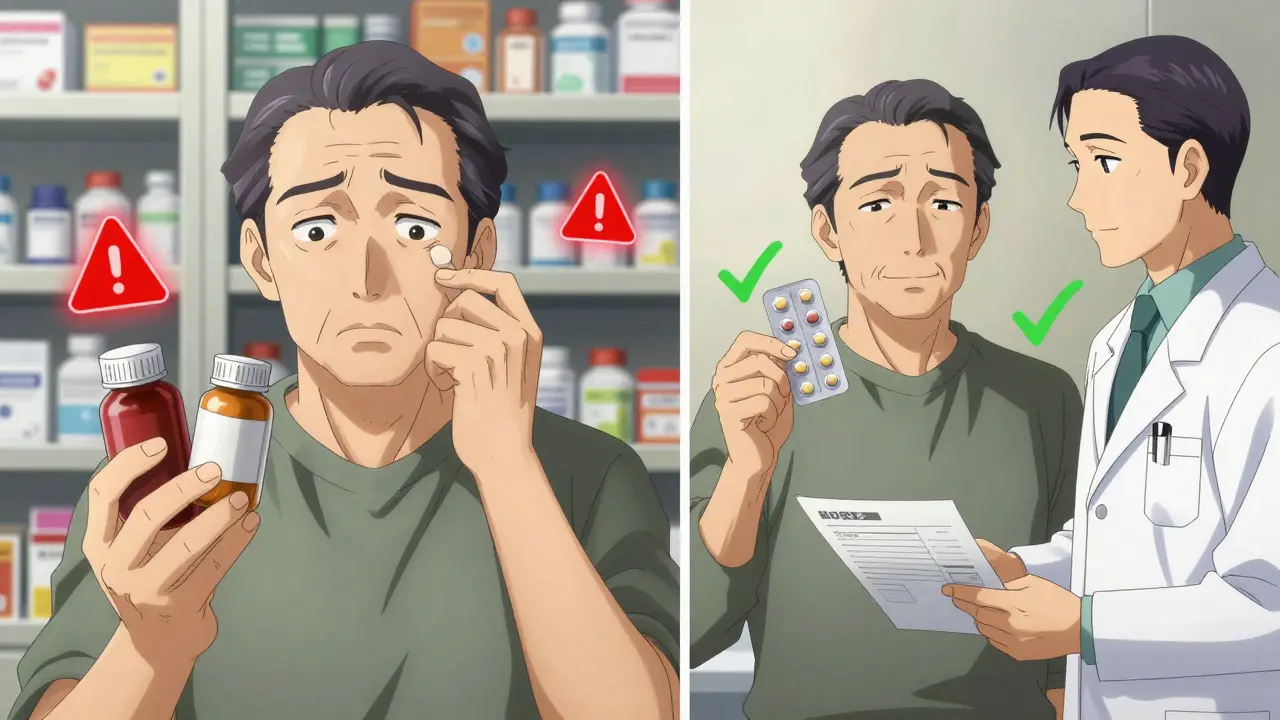
One woman in Bristol, 72, came in because she felt constantly tired. She was on six prescriptions and three supplements. The pharmacist found she was taking two different pills that both contained the same sleeping aid. She’d been doubling up for years. After stopping the duplicate, her energy returned in two weeks.
A man in Gloucester, 68, was told his memory lapses were "just aging." His review revealed he was on a muscle relaxant that caused brain fog. He switched to a different drug - and his focus improved within a month.
Another patient was taking a statin for cholesterol and a calcium supplement. The pharmacist pointed out the supplement was interfering with the statin’s effect. She stopped it - and her cholesterol levels dropped.
These aren’t rare cases. They’re common.
What to Bring to Your Review
Don’t wing it. Come prepared:
- All prescription bottles - even empty ones.
- All over-the-counter medicines - painkillers, antacids, cold tablets.
- All vitamins, minerals, and herbal supplements - gummies, powders, teas.
- A list of any recent changes - new meds, stopped meds, doses changed.
- Your notes: What side effects have you noticed? When? What makes them better or worse?
Don’t rely on memory. Write it down. Take a photo of your medicine cabinet. Bring the actual bottles. Pharmacists have seen it all - and they won’t judge. They’ve seen people take 14 pills a day because they were afraid to stop.
What You Can Expect After the Review
You won’t walk out with a prescription. You’ll walk out with a plan.
Here’s what happens next:
- You’ll get a written summary of what you take, why, and what changed.
- The pharmacist will send a report to your GP so they’re in the loop.
- You might get a new pill box, a refill schedule, or a reminder app recommendation.
- Some pharmacies offer free blister packs or medication synchronization - so all your pills arrive on the same day each month.
And if something needs to be changed - like stopping a drug or switching to a cheaper alternative - the pharmacist will help you talk to your doctor. They’ve done it before. They know how to speak the language.
What Doesn’t Work
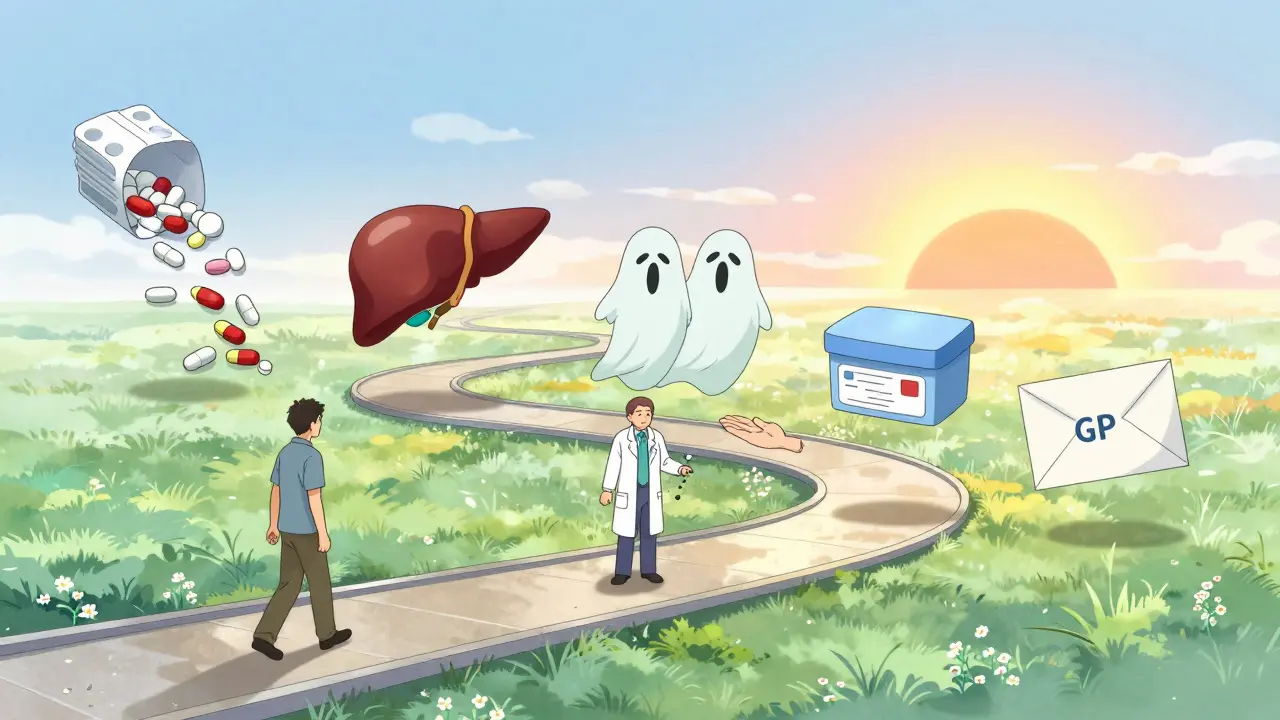
Not everyone needs this. If you take one pill for high blood pressure and nothing else, an annual review won’t add much. But if you’ve added a new med every year for the last five - you’re in the target group.
Also, reviews don’t work if you don’t follow up. Studies show only 60-70% of people complete the full plan after their review. That’s why it’s called an annual review - you need to do it again next year. Medicines change. Your body changes. Your life changes.
And if your pharmacist doesn’t ask you about side effects? If they just hand you a list and say "you’re fine"? Find another one. The best reviews are conversations - not checklists.
How to Get Started
In the UK, you can ask your pharmacy for an annual medication review. Many offer it for free under NHS services, especially if you’re on multiple prescriptions. Chain pharmacies like Boots, Lloyds, and Superdrug all have trained pharmacists who can do this. Independent pharmacies often do it too - just ask.
Call ahead. Say: "I’d like to schedule my annual medication review." They’ll know what you mean.
If you’re on Medicare (in the US) or similar public schemes, it’s often required. But even if you pay privately, it’s worth it. The cost of a fall, a hospital stay, or a liver injury? That’s far more than the time you spend in a pharmacy.
Why This Matters Now
The population is aging. More people are taking more meds. More side effects are going unnoticed. The NHS and healthcare systems know this. That’s why they’re pushing pharmacists into the front line of care.
By 2030, nearly one in three people in the UK will be over 65. More drugs. More complexity. More risk. The solution isn’t more doctors. It’s better use of the ones we already have - especially pharmacists.
This isn’t about cutting corners. It’s about cutting confusion.
Is an annual medication review free?
In the UK, yes - if you’re on multiple prescriptions, most NHS-affiliated pharmacies offer it at no cost. Even if you pay for your meds privately, many pharmacies include the review as part of their service. Always ask. There’s no reason to pay for this.
Do I need to see my doctor before the review?
No. You can go straight to your pharmacist. They’ll communicate with your GP after the review, but you don’t need a referral. In fact, many people find the review helps them decide whether they even need to see their doctor.
Can a pharmacist stop my medication?
No - only your doctor can cancel a prescription. But your pharmacist can recommend stopping a drug, explain why, and help you talk to your doctor. Many doctors will follow their advice, especially if it’s backed by evidence.
What if I forget to bring all my meds?
Bring what you can. Even a partial list helps. But if you forget something, tell the pharmacist you might have missed a pill. They’ll ask follow-up questions. Many people forget supplements - don’t be embarrassed. They’ve seen it all.
How often should I have this done?
Once a year. If your meds change - you start a new drug, stop one, or have a hospital visit - don’t wait. Book a review right away. Annual is the minimum. More frequent reviews are better if your health is unstable.
Kal Lambert
March 16, 2026 AT 18:59Just had my first med review last month. Took me 25 minutes. Walked out with 3 pills cut, a new pill organizer, and a handwritten schedule. No drama. No judgment. Just clarity. Best 25 minutes I’ve spent all year.
Andrew Muchmore
March 16, 2026 AT 20:36This is exactly why pharmacists should be frontline care. Doctors are swamped. Pharmacists? They see every bottle you own. And they remember what you took last month. That’s not magic-that’s training.
Melissa Starks
March 17, 2026 AT 22:22I’ve been saying this for years but nobody listens. People think vitamins are harmless because they’re 'natural'-but that’s the dumbest myth going. I had a friend on blood thinners who took fish oil, turmeric, garlic, and ginkgo every day. She ended up in the ER with internal bleeding. Turns out, none of it was helping her arthritis anyway. Just a fancy placebo habit. Pharmacists are the only ones who’ll ask you about the gummies. Your doctor? They’ll nod and write another script.
And don’t even get me started on how many people are on 3 different painkillers that all have acetaminophen. Liver damage isn’t dramatic. It just sneaks up on you. By the time you feel it, it’s too late. A 30-minute chat saves lives. Why isn’t this mandatory?
I wish every pharmacy had a sign: 'If you take more than 4 things a day, you’re not 'well'-you’re a walking cocktail. Come talk to us.' We need to normalize this like getting a flu shot.
Also-yes, it’s free. No, you don’t need a referral. Yes, they’ll help you talk to your doctor. No, they won’t laugh at you for forgetting your melatonin gummies. They’ve seen a woman bring 17 bottles because she was scared to stop anything. You’re not weird. You’re normal. And you need this.
Michelle Jackson
March 18, 2026 AT 16:48Ugh. Another one of these 'pharmacists know best' rants. What about the people who actually read the labels? Who check interactions? Who don’t just hand over their entire medicine cabinet to someone who might be overworked and underpaid? I’ve seen pharmacists miss obvious stuff. And then they act like they’re saving lives. It’s not a miracle. It’s a job. And if you’re not doing your own research, you’re just outsourcing your health to someone who might be on their 10th review of the day.
Also-why is this only talked about for older people? I’m 42 and on 5 meds. No one ever says anything. We’re just supposed to keep swallowing until we collapse? Maybe we need to stop being passive and start asking questions. Not just 'can I get a review?' but 'why am I still on this?'
becca roberts
March 18, 2026 AT 22:10Let me guess-you’re the kind of person who thinks 'natural' means 'safe' and 'herbal' means 'no side effects.' I used to be. Then I Googled 'St. John’s Wort and SSRIs' and found out I was one missed dose away from serotonin syndrome. My pharmacist caught it. I cried. She didn’t judge. She just said, 'We’ve all been there.'
And yeah, I brought my entire medicine cabinet. Including the CBD gummies I bought because 'it helps with anxiety.' Turns out they were making my insomnia worse. I didn’t know. She did. That’s why we need these reviews. Not because we’re dumb. Because we’re busy. And we trust the system. And sometimes, the system lets us down.
Also-yes, it’s free. Yes, you don’t need a doctor’s note. Yes, they’ll help you talk to your GP. And yes, your pharmacist has seen 14-year-olds with 7 prescriptions. They’re not surprised. They’re just glad you showed up.
Ayan Khan
March 19, 2026 AT 20:54In India, this concept is almost unheard of. People take whatever the doctor gives, then add whatever the neighbor recommends, then throw in whatever the Ayurvedic shop says. No one checks for interactions. No one tracks doses. And when someone gets sick, they blame the medicine, not the pile.
I recently helped my uncle-he was on 8 different pills for hypertension, diabetes, and arthritis. He’d been taking two different calcium supplements because he thought 'more is better.' His kidneys were struggling. We went to a private pharmacist. She sat with him for 40 minutes. Cut two supplements, changed the timing of one pill, and gave him a color-coded chart. His BP dropped. His energy returned. He’s 78. He didn’t know he could feel this good.
This isn’t a Western luxury. It’s a global necessity. We need to start talking about it here. Not as a 'foreign idea'-but as a basic right. Everyone deserves to know what’s in their body.
SNEHA GUPTA
March 21, 2026 AT 04:45There’s a deeper question here: why do we treat medication like a sacred object? Why do we fear stopping something we’ve been on for years? It’s not just about side effects-it’s about identity. 'I’ve been on this for 15 years. It’s part of who I am.' But what if it’s not helping? What if it’s just noise? What if the real version of you was waiting under all those pills?
Pharmacists don’t just check interactions. They help you rediscover yourself. The woman in Bristol who felt tired? She wasn’t aging. She was overdosed on sleep meds. The man in Gloucester? His memory wasn’t fading. It was being numbed by a muscle relaxant meant for acute injury. These aren’t just medical fixes. They’re existential awakenings.
We’ve been taught to trust the script. But maybe the real healing starts when we question it.
Suchi G.
March 21, 2026 AT 21:28My mom is 70 and on 11 medications. She takes them all at once because she’s afraid she’ll forget. She doesn’t even know what half of them do. She just says 'the doctor said so.' I took her to her pharmacy review last week. The pharmacist found she was on two different versions of the same blood pressure pill. She’d been taking double the dose for 3 years. Her dizziness? Gone. Her confusion? Vanished. She cried because she realized she’d been living in fog for years-and no one told her.
And you know what? She didn’t even know she could ask. No one ever explained it. We’re taught to obey, not to question. This review isn’t about pills. It’s about dignity. It’s about being seen. And it’s about reclaiming your body from a system that treats you like a checklist.
I’m going to push for this in my community. Not because it’s trendy. Because it’s right.
Emily Hager
March 23, 2026 AT 06:56I find it deeply concerning that we’re placing so much trust in pharmacists as if they’re medical oracles. They are not doctors. They are not trained to make clinical judgments. They are dispensers. And while their knowledge of drug interactions is impressive, they are not equipped to evaluate underlying conditions. This review process, while well-intentioned, risks creating a false sense of security. Patients may assume that because a pharmacist said it was fine, they are no longer at risk. But pharmacists do not have access to full medical histories, imaging, lab results, or patient context. They are one layer of a complex system-and we must not mistake them for the entire system.
Furthermore, the notion that this service is 'free' is misleading. It is subsidized by public funds, which are finite. And if every patient demands this review annually, it will strain resources. We need to prioritize-not universalize.
David Robinson
March 24, 2026 AT 10:23Let’s be real. Most people don’t care. They’ll take 12 pills a day, forget half of them, and blame their age when they feel awful. And when you tell them to get a review? 'I’m fine.' 'I don’t have time.' 'It’s not a big deal.'
Then they end up in the hospital. And suddenly everyone’s shocked. 'How did this happen?' Because you didn’t want to be told you were overdosing on melatonin and ibuprofen. You wanted to believe the myth that 'more is better.'
Pharmacists aren’t heroes. They’re just the last line before the crash. And we’re not giving them enough room to do their job.
Kathy Underhill
March 25, 2026 AT 03:11Finally, someone says it. This is the quiet revolution we’ve been ignoring. It’s not about pills. It’s about autonomy. Every time you take a drug without understanding why, you surrender a piece of your agency. The system doesn’t want you to question. It wants you to comply. But the pharmacist? They’re the only one who doesn’t care about your compliance. They care about your survival.
I’ve seen this happen. A woman in her 50s was on a statin, a beta-blocker, a proton pump inhibitor, and a sleep aid-all because of cascading prescriptions. No one ever asked why. She came in for a review. They cut two. She stopped the statin. Her liver enzymes normalized. Her sleep improved. She said, 'I didn’t know I could feel this clear.'
This isn’t healthcare. It’s liberation.
Paul Ratliff
March 26, 2026 AT 17:49Just walked into my local pharmacy and asked for the med review. They looked at me like I’d asked for a unicorn. Then they said, 'Oh, you mean the NHS one? Yeah, we do that. Come back Thursday.' No appointment needed. No form. Just me and a pharmacist with a clipboard. Took 22 minutes. Cut one pill. Got a new schedule. Done.
Why is this so hard to talk about? It’s not a big deal. It’s just smart.
Srividhya Srinivasan
March 28, 2026 AT 07:03Wait-so now we’re trusting pharmacists to decide what we take? What’s next? Are they going to start reading our minds? I heard a rumor that some pharmacies are using AI to analyze your pill bottles and cross-reference them with your social media. Is this the first step? Are they collecting data on our health habits to sell to insurers? I’m not saying it’s true-but I’m not saying it’s false either. I’ve seen what happens when 'well-intentioned' systems get too cozy with power. One day you’re getting a free review. The next, you’re getting a 'health score' that affects your premiums. I’m not paranoid. I’m informed.
Andrew Muchmore
March 29, 2026 AT 22:07Reply to #8093: You’re right-they’re not doctors. But they’re the only ones who see the full picture. Doctors write scripts. Pharmacists see the bottles. And when those bottles don’t match the script? That’s where the danger is. Pharmacists don’t replace doctors. They catch what doctors miss. And if you think that’s not valuable, you’ve never had a family member overdose on acetaminophen.
Kal Lambert
March 31, 2026 AT 10:28Reply to #8106: You’re right-we should question everything. But asking 'why am I still on this?' is the whole point of the review. The pharmacist doesn’t say 'take it.' They say 'why are you taking it?' And if you can’t answer? That’s the red flag.
Kathy Underhill
April 1, 2026 AT 14:18Reply to #8081: You’re not paranoid. You’re just not listening. This isn’t surveillance. It’s safety. The data collected? It’s your medication list. It’s not shared. It’s not sold. It’s not used for scoring. It’s kept so you don’t die. If you’re afraid of someone knowing what pills you take-you’ve got bigger problems than pharmacists.