When your body can’t make enough of the stress hormone cortisol, everyday life becomes a high-wire act. For people with Addison’s disease, even a common cold can turn dangerous. This rare endocrine disorder, also called primary adrenal insufficiency, happens when the adrenal glands - small organs sitting on top of the kidneys - are destroyed, usually by the body’s own immune system. Without these glands working, you don’t produce enough cortisol or aldosterone. And without those hormones, your body can’t handle stress, regulate blood pressure, or balance salt and water. Left untreated, it’s fatal.
What Actually Happens in Addison’s Disease?
Addison’s disease isn’t just about being tired. It’s a complete breakdown of your body’s internal alarm system. Normally, your pituitary gland sends out ACTH to tell your adrenal glands to make cortisol. In Addison’s, the adrenals are damaged - often by autoimmune attacks targeting the 21-hydroxylase enzyme - and they stop responding. By the time symptoms show up, about 90% of adrenal tissue is gone. That’s why diagnosis often takes years. People go to doctors for nausea, dizziness, or muscle weakness, and get told it’s the flu, stress, or anxiety. The National Adrenal Diseases Foundation found 63% of patients waited an average of 3.2 years before getting the right diagnosis.
The classic signs are hard to miss once you know what to look for: dark patches of skin (hyperpigmentation), especially on knuckles, elbows, and inside the mouth; extreme fatigue; low blood pressure that drops further when standing; salt cravings; and nausea. Blood tests show low sodium, high potassium, and low cortisol. The ACTH stimulation test confirms it: if your cortisol doesn’t jump above 18 mcg/dL after a synthetic ACTH injection, your adrenals aren’t working. And if your ACTH levels are above 50 pg/mL, it’s primary - meaning the problem is in the adrenals, not the brain.
Why Steroid Replacement Isn’t Optional
You can’t live without cortisol. It’s not just a stress hormone - it controls blood sugar, inflammation, immune response, and metabolism. Aldosterone keeps your sodium and potassium in balance and your blood pressure stable. Without replacement, your body shuts down. That’s why lifelong steroid therapy is non-negotiable.
Most patients take hydrocortisone - a synthetic version of cortisol - in divided doses: 15 to 25 mg per day, split into two or three doses. The first dose is usually higher in the morning to mimic the body’s natural rhythm. Then there’s fludrocortisone, a mineralocorticoid, taken daily at 50 to 300 micrograms to replace aldosterone. These aren’t "optional" supplements. They’re life-sustaining. Skip a dose during illness, and you risk adrenal crisis - a medical emergency with vomiting, confusion, shock, and possible death.
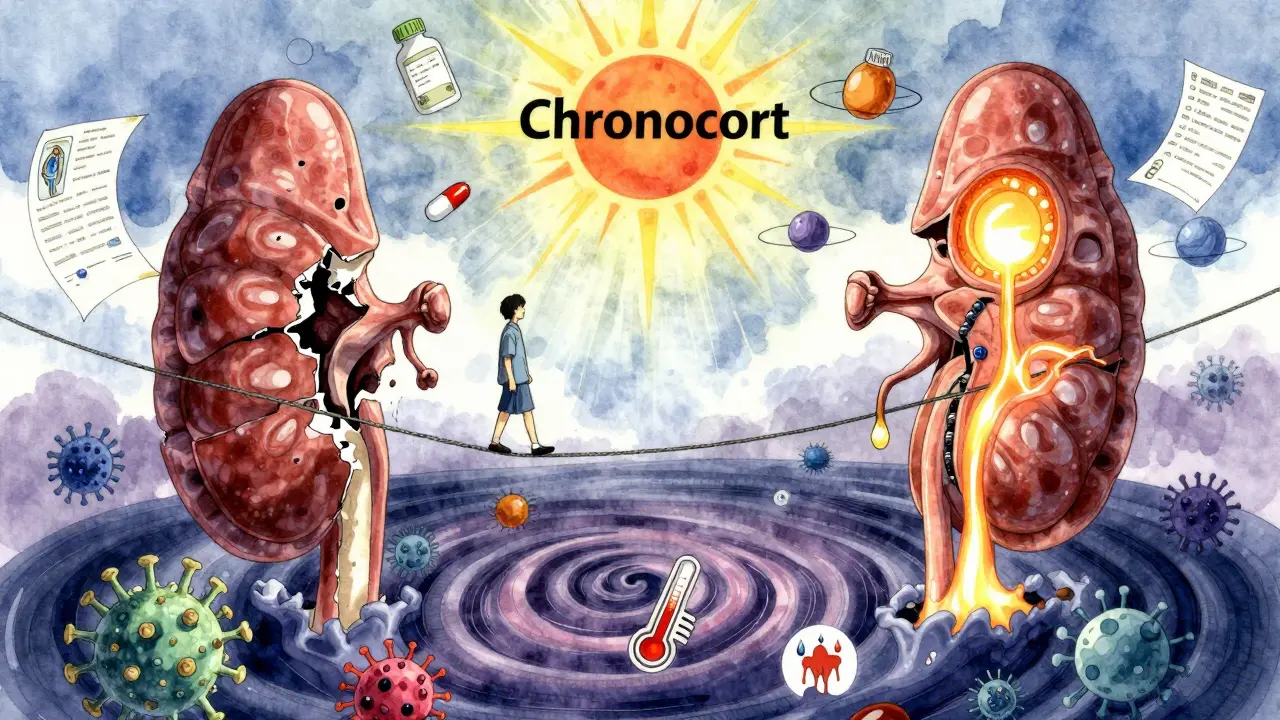
Here’s the catch: getting the dose right is like walking a tightrope. Too little, and you’re at risk of crisis. Too much, and you increase your chance of heart disease, weight gain, diabetes, and bone loss. Dr. Wiebke Arlt’s research shows over-replacement raises cardiovascular death risk by 44%. Under-replacement? That triples your chance of adrenal crisis. That’s why regular blood tests - electrolytes, renin, and sometimes ACTH - are part of every checkup.
The Silent Killer: Adrenal Crisis
Adrenal crisis is the nightmare every patient lives with. It can strike during infection, trauma, surgery, or even intense emotional stress. Infection is the most common trigger - 39% of cases, according to the Pituitary Foundation. Gastroenteritis comes second. And 18% of crises happen because someone skipped or cut their meds - often because they didn’t feel sick enough to need them.
When crisis hits, you don’t wait for a doctor. You act. Every hour of delay increases death risk by 3-5%. The rule is simple: if you’re vomiting, severely ill, or unable to keep pills down, you need an emergency injection of 100 mg hydrocortisone intramuscularly or intravenously. That’s why every patient is told to carry an emergency kit. And wear a medical alert bracelet. In the UK, 92% compliance with these two steps cuts crisis mortality by half.
But here’s the truth: even with perfect adherence, 78% of patients surveyed by the Addison’s Disease Self Help Group had at least one crisis in the last five years. That’s not because they’re careless. It’s because illness doesn’t care if you’re taking your pills. A fever, a stomach bug, a dental procedure - these all demand more steroid. That’s where the "sick day rules" come in.

Mastering the Sick Day Rules
There’s no one-size-fits-all answer for what to do when you’re sick. But the Addison’s Disease Self Help Group has a clear, tested plan:
- Minor illness (fever, cold, mild flu): Double your daily hydrocortisone dose.
- Moderate illness (vomiting, diarrhea, high fever): Triple your dose.
- Severe illness or vomiting: Stop oral meds. Give 100 mg hydrocortisone injection immediately. Go to the ER.
- Dental work: For procedures longer than 30 minutes, take an extra 25-50 mg hydrocortisone before and after.
Patients who learn these rules through structured education - not just a handout - reduce their crisis frequency by 85%, according to a 2022 study. But finding a doctor who understands this? That’s the hard part. Many primary care physicians have never seen a case. Patients on Reddit say it’s common to be told to "just rest" or "take ibuprofen" during a crisis. That’s deadly.
What’s New in Treatment?
The standard treatment - hydrocortisone tablets - has been around for decades. But it’s not ideal. Taking it three times a day disrupts sleep and doesn’t match the body’s natural cortisol rhythm. That’s why the FDA approved Chronocort in 2023: a modified-release version that mimics the body’s pattern with just one daily dose. In trials, it cut cortisol fluctuations by 37%. It’s not a cure, but it’s a step toward better quality of life.
Another big change: testing for 21-hydroxylase antibodies is now standard. If you’re diagnosed with primary adrenal insufficiency, you should get this test. It confirms autoimmune Addison’s - which means you’re also at higher risk for other autoimmune diseases. About half of patients develop another one: thyroid disease, type 1 diabetes, or vitiligo. Some even develop vitamin B12 deficiency. Annual screenings for these conditions are now part of best-practice guidelines.
Looking ahead, researchers are testing continuous cortisol monitors - tiny devices that track your cortisol levels in real time. Early results suggest they could cut crisis rates by 60% in five years. That’s not science fiction. It’s coming.
The Hidden Costs
Hydrocortisone isn’t expensive - but it’s not cheap either. In the U.S., without insurance, a month’s supply of Cortef can cost $350 to $500. That’s why 40% of patients skip doses or ration pills, according to the Endocrine Society’s 2022 survey. In Australia, the PBS subsidizes hydrocortisone, but fludrocortisone isn’t always covered, and patients still pay hundreds out of pocket annually. Cost isn’t just a financial issue - it’s a survival issue.
And geography matters. In Africa and Asia, tuberculosis is still the leading cause of Addison’s. In North America and Europe, it’s almost always autoimmune. That’s why global awareness is still low. The disease affects 10-14 people per 100,000 worldwide - rare, but not rare enough to be ignored.
Living With It
Addison’s disease doesn’t mean you can’t live a full life. But it means you have to be your own best advocate. You need to know your numbers. You need to carry your injection kit. You need to teach your family what to do if you collapse. You need to find an endocrinologist who gets it.
Patients who join support groups, learn the sick day rules, and get regular monitoring live longer and feel better. The average life expectancy is still 3.2 to 11.2 years shorter than the general population - mostly because of heart disease from long-term steroid use or sudden crisis. But with smart management, that gap is closing.
It’s not about being perfect. It’s about being prepared. One patient put it simply: "I don’t live in fear. I live with a plan. And that’s everything."
Can Addison’s disease be cured?
No, Addison’s disease cannot be cured. The damage to the adrenal glands is permanent. Lifelong steroid replacement is required to replace the hormones your body can no longer make. While new treatments like Chronocort improve quality of life, they don’t restore adrenal function. Research into stem cell or gene therapies is ongoing, but no cure exists today.
What happens if I miss a dose of hydrocortisone?
Missing one dose occasionally may cause fatigue, dizziness, or nausea. But if you miss doses during illness, stress, or injury, you risk adrenal crisis - a life-threatening drop in blood pressure, low blood sugar, and shock. Never skip your meds. If you vomit after taking a dose, assume it didn’t work and give an emergency injection. Always have a backup plan.
Why do people with Addison’s get dark skin?
High levels of ACTH - the hormone your pituitary gland makes to try to stimulate your dead adrenal glands - also stimulate melanocytes, the cells that make skin pigment. This causes hyperpigmentation, especially in sun-exposed areas, skin folds, gums, and scars. It’s a key diagnostic clue that helps doctors spot Addison’s early. The darkening fades with proper steroid replacement.
Can I still exercise or travel with Addison’s disease?
Yes - but you need to plan. Exercise increases stress on your body, so you may need to increase your hydrocortisone dose before intense workouts. Traveling? Always carry extra medication - at least double your supply - in your carry-on. Bring your emergency injection kit. Know where the nearest hospital is. Tell a travel companion how to give the injection. Many patients travel globally without issue - as long as they’re prepared.
Is Addison’s disease hereditary?
It’s not directly inherited like a single-gene disorder. But there’s a strong genetic link. People with certain HLA gene types (like HLA-DR3 and HLA-DR4) are more likely to develop autoimmune Addison’s. If you have a family member with autoimmune thyroid disease, type 1 diabetes, or vitiligo, your risk is higher. Screening for 21-hydroxylase antibodies is recommended for close relatives if one person in the family has it.
Do I need to avoid certain foods or supplements?
No strict diet is required, but you should avoid excessive salt restriction - your body needs more sodium. Some patients benefit from extra salt intake, especially in hot weather or after exercise. Avoid licorice - it mimics aldosterone and can interfere with your fludrocortisone dose. Always check with your doctor before starting new supplements, especially those that affect cortisol metabolism like DHEA or adaptogens.
Can women with Addison’s have healthy pregnancies?
Yes, with careful management. Pregnancy increases cortisol needs, so your dose will likely need to increase - especially in the third trimester. Fludrocortisone doses may also need adjustment. Work with an endocrinologist and obstetrician experienced in adrenal disorders. Most women have normal pregnancies and healthy babies. Emergency hydrocortisone must be available during labor, and IV steroids are often given during delivery.
How often should I see my doctor?
At least once a year - more if your dose changes or you’re unwell. Tests should include electrolytes, renin, cortisol, and full blood count. You should also be screened annually for other autoimmune conditions: thyroid function, vitamin B12, and diabetes markers. If you’re on Chronocort or other newer treatments, your doctor may monitor you more closely to fine-tune dosing.
What Comes Next?
If you’ve just been diagnosed, start with the Addison’s Disease Self Help Group’s "Sick Day Rules" guide. Get your emergency kit. Learn how to inject. Wear your medical ID. Find an endocrinologist who’s seen more than one case. Join a patient group. You’re not alone.
If you know someone with Addison’s, learn what to do in a crisis. Keep a hydrocortisone injection in your car or bag. Don’t wait for paramedics - act fast. That one step could save a life.
The future of Addison’s disease isn’t about finding a cure. It’s about making sure no one dies because they didn’t know what to do - or because they couldn’t afford to do it.
evelyn wellding
January 17, 2026 AT 21:36Just found out my cousin has Addison’s and I’m honestly in awe of how she manages it 😭 I used to think "just take your pills" was enough-now I know it’s like juggling fire while blindfolded. She carries her injection kit everywhere, even to yoga class. Respect. 🙌
Corey Sawchuk
January 18, 2026 AT 18:05Been on hydrocortisone for 12 years. The dark skin thing freaked me out at first until I learned it was just my body screaming for help. Now I see it as a badge. Still hate the weight gain though. 🤷♂️
Rob Deneke
January 18, 2026 AT 18:41My buddy had his first crisis last year after a bad flu. He didn’t know to triple his dose. Got rushed to the ER at 3am. Now he’s got a whole system: alarms for meds, emergency kit in his car, even a QR code on his phone linking to his treatment plan. Smart AF. If you’ve got this, be like him.
Joie Cregin
January 20, 2026 AT 06:53There’s something so quietly heroic about living with this. Not the dramatic "I’m a warrior" stuff-just the daily grind of remembering, adjusting, carrying, explaining. I met a woman at a coffee shop who had her med schedule written on her napkin. No big deal to her. But I cried in my car afterward. We don’t talk enough about the invisible labor of survival.
Melodie Lesesne
January 21, 2026 AT 10:31My mom has Addison’s and I used to think she was just moody because she skipped her meds once. Now I know it was her body shutting down. I got her a medical ID bracelet for Christmas. She cried. I didn’t know what else to do. It feels good to help.
kanchan tiwari
January 22, 2026 AT 06:22They say it’s autoimmune but what if it’s the fluoridated water? Or 5G? Or glyphosate in the oat milk? My cousin got diagnosed after eating gluten-free granola for a year. Coincidence? I think not. The pharma giants don’t want you to know cortisol can be restored naturally. They profit from lifelong dependency. Wake up.
Bobbi-Marie Nova
January 23, 2026 AT 06:52So let me get this straight: you have to take poison every day to stay alive, and if you skip it you die, but if you take too much you get diabetes and heart disease? And the government won’t cover the pills? Wow. Sounds like a really well-designed dystopia. I’d say "you’re welcome, capitalism," but I don’t want to vomit.
Henry Ip
January 24, 2026 AT 12:48Chronocort sounds promising. One pill a day instead of three? That’s huge. Sleep quality alone is worth it. Anyone tried it? How’s the cost? And does it still require the emergency kit? Asking for a friend who’s tired of setting three alarms before breakfast.