
Quick Safety Checklist
- Never exceed 4 grams of acetaminophen in 24 hours (usually eight 500mg pills).
- Stop alcohol consumption while taking this medication; even moderate drinking increases liver strain.
- Read every label-"APAP" on a bottle means it contains acetaminophen, even in cold medicine.
- Watch the clock: If you think you've overdosed, seek help within 8 hours for the best outcome.
- Avoid duplicates: Don't combine prescription opioids (like Percocet) with extra over-the-counter tablets.
The Silent Threat in Your Medicine Cabinet
We all know the routine. You wake up with a headache, reach for a pill, and carry on with your day. For millions of people, acetaminophen, known globally as paracetamol and sold under names like Tylenol, is the go-to solution for almost anything hurting.
It seems incredibly safe because it doesn't upset your stomach like ibuprofen might. But here is the uncomfortable truth: that same chemical pathway that cools down a fever can quietly destroy your liver if you just push a little too hard. It's not usually a case of trying to hurt yourself. It's about a busy day, a bad cold, and not realizing that two different bottles are pouring the same chemical into your system.
What Exactly Is This Medication?
To keep yourself safe, you need to know what you're putting in your body. Acetaminophen is an analgesic-it stops pain-and an antipyretic-it lowers fever. Unlike anti-inflammatory drugs that irritate the gut, it works centrally in the brain and spinal cord. The trick is that your liver has to process it, and the liver is not infinite.
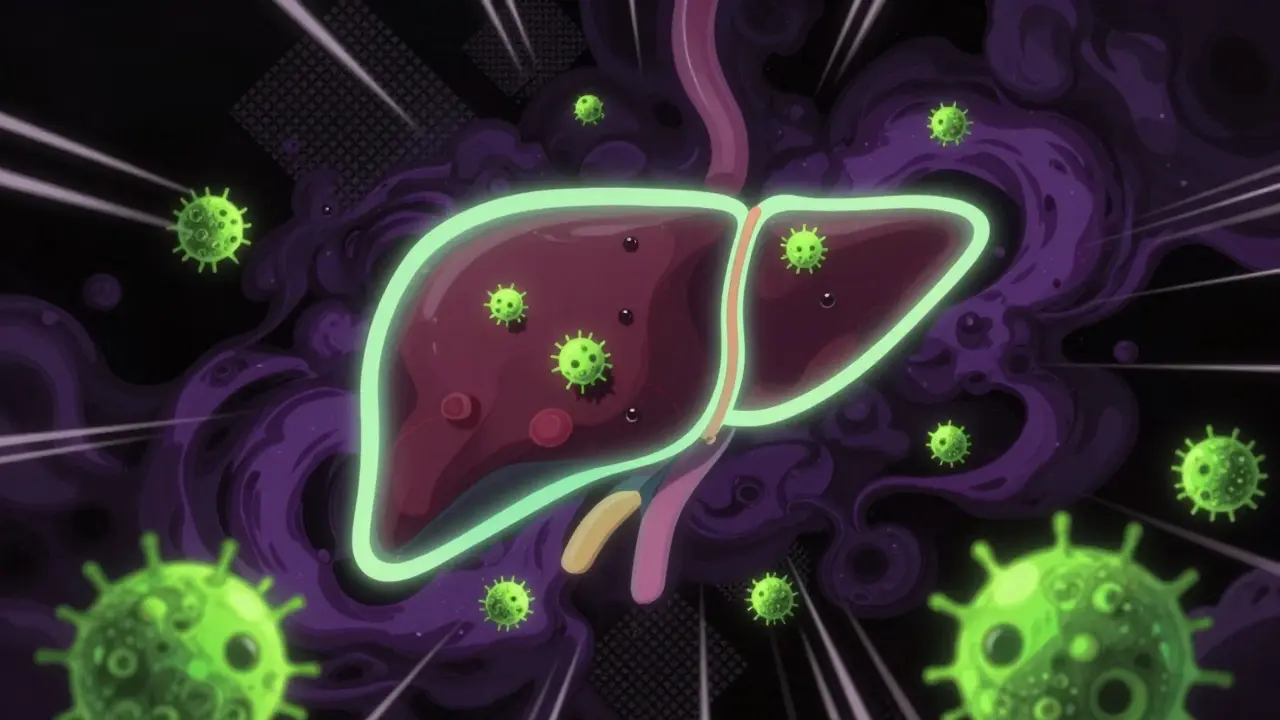
When taken correctly, your liver handles the load easily. However, when you exceed the maximum dose, a toxic byproduct called N-acetyl-p-benzoquinone imine (NAPQI) builds up. Under normal conditions, your liver has a natural defender called glutathione that neutralizes this toxin. When you flood your system with too much medication, the glutathione gets used up, and NAPQI starts eating away at liver cells. Once those cells start dying, it creates a condition known as acute liver failure.
How Accidental Overdoses Really Happen
You aren't necessarily the target. The scary part isn't people planning to overdose; it's the accidental ones. According to recent data, nearly half of all acetaminophen toxicities are unintentional. This happens mostly because of "polypharmacy"-taking multiple medicines at once without tracking the totals.
Imagine waking up with flu symptoms. You take a multi-symptom cold syrup. That has acetaminophen. Hours later, the headache persists, so you pop two capsules of extra-strength pain reliever. You haven't realized that the "cold cure" still had active ingredients inside. In fact, studies show that a quarter of accidental cases involve combining products without checking labels.
This is why simply counting how many pills you swallow isn't enough. You have to look for the abbreviation "APAP" on ingredient lists, which stands for acetaminophen. If you see it in one bottle, subtract that amount from your daily allowance before reaching for another.
The Warning Signs: A Four-Stage Timeline
Many people believe that if they feel sick after taking meds, it's a sign something is wrong. That makes sense, right? Wrong. With acetaminophen, feeling sick can happen way too late to save your liver easily. The damage unfolds in four distinct stages.
Stage One: The False Calm (0-24 Hours)
In the first day, you might feel nauseous or vomit. About 78% of people report nausea. You might feel sweaty or tired. Crucially, your blood work often looks normal here. This is the trap. Because you don't look critically ill yet, some people decide not to go to the hospital. But during this window, the toxic metabolites are accumulating in the liver tissue.
Stage Two: The Quiet Window (24-72 Hours)
Sometimes, after the initial nausea passes, patients actually feel better. The pain is gone, the stomach settles. But inside the abdomen, specifically the upper right quadrant where the liver sits, inflammation is spiking. Blood tests would reveal rising AST and ALT levels, indicators that liver cells are dying.
Stage Three: The Crisis (72-96 Hours)
This is the peak danger zone. Jaundice sets in-that yellowing of the eyes and skin-as the liver fails to filter bilirubin. Confusion begins because ammonia isn't being cleared from the blood. If kidney failure kicks in, which happens in half of severe cases, the situation becomes life-threatening quickly.
Stage Four: Recovery or Loss (After 5 Days)
By this point, the fate of the organ is sealed. With treatment, the liver can regenerate, though it takes time. Without intervention, mortality rates skyrocket. The goal is to never let a timeline get here.
Who Is Most At Risk?
If you drink three alcoholic beverages a week, you are walking a thinner line. Alcohol induces liver enzymes that produce more of the toxic byproduct mentioned earlier. It also depletes your store of glutathione, the very thing that protects you. For someone who drinks regularly, the "safe" daily dose drops significantly. While a healthy adult might handle 4 grams, a regular drinker might struggle safely at 2 grams a day.
Fasting is another hidden risk factor. If you haven't eaten well, your glutathione stores are already low. Adding heavy acetaminophen loads on top of empty reserves invites trouble.
Pain Relief Options: How They Compare
Not everyone needs acetaminophen. Sometimes the choice comes down to managing other health risks. Here is how it stacks up against its main competitor, Ibuprofen (a type of NSAID).
| Feature | Acetaminophen (Tylenol) | NSAIDs (Ibuprofen/Naproxen) |
|---|---|---|
| Primary Organ Risk | Liver (Hepatotoxicity) | Kidneys & Stomach |
| Stomach Safety | Low risk of bleeding | High risk of ulcers/bleeding |
| Anti-Inflammatory? | No | Yes (Reduces swelling) |
| Max Daily Limit | 4,000 mg | ~3,200 mg (varies) |
| Safe with Alcohol? | No | Moderate caution (increases bleed risk) |

Practical Prevention Steps for Home
Safety isn't about fear; it's about mechanics. You need a system. First, measure liquids accurately. Using a kitchen spoon is a recipe for disaster. A tablespoon holds a lot more than a teaspoon, and errors like this account for a significant chunk of pediatric overdoses. Always use the dosing cup or syringe that comes with the bottle.
Second, keep a dedicated log or app for your medications. This sounds tedious, but if you rotate between prescription Vicodin and OTC painkillers, it saves lives. Write down the time and amount. Do not trust your memory of "morning, afternoon, night." Time matters. Taking doses too close together spikes the concentration in the blood higher than steady spacing does.
For parents, calculate based on weight, not age. A large toddler weighing 25kg needs a different dose than a small 4-year-old. Stick to the guideline of 15 mg per kilogram of body weight per dose, maxed out at five times a day.
Emergency Protocol: What to Do If Mistakes Happen
The antidote is N-acetylcysteine (often abbreviated as NAC). It works by replenishing the glutathione in the liver so it can fight off the toxin again. However, it has a very strict time limit.
Dr. William Lee, a leading expert in hepatology, emphasizes that the window for effective treatment is narrow-specifically within 8 hours of ingestion. If you get NAC in time, 90% of patients make a full recovery without permanent damage. If you wait until 16 hours later, that recovery rate drops to 60%. The delay isn't worth it. If you think you've miscalculated the math, call your Poison Control center immediately. They don't judge; they calculate risk using the Rumack-Matthew nomogram to tell you exactly what to do next.
Frequently Asked Questions
Can I drink alcohol while taking acetaminophen?
It is generally recommended to avoid alcohol entirely. Consuming more than three alcoholic drinks daily while using this medication increases the risk of liver toxicity significantly because alcohol depletes the protective glutathione stores your liver needs to process the drug safely.
Is 4 grams of acetaminophen safe for everyone?
While 4 grams (4,000 mg) is the standard maximum for healthy adults, people with chronic liver disease, malnutrition, or regular alcohol consumption should lower their limit to 2,000 mg (2 grams) per day to stay within a safer threshold.
What are the symptoms of a late-stage overdose?
Late signs appear 3 to 4 days after ingestion. These include jaundice (yellow eyes/skin), confusion due to brain fog from ammonia buildup, and potential bleeding tendencies. By this stage, damage is usually advanced.
How long does acetaminophen stay in your system?
The drug itself clears relatively fast, usually within 24 hours for most people. However, the toxic effects on the liver can continue developing for days, which is why immediate medical attention is vital even if you initially feel fine.
Can mixing cold meds cause an overdose?
Yes. Many multi-symptom formulas contain APAP (acetaminophen). Taking a separate pain reliever on top of a cold syrup often pushes you over the daily limit without you realizing the total intake.
Sam Hayes
April 2, 2026 AT 18:37i find that keeping a physical log book helps more than apps because you actually look at the paper
it prevents accidental doubling up when switching brands
just write down every pill you take regardless of the brand
most people forget what was in the cold syrup bottle
consistency is key for safety protocols
Branden Prunica
April 3, 2026 AT 02:22My neighbor almost lost his liver last year thinking he was just taking extra ibuprofen
It was absolutely terrifying watching him go through withdrawal symptoms while the doctors scrambled
One moment you feel fine the next you are staring at the ceiling tiles wondering why your eyes are yellow
Nobody warns you that the medicine cabinet is basically a bomb waiting to go off
The silence in the hospital room was louder than the sirens outside
HARSH GUSANI
April 3, 2026 AT 13:09People always scream about this stuff but nobody dies from taking one tablet
It is ridiculous how scared everyone gets about a normal headache pill
Governments want you to panic so you buy more expensive doctor visits instead
The limit is way too strict for strong healthy men like myself
You know your body better than any generic chart printed online
They never tell you that skipping meals makes it worse so eat first
But really the fear industry just wants to sell antidotes later
Everyone thinks they are fragile when they are actually quite durable
Just drink water and move on with life without worrying so much
We need to stop listening to these alarmist headlines constantly
Real toxicity comes from addiction not a two week cold
Stop acting like weaklings every time you pop a caplet
Life is hard enough without worrying about every chemical
The liver is a regenerative organ unlike your heart
Trust your instincts more than the internet warnings 🔥💪😤🛑🧠🏥📉⚡🌡️🍾
Rachelle Z
April 3, 2026 AT 13:26Wow!!! That is such an extreme perspective considering the actual death toll!! 😱 You ignore the medical guidelines completely! 🙄 It sounds like you are minimizing real health risks! 😡 I know someone who struggled with liver failure before! 😡 Just read the label carefully!! 💊
Mark Zhang
April 5, 2026 AT 03:49It takes courage to share personal experiences even if perspectives differ
We all want the best outcomes for our families regarding medication
Maybe finding a middle ground keeps everyone safe without the panic
Checking labels is easy when we stay calm and organized
Supporting each other means sharing accurate info gently
Safety is a collective responsibility we should all uphold
The Charlotte Moms Blog
April 5, 2026 AT 11:05Parents really need to stop using kitchen spoons for liquid medication because it causes dosing errors frequently!
Hudson Nascimento Santos
April 5, 2026 AT 19:02Modern medicine offers us relief but demands absolute discipline in return
We trade convenience for vigilance in a world full of invisible chemicals
Perhaps true health lies not in the absence of pain but in understanding our own vessel
The balance between relief and risk requires constant philosophical reflection
sophia alex
April 7, 2026 AT 08:08Only those with proper education would realize how basic this concept is to implement :) Smart parents already track everything meticulously
It is amusing how many still struggle with simple math regarding milligrams
True intellect understands the gravity of liver health effortlessly! :)